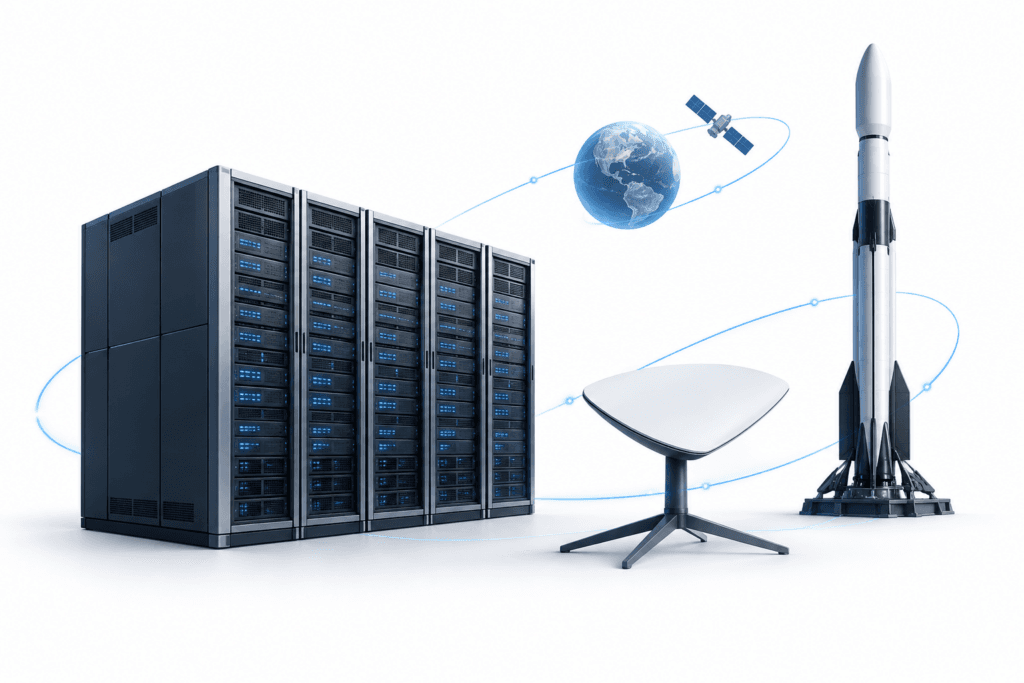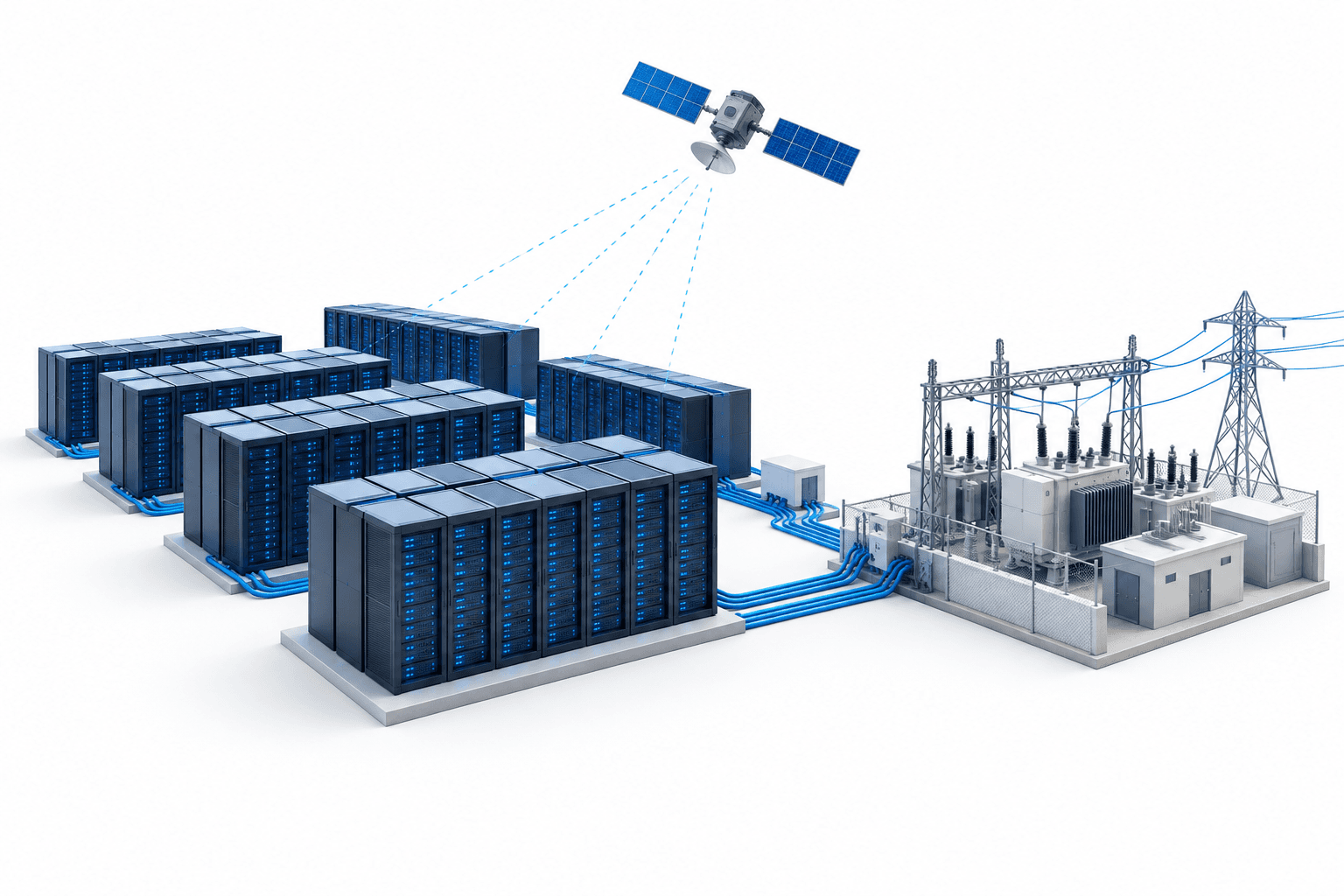
SpaceX AI expansion plans now target 13 gigawatts of computing capacity by the end of 2027, UBS said in an assessment published on October 23, 2026. The target represents a sharp increase from an earlier expectation of 2.5–3 GW, but achieving it would require substantial investment and access to additional power generation.
Key Takeaways
- UBS described a 13 GW end-2027 computing target, roughly 10 GW above the earlier expectation.
- Third-quarter Super Intelligence revenue nearly tripled sequentially to $7.6 billion.
- Fourth-quarter capital expenditure guidance is $35 billion–$40 billion, while UBS estimates the capacity buildout would require about $350 billion.
Table of Contents
- SpaceX AI expansion raises the capacity benchmark
- Revenue projections depend on capacity and customer leasing
- Quarterly results show the business already scaling
- Connectivity and Starship add operating milestones
- Conclusion
SpaceX AI expansion raises the capacity benchmark
UBS attributed the more ambitious plan to stronger demand for leased AI computing capacity. It cited capacity of 1.7 GW in the third quarter of 2026 and 2.2 GW in October, compared with the 13 GW target for the end of 2027.
Elon Musk indicated that demand was sufficient to sell the available capacity several times over, UBS said. He also expected spot rental rates to rise further, potentially shortening investment payback periods to around six months in 2027. Those are expectations, not realized returns.
UBS also said Musk suggested capacity could potentially reach 20 GW during 2027, depending on available power generation. That higher possibility is distinct from the stated 13 GW target.
| Item | Details |
|---|---|
| Reporting period | Three months ended September 30, 2026 |
| Consolidated revenue | $14.575 billion, up 161% year over year |
| Consolidated operating income | $2.791 billion |
| Consolidated net income | $4.4 billion |
| Consolidated adjusted EBITDA | $8.809 billion; a non-GAAP measure |
Revenue projections depend on capacity and customer leasing
Using a roughly equal split between capacity retained for internal use and capacity leased to customers, UBS outlined potential annual recurring revenue of $500 billion–$1 trillion by the end of 2027. That compares with an expected $100 billion at the end of 2026.
These figures describe a prospective annual recurring revenue run rate, not revenue already earned or a forecast of total revenue recognized during 2027. Their realization depends on infrastructure delivery and the commercial use of the added capacity.
The spending requirement is also substantial. SpaceX has guided for fourth-quarter 2026 capital expenditure of $35 billion–$40 billion, compared with $19.6 billion in the third quarter. Separately, UBS estimates approximately $350 billion would be needed to achieve the 13 GW target.
Quarterly results show the business already scaling
SpaceX’s third-quarter 2026 results announcement records 1.7 GW of nameplate computing capacity at September 30. The filing establishes the operating baseline, rather than confirming the subsequent 13 GW target or UBS’s revenue and investment projections.
The Super Intelligence segment, which includes AI cloud services and infrastructure, generated $7.56 billion in revenue, up from $2.56 billion in the second quarter. SpaceX attributed growth to new cloud services agreements, the acquisition of Cursor and increased Grok adoption.
Segment adjusted EBITDA rose to $4.95 billion from $1.15 billion. This non-GAAP measure differs substantially from the segment’s $431 million operating profit, which included $1.2 billion in share-based compensation associated with the Cursor acquisition.
Connectivity and Starship add operating milestones
Connectivity revenue reached $5.25 billion in the third quarter, up 69% from a year earlier. Starlink consumer subscribers reached 13.6 million at September 30, an increase of 1.6 million from June.
SpaceX also completed Starship Flight 14, its first orbital and revenue-generating Starship mission. The flight delivered 26 Starlink V3 satellites, adding approximately ten times the downlink capacity of a Falcon 9 Starlink launch.
The results show growth beyond AI, although the proposed computing buildout introduces a much larger spending requirement. Infrastructure execution, additional AI customer agreements and power availability remain central to the expansion timetable.
Conclusion
The next benchmark for SpaceX AI expansion is execution against its fourth-quarter 2026 spending guidance and end-2027 capacity target. The reported quarterly results establish a growing business, but the much larger capacity and recurring-revenue figures remain forward-looking.
Read More News
Disclaimer
This FinanceVelix article provides general information, not personalized financial, investment, legal, or tax advice. Market prices, interest rates and economic conditions can change; investments carry a risk of loss. Facts reflect the material available when published and may change. Check important information independently and consult a qualified professional when needed. Mentioning an asset, company, or service is not an endorsement.