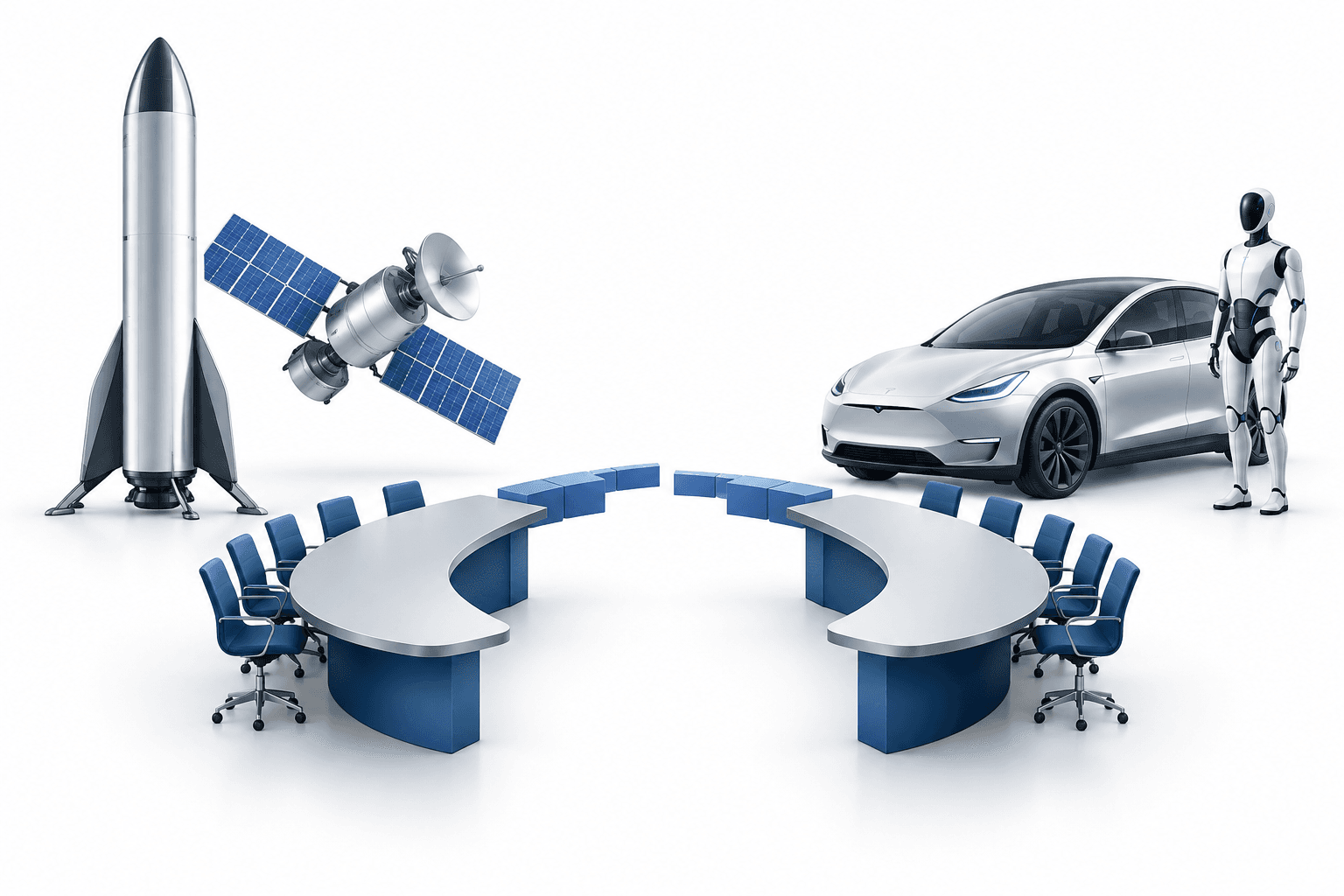
A potential SpaceX Tesla merger moved into formal review in October 2026, with Elon Musk saying both companies had formed special committees to study a combination. The companies have a combined value of about $3.5 trillion, but the review is not an agreed transaction, and Musk cautioned that securing Tesla shareholder approval would be a high hurdle.
Key Takeaways
- Special committees are evaluating a combination; a merger is not certain.
- Musk's much stronger voting control at SpaceX makes Tesla shareholder support a central issue.
- SpaceX's US government contracts and Tesla's China operations could complicate a deal.
Table of Contents
- SpaceX Tesla merger remains under evaluation
- The business case extends beyond rockets and cars
- Tesla shareholders hold a key decision
- Government contracts and China create complications
- Conclusion
SpaceX Tesla merger remains under evaluation
Musk told analysts on October 20 that combining the companies would be “a good idea.” SpaceX's committee is evaluating a potential combination, while Tesla's committee is exploring a deeper relationship that could include a business combination.
The distinction matters for shareholders: studying a transaction does not establish its price, structure or completion timetable. The roughly $3.5 trillion combined company value is not an agreed purchase price.
Tesla's third-quarter 2026 filing also identifies a SpaceX equity investment, a financial connection separate from the potential merger.
| Item | Details |
|---|---|
| SpaceX valuation | About $2 trillion. |
| Tesla valuation | About $1.5 trillion. |
| Combined indicative value | About $3.5 trillion; not an agreed transaction price. |
The business case extends beyond rockets and cars
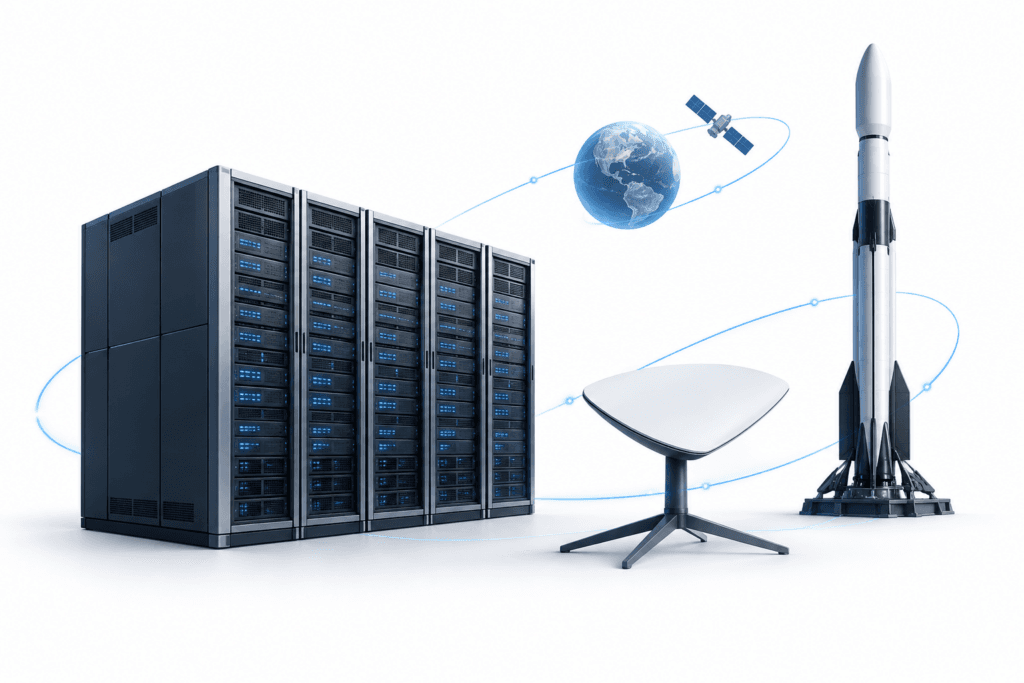
SpaceX combines reusable rockets, astronaut transport and Starlink satellite internet with a growing artificial intelligence business. It absorbed xAI in February 2026, after xAI had taken over the social network X in 2025. SpaceX also went public in 2026, and renting data-center computing capacity to other AI companies has become an important source of growth.
Tesla's core electric-car business has come under pressure. Musk increasingly presents its future around self-driving robotaxis and the Optimus humanoid robot.
Florian Frischmuth of engineering consultancy Envorso said a combined company could centrally control chips, energy and connectivity, key components of AI. Garrett Nelson of CFRA Research offered a different assessment: potential synergies would likely be small relative to the transaction's size, and control would be the main rationale.
Tesla shareholders hold a key decision
Musk holds about 82% of SpaceX's voting power, compared with about 20% at Tesla. He said a merger would require support from a majority of all Tesla shares, calling that “quite a high hurdle.”
Nelson estimated that retail investors hold 25% to 27% of Tesla shares. Their support, alongside Musk's stake, could reduce the institutional backing needed, but those holdings do not establish how shareholders would vote.
Both companies moved their incorporation from Delaware to Texas. Ann Lipton, a University of Colorado law professor, said Texas presents fewer legal obstacles to shareholder approval challenges, with investors facing demanding standards when contesting a deal.
Government contracts and China create complications
Lipton identified SpaceX's importance to the US government and Tesla's operations in China as bigger potential obstacles. SpaceX depends heavily on NASA and Pentagon contracts, while Tesla has a large manufacturing base in China.
Bringing those businesses together could draw national-security scrutiny. JPMorgan analysts suggested that one possible response would be to separate Tesla's China business or transfer control to a China-based consortium. That is an analyst scenario, not an announced restructuring plan.
Conclusion
The SpaceX Tesla merger remains a committee review rather than a settled deal. The next substantive development to watch is the committees' determination on whether to recommend a combination, followed by any proposed terms and required approvals.
Read More News
Disclaimer
This FinanceVelix article provides general information, not personalized financial, investment, legal, or tax advice. Market prices, interest rates and economic conditions can change; investments carry a risk of loss. Facts reflect the material available when published and may change. Check important information independently and consult a qualified professional when needed. Mentioning an asset, company, or service is not an endorsement.