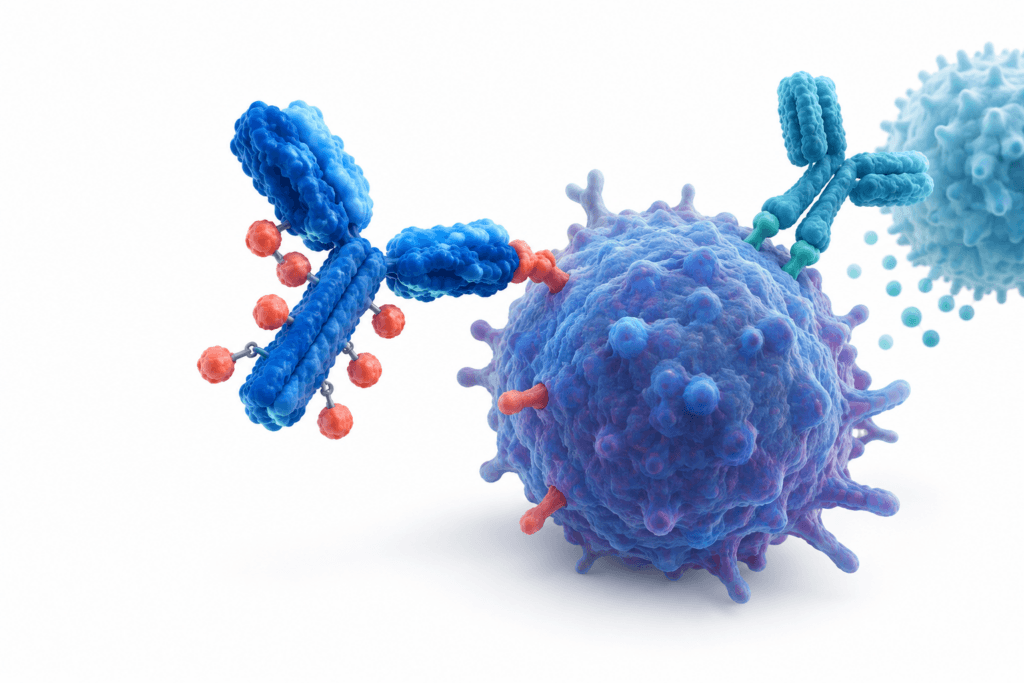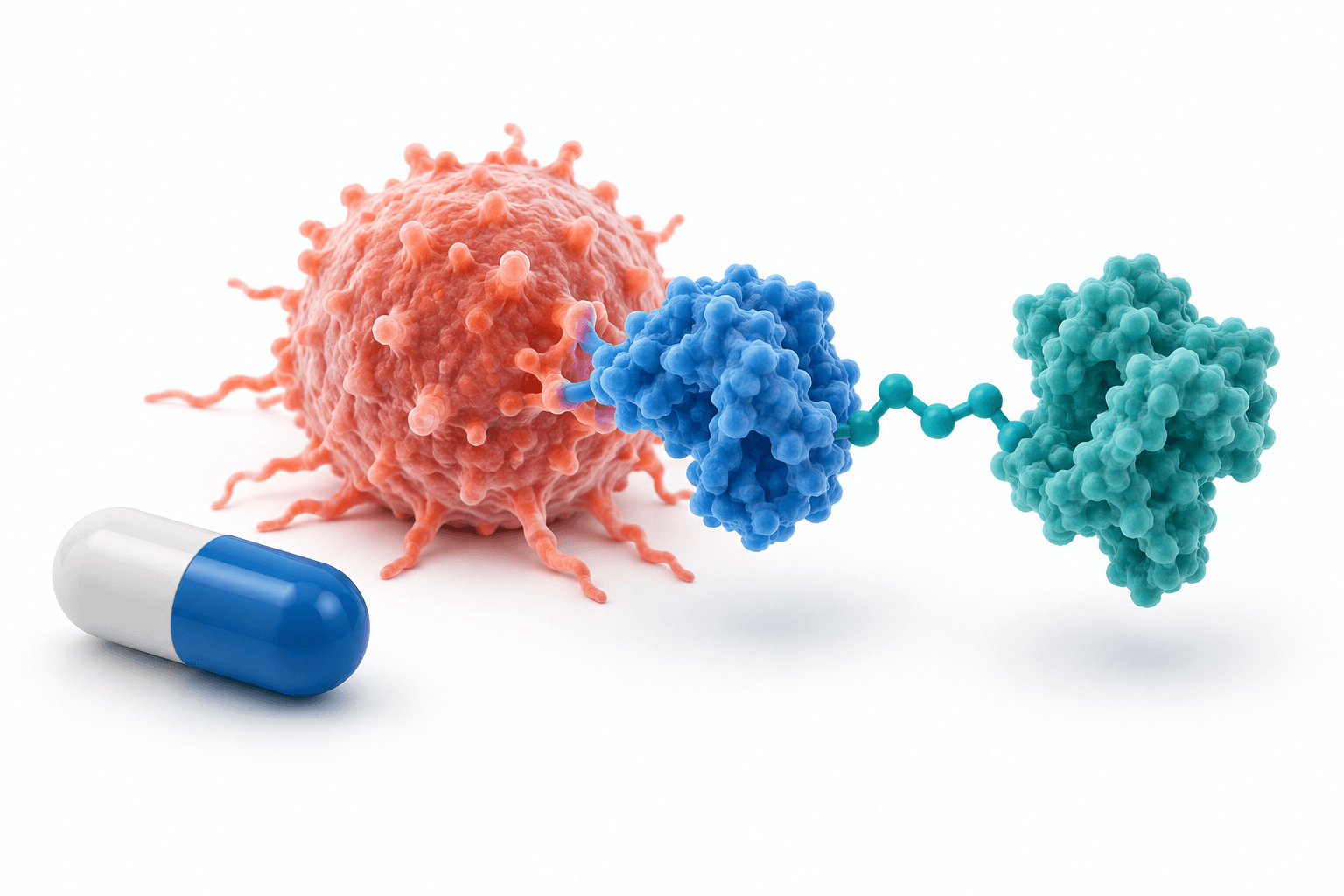
Johnson & Johnson said on October 24, 2026, that its JNJ-6143 trial showed tumor shrinkage or disappearance in patients with advanced prostate cancer who had received multiple treatments. The early-stage findings provide a clinical update on an experimental drug obtained through the company’s $3.05 billion acquisition of Halda Therapeutics in 2025.
Key Takeaways
- At the 50-milligram dose, 77% of 31 evaluable patients had PSA levels fall by at least half.
- Among patients with tumors measurable by imaging, 69% had a confirmed complete or partial response.
- The drug remains investigational, with the findings intended to inform dose selection for further development.
Table of Contents
- JNJ-6143 trial reports two measures of activity
- Safety findings include nausea and elevated blood lipids
- Halda acquisition added a different treatment approach
- Conclusion
JNJ-6143 trial reports two measures of activity
Johnson & Johnson presented the findings at the European Society for Medical Oncology Congress. The study evaluated patients with advanced prostate cancer after multiple prior treatments.
Among 31 evaluable patients receiving the 50-milligram dose, 77% recorded a decline of at least 50% in prostate-specific antigen, or PSA, a blood marker used to monitor prostate cancer. PSA levels fell by at least 90% in 48% of patients.
Separately, 69% of patients whose tumors could be measured using imaging had a confirmed complete or partial response. The supplied findings do not specify the size of that imaging-evaluable group, so the percentage should not be treated as applying to all 31 patients.
PSA declines and imaging responses are different measures of treatment activity. These early results do not establish how long responses last or whether the drug improves survival.
| Item | Details |
|---|---|
| Candidate | JNJ-6143, formerly HLD-0915 |
| Administration | Experimental once-daily oral therapy |
| Technology | Regulated Induced Proximity Targeting Chimera, or RIPTAC |
| Development program | Being evaluated in Phase 1 and Phase 2 studies in metastatic prostate cancer |
Safety findings include nausea and elevated blood lipids
Common side effects included nausea and elevated cholesterol and triglyceride levels. One patient discontinued treatment because of adverse effects.
The findings provide an initial view of tolerability in this heavily pretreated population, rather than a complete assessment of the drug’s benefits and risks.
Halda acquisition added a different treatment approach
Johnson & Johnson’s JNJ-6143 development overview describes an investigational therapy designed to bring together the androgen receptor, which is highly expressed in prostate cancer cells, and BRD4, a protein essential for cell survival. The proposed mechanism aims to disrupt cancer-cell function and trigger cell death.
A Johnson & Johnson spokesperson said the candidate adds a new mechanism of action to the company’s prostate cancer portfolio. The company completed its Halda acquisition in December 2025, adding both the drug and its underlying RIPTAC platform.
Johnson & Johnson says the ESMO results will help identify the optimal dose for further development in metastatic prostate cancer resistant to androgen-pathway treatment.
Conclusion
The JNJ-6143 trial provides early evidence of treatment activity for a candidate acquired with Halda. The next stated development step is using the findings to inform dose selection; the drug remains investigational.
Read More News
Disclaimer
This FinanceVelix article provides general information, not personalized financial, investment, legal, or tax advice. Market prices, interest rates and economic conditions can change; investments carry a risk of loss. Facts reflect the material available when published and may change. Check important information independently and consult a qualified professional when needed. Mentioning an asset, company, or service is not an endorsement.