Moderna stock fell 25.2% to $183.88 in trading on October 22, 2026, wiping out about $24 billion in market value after detailed late-stage results for its personalized melanoma vaccine became public. The decline came despite evidence that the experimental treatment, developed with Merck, improved outcomes when added to Keytruda.
Key Takeaways
- The selloff interrupted a rally that had lifted Moderna shares more than 500% in 2026.
- Intismeran plus Keytruda reduced the relative risk of cancer recurrence or death by 42% compared with Keytruda alone.
- Overall survival findings remained immature, and the companies said they were engaging with regulators.
Table of Contents
- Moderna stock retreats despite positive trial findings
- What the melanoma trial demonstrated
- Survival follow-up and broader cancer studies remain important
- Conclusion
Moderna stock retreats despite positive trial findings
Moderna and Merck released the detailed results after they leaked on an oncology website earlier on October 22. The quoted share price was the latest trading observation, not a confirmed closing price. Merck shares fell nearly 1%.
The companies had disclosed positive interim findings in August. The detailed release therefore arrived after months of rising expectations, rather than as the first indication that the trial had succeeded.
UBS analyst Michael Yee described the recurrence-free survival findings as solid and characterized the pullback as a “sell the news” reaction. William Blair analyst Myles Minter also viewed the data positively, but said investors could be questioning whether the treatment would work well enough in other cancers to support Moderna’s valuation. Those are analysts’ interpretations of the selling, not established investor motives.
| Item | Details |
|---|---|
| Two-year distant metastasis-free survival | 88.5% with intismeran plus Keytruda; 80.2% with Keytruda alone. |
| Any treatment-related adverse event | 95.8% with the combination; 90.0% with Keytruda alone. |
| Grade 3–5 treatment-related adverse events | 14.2% with the combination; 13.4% with Keytruda alone. |
| Intismeran dosing in the trial | 1 mg every three weeks for up to nine doses. |
What the melanoma trial demonstrated
Merck and Moderna’s detailed Phase 3 trial announcement describes INTerpath-001, which enrolled 1,137 patients with high-risk stage IIB-IV melanoma following complete surgical removal of their cancer. The study compared intismeran plus Keytruda with placebo plus Keytruda.
After a median follow-up of 24.6 months, the combination reduced the relative risk of recurrence or death by 42% and the risk of distant metastasis or death by 38%. Distant metastasis means cancer spreading to other parts of the body.
The 42% figure is a relative risk reduction, not a 42-percentage-point increase in the proportion of patients remaining cancer-free. The two-year recurrence-free survival rates were 82.2% with the combination and 70.0% with Keytruda alone, a difference of 12.2 percentage points.
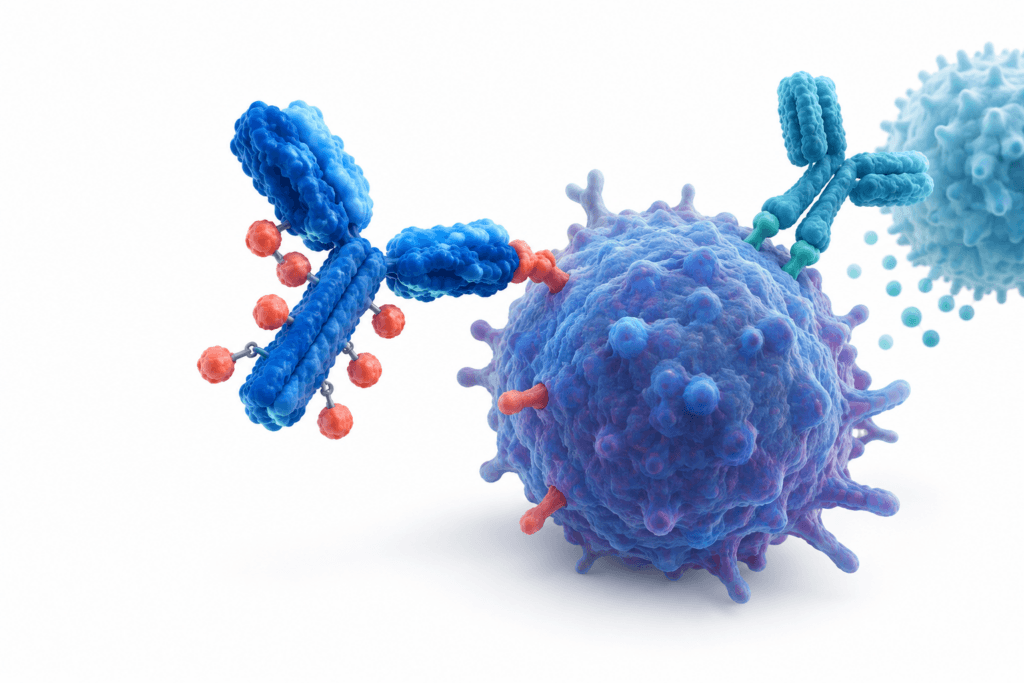
Intismeran remains investigational. The mRNA-based treatment is designed using the unique mutations in an individual patient’s tumor to help generate an immune response against cancer cells.
Survival follow-up and broader cancer studies remain important
The companies said overall survival data were not yet mature, although they showed a favorable trend. A reduction in recurrence or death on the trial’s primary endpoint does not by itself establish an overall survival benefit.
The melanoma findings also do not establish effectiveness in other tumor types. Merck and Moderna’s broader intismeran program includes nine Phase 2 and Phase 3 trials, including three ongoing Phase 3 studies in non-small cell lung cancer.
Treatment-related adverse events were common in both melanoma study groups. The reported rates of severe events were relatively close, but the combination produced more treatment-related adverse events overall.
Conclusion
The October 22 decline in Moderna stock contrasted with positive melanoma trial findings, while longer-term survival and effectiveness in other cancers remained unresolved. At the time of the release, the next scheduled milestone was presentation of the results at the European Society for Medical Oncology meeting in Madrid on October 24, 2026.
Read More News
Disclaimer
This FinanceVelix article provides general information, not personalized financial, investment, legal, or tax advice. Market prices, interest rates and economic conditions can change; investments carry a risk of loss. Facts reflect the material available when published and may change. Check important information independently and consult a qualified professional when needed. Mentioning an asset, company, or service is not an endorsement.