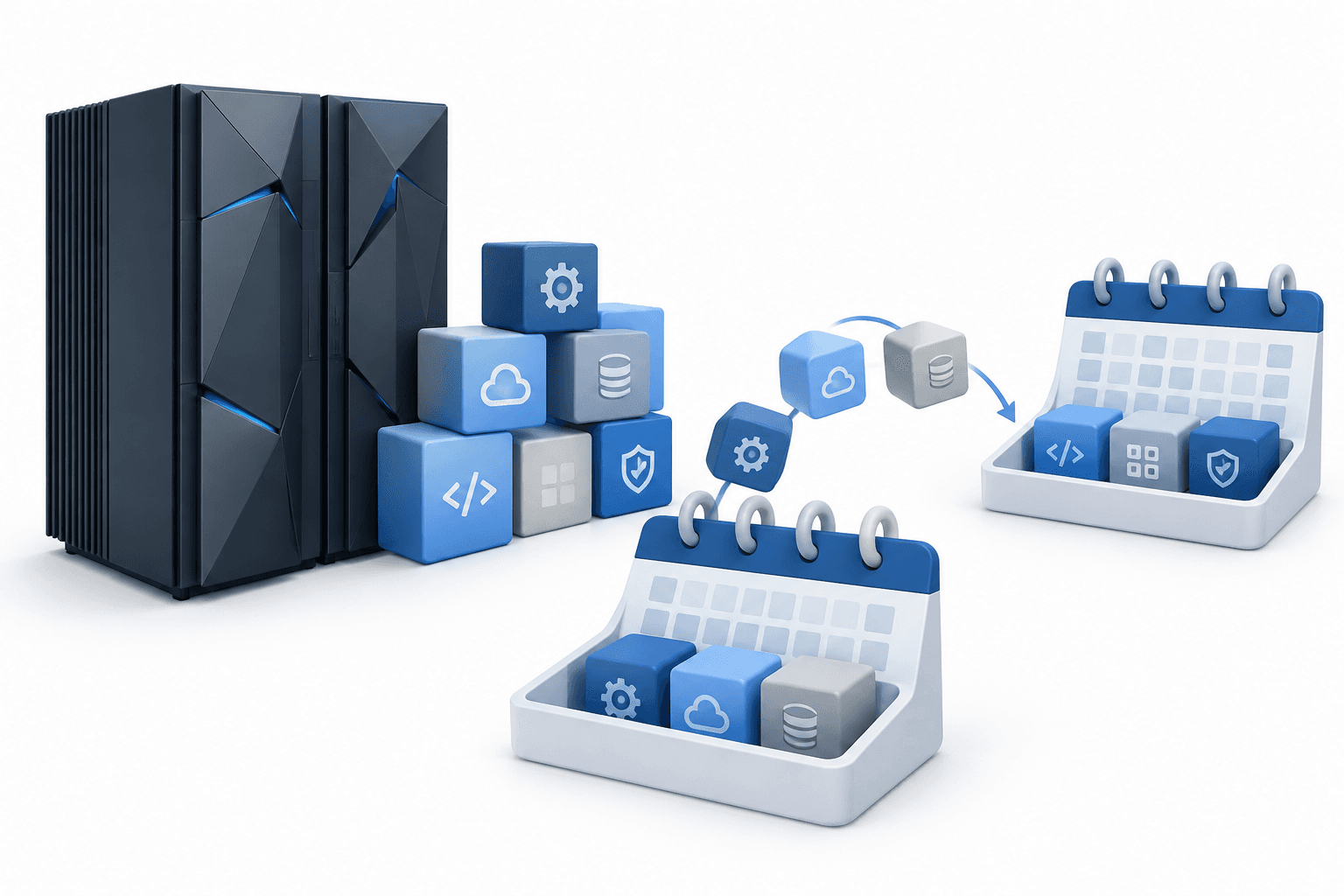
IBM shares fell 6.5% in premarket trading on October 22, 2026, as analysts questioned the durability of its third-quarter software rebound. BofA Global Research said roughly $250 million of software growth came from deals delayed from the second quarter, making the underlying improvement more modest than the headline figures suggested.
Key Takeaways
- Delayed second-quarter deals contributed about $250 million to software growth, BofA analysts said.
- Transaction-processing revenue rose 9%, but CEO Arvind Krishna cautioned against expecting that pace to continue.
- IBM raised the lower end of its annual software growth outlook while leaving its overall revenue forecast unchanged.
Table of Contents
- IBM shares retreat as delayed deals complicate the rebound
- Transaction processing faces a tougher follow-through
- Higher software outlook leaves group growth unchanged
- Conclusion
IBM shares retreat as delayed deals complicate the rebound
The central question is whether IBM’s stronger software quarter represents a sustained acceleration or partly a shift in when customers completed purchases. BofA analysts said the contribution from postponed deals made the improvement less pronounced once that timing effect was excluded.
IBM's third-quarter 2026 results, released on October 21, showed software revenue of $7.8 billion, up 8% from a year earlier, or 9% at constant currency. The delayed-deal estimate is an analyst assessment, rather than a figure disclosed in that earnings announcement.
The premarket decline followed a difficult year for the stock: IBM had fallen about 15% through October 21. The 6.5% move was an early-trading snapshot, not a confirmed closing result.
| Item | Details |
|---|---|
| Third-quarter GAAP diluted EPS from continuing operations | $2.31, up 26% year over year |
| Third-quarter operating non-GAAP diluted EPS | $2.95, up 11% year over year |
| Third-quarter free cash flow | $3.0 billion, up $0.7 billion year over year |
| Third-quarter consulting revenue | $5.3 billion; flat as reported, up 2% at constant currency |
Transaction processing faces a tougher follow-through
Revenue in transaction processing, which sells software tied to IBM’s mainframe computers, grew 9% in the third quarter. Krishna said he did not expect that pace to continue and anticipated a more “normalized performance, especially going into next year.”
The improvement followed a second-quarter decline in the unit. Finance chief James Kavanaugh had said at the time that weakness in mainframe hardware and transaction-processing software cut more than five percentage points from IBM’s growth.
Bernstein said IBM’s forecast implied a slight fourth-quarter sales decline in transaction processing as the benefit from delayed deals faded. That is the brokerage’s interpretation of the outlook, not a reported fourth-quarter result.
Higher software outlook leaves group growth unchanged
IBM now expects annual software revenue growth of about 7%–8%, compared with its previous 6%–8% range. Raising the lower end narrows the forecast but does not increase its upper limit.
At the group level, IBM maintained its forecast for 2026 constant-currency revenue growth of 4%–5%. Third-quarter revenue reached $17.1 billion, up 5% as reported and 6% at constant currency.
The company also raised its full-year free-cash-flow outlook, saying it now expects an increase of more than $1 billion from the previous year. The unchanged group revenue forecast and stronger cash-flow outlook show that the software sustainability question is only one part of IBM’s financial picture.
Conclusion
IBM’s fourth-quarter results will provide the next test of whether software growth can hold up after the delayed-deal benefit fades. Management’s unchanged group revenue outlook remains the benchmark, alongside its higher free-cash-flow expectation.
Read More News
Disclaimer
This FinanceVelix article provides general information, not personalized financial, investment, legal, or tax advice. Market prices, interest rates and economic conditions can change; investments carry a risk of loss. Facts reflect the material available when published and may change. Check important information independently and consult a qualified professional when needed. Mentioning an asset, company, or service is not an endorsement.