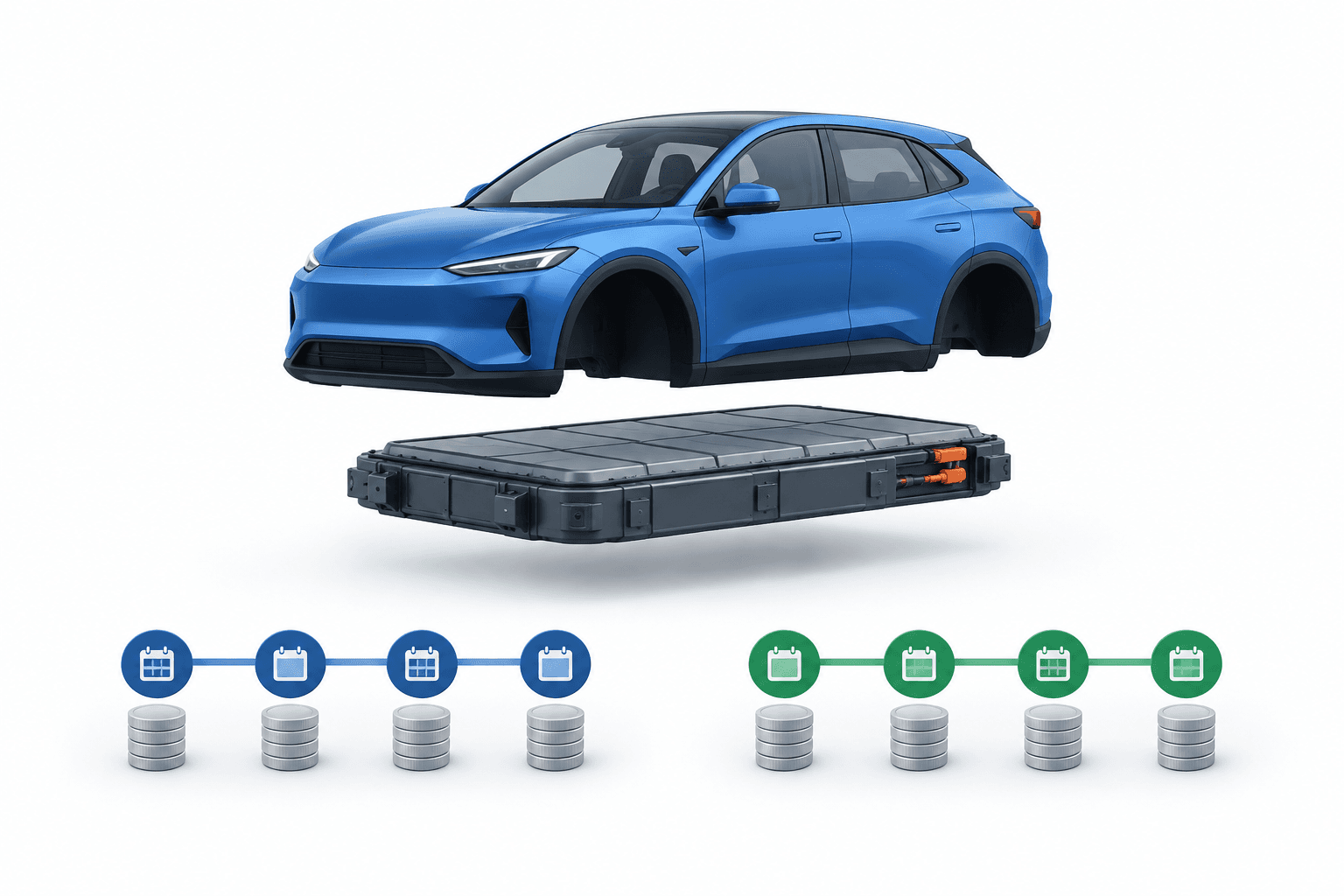
The HDFC Bank EV loan offering now includes a Flexi (Green) option with different financing proportions and repayment periods for an electric car’s body and battery. The launch, detailed on October 25, 2026, allows the battery portion to be repaid over a longer term, giving buyers more flexibility over monthly instalments.
Key Takeaways
- The Flexi (Green) loan separates financing for the electric vehicle’s body and battery.
- A longer battery repayment period is intended to help buyers customise monthly payments.
- The launch details do not specify interest rates, financing proportions or exact component-level tenors.
Table of Contents
- How the HDFC Bank EV loan structure works
- Affordability claims and terms still to check
- Bank frames the launch around EV adoption
- Conclusion
How the HDFC Bank EV loan structure works
Rather than applying the same repayment schedule to the whole vehicle, the product allows different loan proportions and tenors for the body and battery. HDFC Bank said this would let borrowers customise their equated monthly instalment, or EMI, outflow.
The bank identified batteries as the most expensive component of an electric vehicle and a reason acquisition costs are higher than for internal-combustion-engine vehicles. Its approach changes how that upfront cost is repaid rather than reducing the vehicle’s purchase price.
A longer repayment period can spread the battery cost across more instalments. That does not by itself establish a lower total borrowing cost, which also depends on interest rates, fees and the repayment schedule.
| Item | Details |
|---|---|
| Body and battery financing proportions | Different proportions are offered; exact percentages were not specified in the launch details. |
| Component repayment periods | The battery can have a longer term; exact body and battery tenors were not specified. |
| Flexi (Green) pricing | Interest rates and product-specific fees were not specified in the launch details. |
Affordability claims and terms still to check
HDFC Bank said the battery-related EMI would be comparable with the running cost of an internal-combustion-engine vehicle. The launch details did not provide a worked example or the assumptions behind that comparison.
The bank also said the approach aligns with evolving battery-subscription models. That comparison does not establish that this loan includes a battery subscription or separate battery ownership.
For broader product context, HDFC Bank’s general EV loan repayment options range from 12 to 96 months. Those published terms describe its wider electric-car financing offering; they do not specify the separate body and battery tenors for the new Flexi (Green) structure.
Bank frames the launch around EV adoption
Arvind Vohra, HDFC Bank’s Group Head of Retail Assets and Rural Banking, described the product as another step toward making electric-vehicle ownership more cost-effective and accessible.
Vohra pointed to government incentives, technological improvements and policy support as factors supporting India’s EV market. The launch centres on repayment flexibility, while the actual affordability benefit will depend on the terms offered to each borrower.
Conclusion
The HDFC Bank EV loan adds flexibility by separating body and battery repayment schedules. For borrowers, the next practical checkpoint is the actual loan offer: its component-level tenors, interest rates, fees and total repayment amount.
Read More News
Disclaimer
This FinanceVelix article provides general information, not personalized financial, investment, legal, or tax advice. Market prices, interest rates and economic conditions can change; investments carry a risk of loss. Facts reflect the material available when published and may change. Check important information independently and consult a qualified professional when needed. Mentioning an asset, company, or service is not an endorsement.