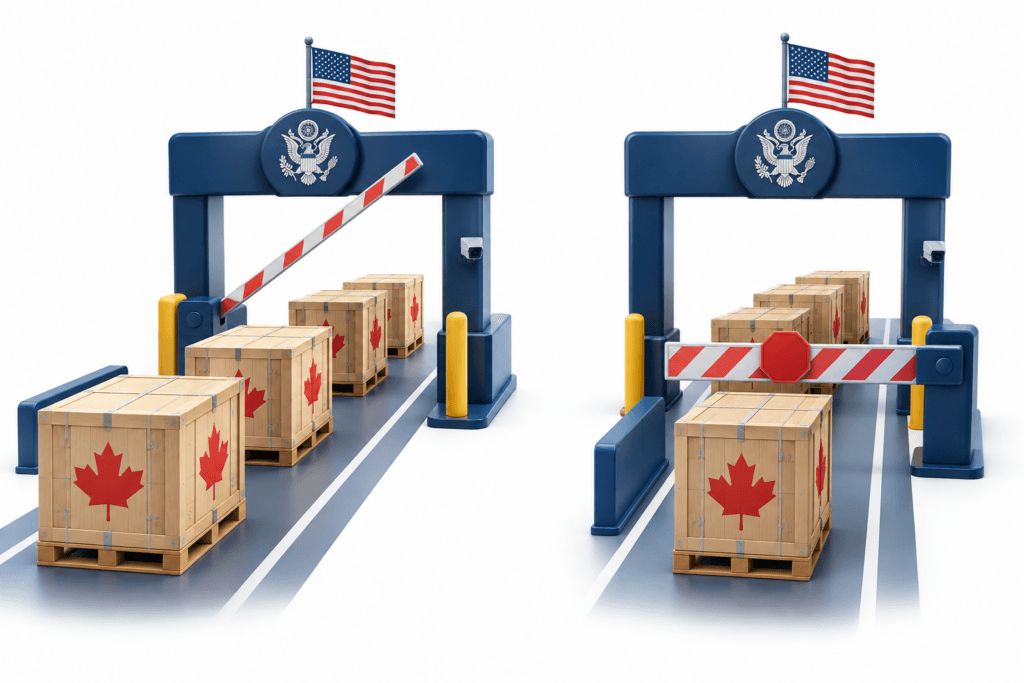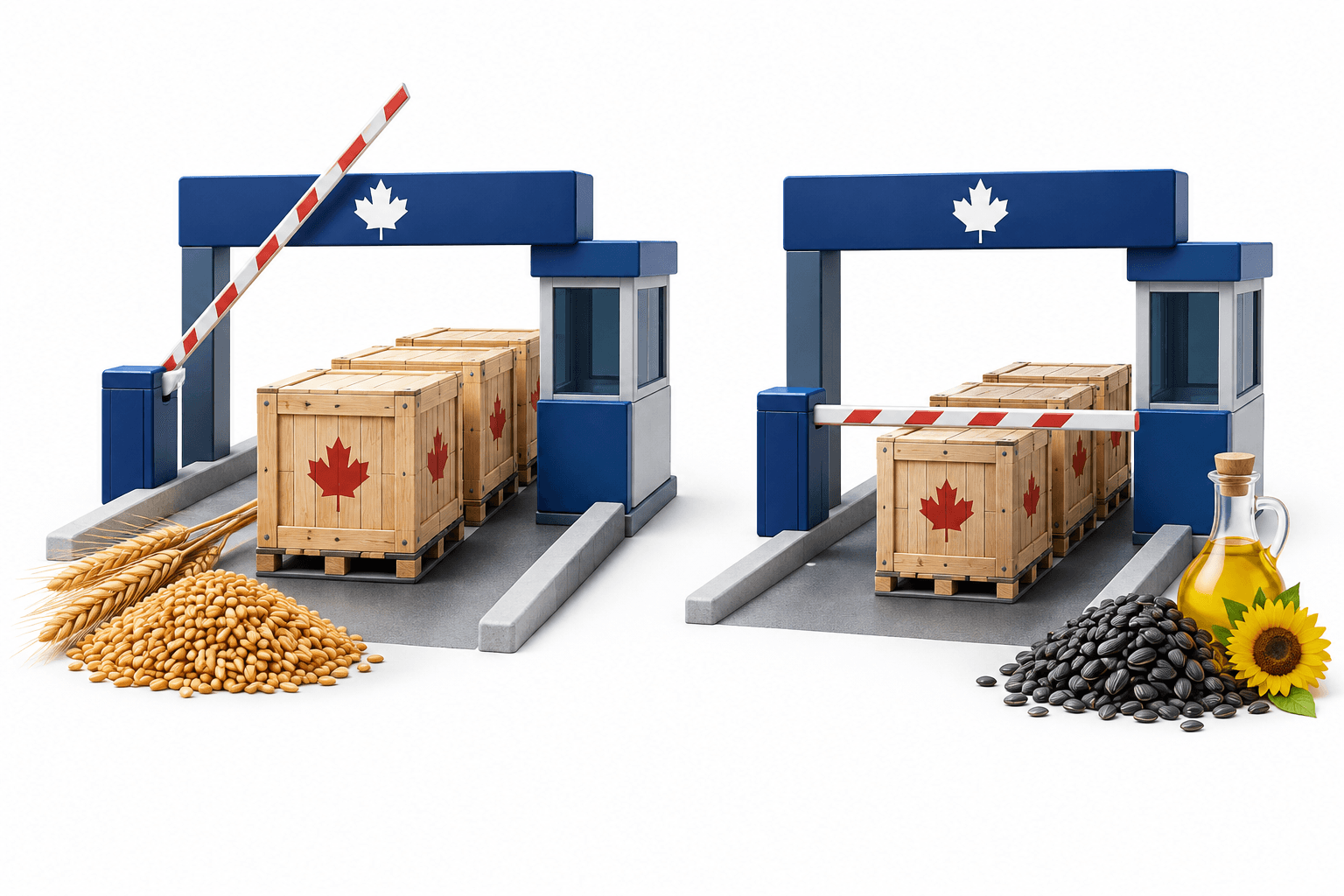
Canadian tariff changes announced by President Donald Trump on October 23, 2026, will remove an additional 50% duty from selected imports while applying the same duty to other Canadian products. The decision takes effect October 30. It changes which goods face the tariff rather than halving the tariff rate, and it does not establish a specific financial benefit for agricultural commodities group Bunge Global.
Key Takeaways
- The proclamation removes an additional 50% duty from selected Canadian goods, rather than cutting that rate in half.
- Other Canadian products will become subject to the additional duty when the changes take effect October 30.
- Bunge’s agricultural operations make product coverage relevant, but no company-specific savings or earnings impact is established.
Table of Contents
- What the Canadian tariff changes actually do
- Bunge’s exposure depends on the covered products
- When import treatment changes
- Conclusion
What the Canadian tariff changes actually do
The signed decision goes beyond a proposal. The presidential proclamation modifying Canadian import duties removes products listed in Part A of Annex I from the additional 50% charge and brings products listed in Part B into its scope.
That distinction matters for businesses assessing import costs: the measure redistributes tariff exposure across specified goods rather than providing a broad reduction for Canadian imports. Removing this additional charge also does not necessarily make an affected product duty-free.
The administration presents the adjustment as serving the public interest while continuing to offset what it describes as Canadian discrimination against US commerce involving motor vehicles.
| Item | Details |
|---|---|
| Legal authority | Section 338 of the Tariff Act of 1930. |
| Other duties | The additional duties apply alongside duties imposed under Section 232. |
| Tariff schedule | Annex II modifies the Harmonized Tariff Schedule of the United States. |
| Duration | The modifications continue unless expressly suspended, revoked, supplemented, amended or terminated. |
Bunge’s exposure depends on the covered products
Bunge processes oilseeds, trades grain and produces edible oils and protein meals. Its operations connect agricultural supply chains across the Americas, Europe and Asia, including the processing of soybeans and canola.
Those activities make cross-border trade rules relevant to the company, but the proclamation does not identify Bunge or quantify an effect on its purchases, shipments, costs or earnings. A company-specific assessment requires matching the covered products to Bunge’s actual trade flows.
The decision therefore does not, by itself, demonstrate lower input costs or improved profitability for Bunge. Its financial effect remains unquantified.
When import treatment changes
The new treatment applies to goods entered for consumption, or withdrawn from warehouses for consumption, from 12:01 a.m. eastern time on October 30, 2026. The relevant trigger is customs entry or warehouse withdrawal, not simply when an order was placed.
US Customs and Border Protection is authorized to issue implementation guidance. Importers will need to check the applicable product classifications and duty combinations rather than assume that all Canadian agricultural or forestry shipments receive relief.
Conclusion
The next confirmed milestone is implementation on October 30. For Bunge and other businesses, the practical question is which shipments fall within the revised product lists—not whether Canadian tariffs have been reduced across the board.
Read More News
Disclaimer
This FinanceVelix article provides general information, not personalized financial, investment, legal, or tax advice. Market prices, interest rates and economic conditions can change; investments carry a risk of loss. Facts reflect the material available when published and may change. Check important information independently and consult a qualified professional when needed. Mentioning an asset, company, or service is not an endorsement.