Rio Tinto announced on October 23, 2026, that it will invest US$1.9 billion in the Kangwinan bauxite project in Queensland, Australia. The development will replace output from an ageing mine and expand capacity at its Weipa Operations, with first production targeted for 2029 and full production expected by 2032.
Key Takeaways
- Kangwinan will add 20 million tonnes of annual capacity, partly replacing production from mines approaching closure.
- Weipa's annual capacity is expected to reach about 44 million tonnes, compared with current production of around 38 million tonnes.
- The investment is included in Rio Tinto's mid-term capital guidance, with construction set to ramp up in 2027.
Table of Contents
- Kangwinan bauxite project replaces ageing mine supply
- Existing infrastructure anchors the development
- Capital estimate includes previously approved early works
- Aurukun acquisition remains subject to approval
- Conclusion
Kangwinan bauxite project replaces ageing mine supply
Rio Tinto's Kangwinan investment announcement sets out a replacement-led development designed to underpin Weipa's long-term future. The project will replace production from the nearby Andoom mine as it reaches the end of its life this decade, while also helping compensate for the planned end of production at Gove in the Northern Territory in 2029.
The distinction matters: Kangwinan's 20 million tonnes of annual production capacity does not represent an equivalent net increase across Rio Tinto's operations. Some of that capacity will take over from retiring mines, supporting continued supplies to international customers and the company's Australian alumina refineries.
Rio Tinto Aluminium & Lithium Chief Executive Jérôme Pécresse described the investment as a long-term commitment to the company's bauxite business and its integrated aluminium supply chain.
| Item | Details |
|---|---|
| Investment announced | October 23, 2026 |
| Construction ramp-up | Scheduled for 2027 |
| First output | Targeted for 2029 |
| Full production | Expected by 2032 |
Existing infrastructure anchors the development
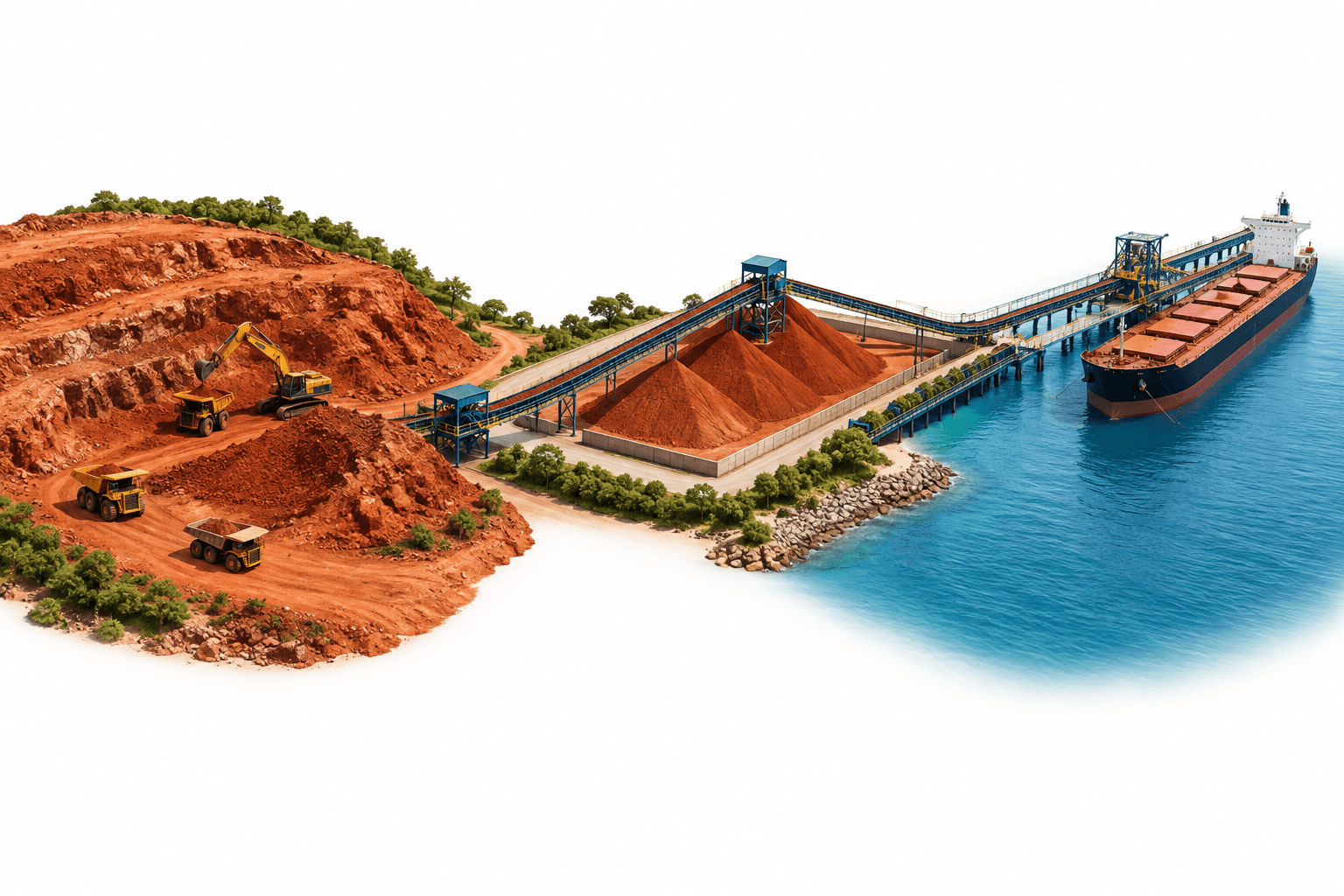
Kangwinan will establish a new production centre 15 kilometres south-east of Rio Tinto's Amrun mine on Western Cape York Peninsula. A 15-kilometre conveyor will carry ore to expanded stockyards and the existing Amrun wharf.
The wharf will be expanded to accommodate larger capesize vessels. Rio Tinto expects that change to improve supply-chain efficiency and reduce freight costs, making the use of existing infrastructure a central feature of the development.
Construction is expected to support more than 1,300 jobs. Over the longer term, the project will help sustain the company's residentially based workforce of around 1,500 people in the Western Cape.
Capital estimate includes previously approved early works
The US$1.9 billion estimate includes US$150 million for early works pre-approved in 2025, when initial activity began. Rio Tinto classifies the spending as replacement capital expenditure and has incorporated it into its mid-term capital guidance.
The company estimates an internal rate of return of approximately 22%, based on third-party market forecasts as of the fourth quarter of 2026. That figure is a project expectation dependent on forecast assumptions, not a realized return.
Environmental permits for Kangwinan were previously secured through the State and Commonwealth-approved South of Embley Environmental Impact Statement. Rio Tinto said it will continue working with Traditional Owners to minimise effects on cultural heritage, waterways and access routes.
Aurukun acquisition remains subject to approval
Separately, Rio Tinto agreed in September 2026 to acquire the adjacent Aurukun Bauxite Project from Glencore and Mitsubishi, which own 70% and 30%, respectively. That transaction remains subject to government approvals.
Rio Tinto expects the combined Amrun, Kangwinan and Aurukun operations to support Weipa well beyond the middle of this century. However, Aurukun's future development would require assessment of the appropriate environmental approvals pathway, consultation with government agencies and further work with Traditional Owners.
Conclusion
The Kangwinan bauxite project is primarily a long-term supply replacement investment, with additional capacity at Weipa. The next scheduled milestone is the construction ramp-up in 2027, ahead of targeted first output in 2029.
Read More News
Disclaimer
This FinanceVelix article provides general information, not personalized financial, investment, legal, or tax advice. Market prices, interest rates and economic conditions can change; investments carry a risk of loss. Facts reflect the material available when published and may change. Check important information independently and consult a qualified professional when needed. Mentioning an asset, company, or service is not an endorsement.