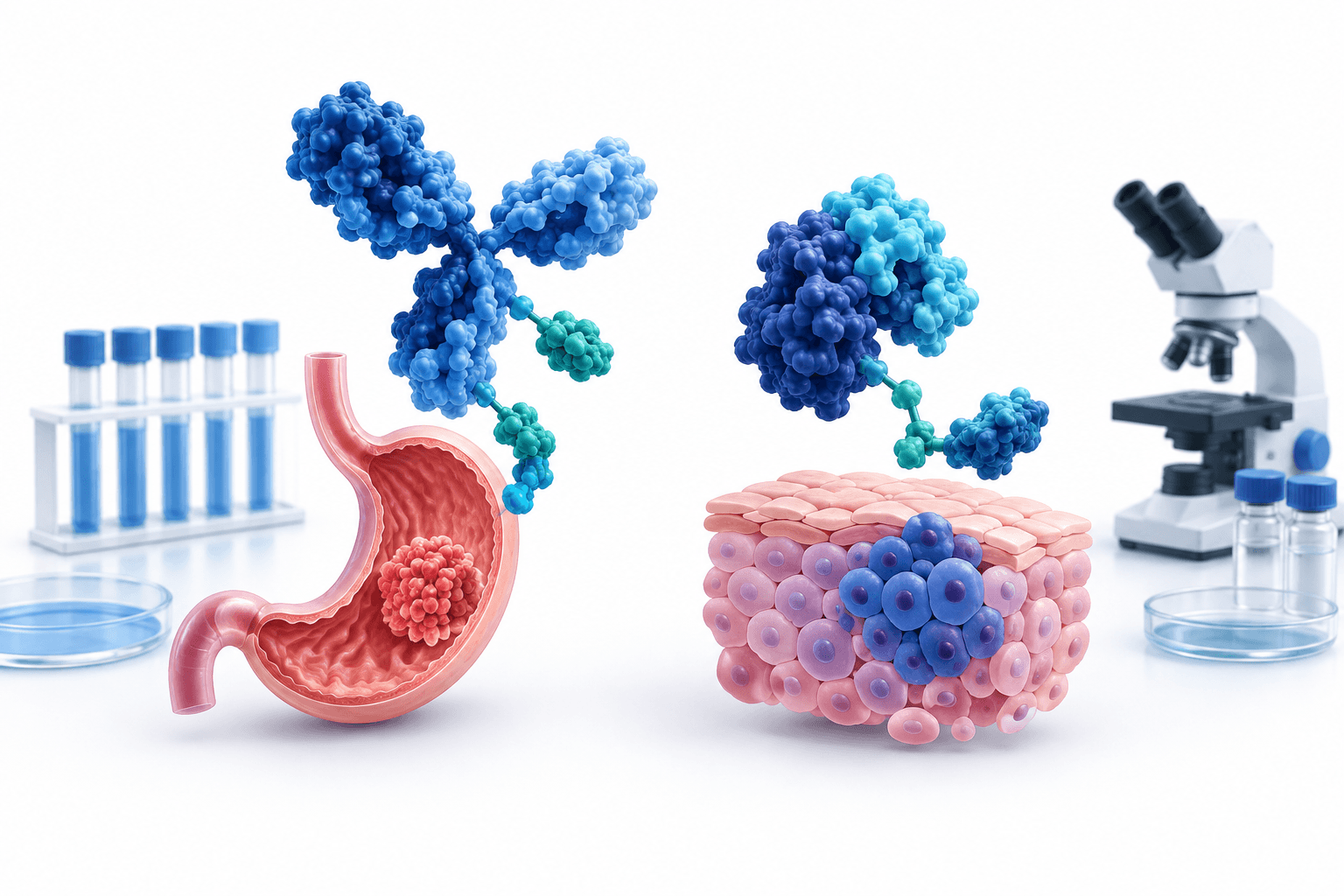
Antengene trial results announced on October 26, 2026, showed tumor responses in studies of two experimental cancer treatments presented at the European Society for Medical Oncology Congress. ATG-022 produced a 46.7% objective response rate in an evaluable gastric cancer cohort, while ATG-037 combined with pembrolizumab achieved a 21.7% response rate in evaluable patients with checkpoint inhibitor-resistant melanoma. The findings support further development but do not establish superiority over existing treatments.
Key Takeaways
- ATG-022’s highlighted Phase II cohort had median progression-free survival of 5.6 months; median overall survival was not yet reached.
- ATG-037 plus pembrolizumab produced five responses among 23 evaluable melanoma patients, including one complete response.
- China has authorized the pivotal CLINCH-3 trial of ATG-022, with 1.8 mg/kg recommended as the study dose.
Table of Contents
- Antengene trial results highlight ATG-022 response and safety
- ATG-037 combination shows activity in resistant melanoma
- Pivotal testing is the next step for ATG-022
- Conclusion
Antengene trial results highlight ATG-022 response and safety
Antengene’s ESMO 2026 clinical update described results from CLINCH, a Phase I/II study of the Claudin 18.2-targeting antibody-drug conjugate ATG-022. The Phase II expansion enrolled patients with advanced gastric or gastroesophageal junction adenocarcinoma whose tumors tested positive for CLDN18.2.
The expansion had treated 82 patients in Australia and China by October 12, 2026. The presentation focused on the 1.8 mg/kg cohort, which included 31 patients, of whom 30 were evaluable for efficacy. The objective response rate was 46.7%, and the disease control rate, which also includes stable disease, was 86.7%.
Median progression-free survival was 5.6 months. Median overall survival had not been reached after median follow-up of 17.4 months, while estimated survival at 18 months was 54.8% in the intention-to-treat population. An unreached median means the survival data remain incomplete, not that a survival advantage over another treatment has been demonstrated.
Grade 3 or higher treatment-related adverse events occurred in 25.8% of the cohort. Serious treatment-related adverse events affected 12.9%, and the same percentage experienced treatment interruptions because of treatment-related events.
| Item | Details |
|---|---|
| ATG-022 presentation | Poster 2886P, presented October 25, 2026. |
| ATG-022 expansion eligibility | CLDN18.2-positive tumors, defined as IHC 1+ in at least 1% of cells. |
| ATG-037 presentation | Poster 2087P, presented October 24, 2026. |
| STAMINA-01 dosing | ATG-037 at 60–600 mg twice daily, with pembrolizumab at 200 mg every three weeks. |
ATG-037 combination shows activity in resistant melanoma
The Phase Ib/II STAMINA-01 update evaluated the oral CD73 inhibitor ATG-037 with pembrolizumab in melanoma that had resisted checkpoint inhibitor treatment. By the April 28, 2026, cutoff, 25 patients had received the combination.
Among 23 evaluable patients, investigators recorded one complete response and four partial responses, yielding an objective response rate of 21.7%. Disease control reached 95.6%. In a subgroup with high CD73 expression on tumor or immune cells, four of 12 patients responded, or 33.3%.
Median progression-free survival was 4.4 months, with a 95% confidence interval of 3.7 to 11.9 months. Median duration of response had not been reached, and one patient with cutaneous melanoma had an ongoing complete response exceeding 167 weeks.
Treatment-related adverse events occurred in 52% of patients. One patient, representing 4%, experienced a Grade 3 treatment-related event: diarrhea. The most common treatment-related events of any grade were diarrhea, rash and itching.
Pivotal testing is the next step for ATG-022
Antengene said China’s National Medical Products Administration had granted investigational new drug approval for CLINCH-3, the pivotal Phase III trial of ATG-022. The recommended dose is 1.8 mg/kg. Authorization to conduct the study is distinct from approval to market the medicine.
The company is also conducting CLINCH-2, which evaluates ATG-022 with standard chemotherapy and an anti-PD-1 antibody as first-line treatment in CLDN18.2-positive disease.
The presented cohorts are small, and the disclosed results do not include control-group comparisons. The two programs also involve different cancers, treatment combinations and patient populations, so their response rates should not be interpreted as a head-to-head comparison.
Conclusion
The Antengene trial results add efficacy and safety data for two investigational oncology programs. The next development milestones are progress in pivotal CLINCH-3 testing and further CLINCH-2 combination results, which Antengene said it would present at future international scientific congresses.
Read More News
Disclaimer
This FinanceVelix article provides general information, not personalized financial, investment, legal, or tax advice. Market prices, interest rates and economic conditions can change; investments carry a risk of loss. Facts reflect the material available when published and may change. Check important information independently and consult a qualified professional when needed. Mentioning an asset, company, or service is not an endorsement.