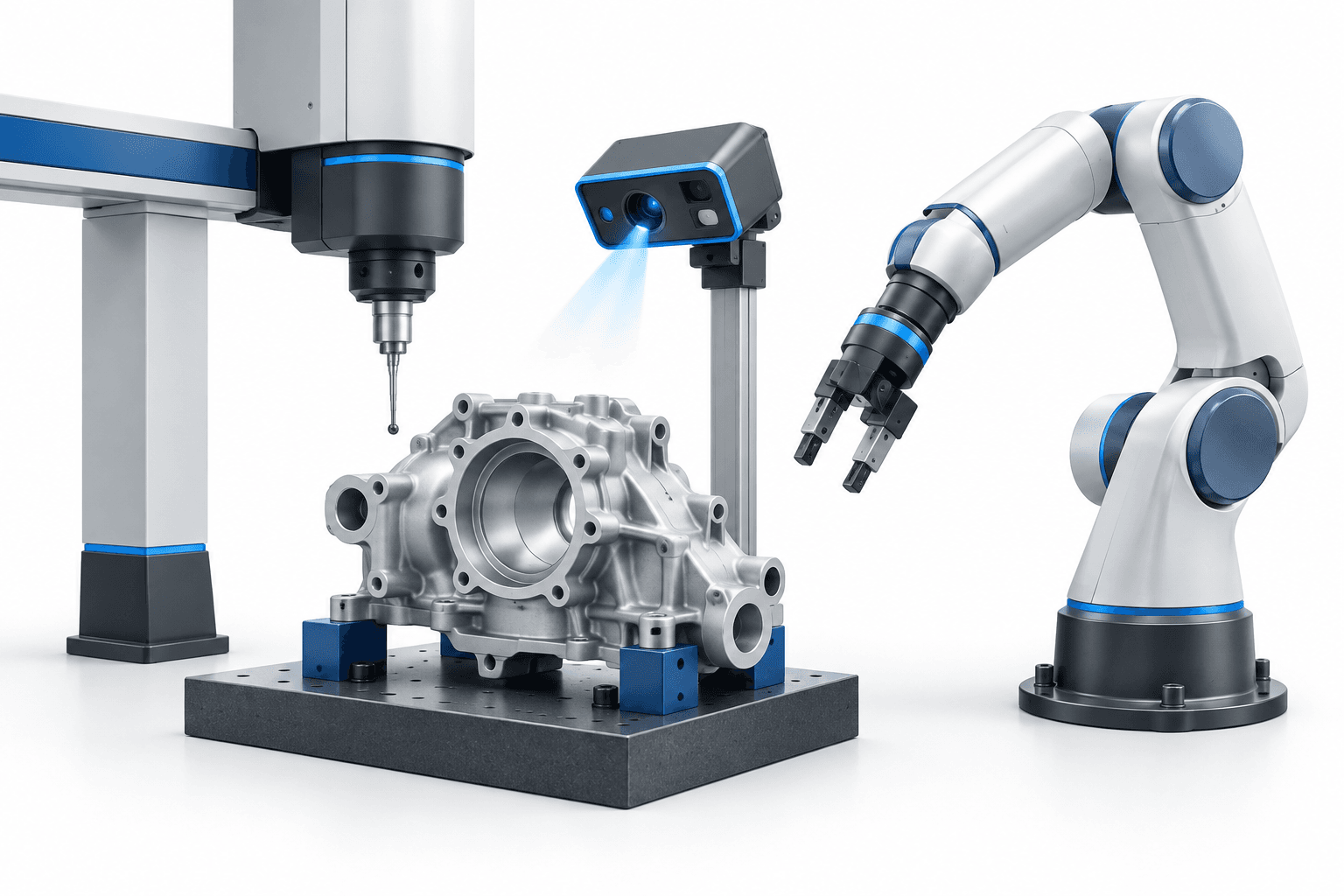
Hexagon earnings for the third quarter of 2026 showed organic growth accelerating to 13%, its highest level in five years, as all business areas expanded. In its October 23 earnings discussion, the measurement technology company reported net sales of €1.05 billion and a higher EBIT AC margin excluding robotics, while outlining acquisition-related margin pressure and rising investment in humanoid robots.
Key Takeaways
- Organic growth reached 13%, led by Autonomous Solutions and Manufacturing Intelligence.
- The EBIT AC margin excluding robotics rose to 25.3%, while quarterly net debt declined.
- Pending acquisitions would increase leverage, and management expects robotics spending to rise further in 2027.
Table of Contents
- Hexagon earnings combine faster growth with stronger margins
- Defense and manufacturing demand lead an uneven recovery
- Pending acquisitions would lift revenue and leverage
- AEON commercialization brings a larger investment commitment
- Conclusion
Hexagon earnings combine faster growth with stronger margins
Net sales increased by €73 million from a year earlier. Sensor sales grew 20%, while the gross margin remained around 62%, broadly unchanged from the third quarter of 2025.
EBIT AC excluding robotics reached €265 million, with its margin rising to 25.3% from 23.1%. On a like-for-like basis excluding one-off items, the company put the margin improvement at 450 basis points. Its cost-saving program contributed €18.5 million in the quarter.
Robotics spending partly tempered the improvement. The EBITDA-C margin including robotics rose to 24% from 22.5%, despite quarterly robotics investment increasing to €13 million from €6 million a year earlier.
Cash conversion was 82%. Operating cash flow was €208 million before tax and €119 million after taxes, interest and non-recurring items. Net debt fell to €489 million from €532 million during the quarter.
| Item | Details |
|---|---|
| EMEA organic growth | 17% in Q3 2026 |
| China organic growth | 15% in Q3 2026 |
| Rest of Asia organic growth | 14% in Q3 2026 |
| Americas organic growth | 6% in Q3 2026 |
Defense and manufacturing demand lead an uneven recovery
Autonomous Solutions delivered 23% organic growth, its strongest quarter, with an EBITDA-C margin of 31.5%. Chief Executive Anders Svensson attributed much of the growth to demand for anti-jamming antennas, particularly in Europe, alongside defense, aviation and marine applications.
Manufacturing Intelligence grew 16% organically, supported by general manufacturing, aerospace and electronics. Infrastructure & Geospatial grew 4%, compared with 1% a year earlier.
Svensson said Manufacturing Intelligence's order intake broadly matched sales, while orders exceeded sales in the other two business areas. He saw stable demand in stronger end markets heading toward 2027, but did not expect a near-term recovery in agriculture, automotive or construction.
Regional growth was positive across the group. The Americas comparison was held back by a large defense order in the prior-year quarter; management said it had not observed a slowdown in North American demand.
Pending acquisitions would lift revenue and leverage
Hexagon expected the Waygate, Guidance Marine and Rock Science acquisitions to close in the fourth quarter of 2026. Waygate, the largest of the three businesses by disclosed revenue, generated about €631 million in sales in 2025 at an EBIT margin of roughly 10%.
Management expects Waygate initially to dilute the group's EBIT AC margin by approximately 150 basis points and Manufacturing Intelligence's margin by about 300 basis points. Svensson said an improvement plan existed, but Hexagon would not disclose a timetable before working through it with the acquired business.
On a pro forma last-12-month basis including the acquisitions, revenue would rise to approximately €4.7 billion from €4.0 billion, and EBITDA-C to about €1 billion from €0.9 billion. Net debt-to-EBITDA would increase to roughly 1.4 times from 0.3 times, remaining below the company's stated 2.5-times threshold. Those figures describe the combined businesses, not completed quarterly results.
AEON commercialization brings a larger investment commitment
Hexagon's industrial humanoid robot launch in June 2025 introduced AEON for applications including manipulation, inspection and reality capture, with Schaeffler and Pilatus named as pilot partners. That earlier announcement establishes the project's industrial scope rather than its latest financial outlook.
In the October 2026 earnings discussion, Svensson said annual investment would reach $45 million–$50 million in 2026 and would likely rise to $70 million–$80 million in 2027, although the latter amount was not yet confirmed.
Management expects revenue to begin in 2027 through robot sales and robot-as-a-service arrangements. Svensson placed expected break-even around 2031, making robotics a longer-term commercialization effort rather than a near-term profit contributor.
Conclusion
The next milestones are the expected fourth-quarter acquisition closings and AEON's planned commercialization in early 2027. Both will test Hexagon's ability to preserve stronger operating profitability while expanding its business portfolio and robotics investment.
Read More News
Disclaimer
This FinanceVelix article provides general information, not personalized financial, investment, legal, or tax advice. Market prices, interest rates and economic conditions can change; investments carry a risk of loss. Facts reflect the material available when published and may change. Check important information independently and consult a qualified professional when needed. Mentioning an asset, company, or service is not an endorsement.


Comments
Be respectful. No spam, impersonation or private credentials. Ordinary posts and comments appear immediately; suspicious links are held for review.
Please wait…