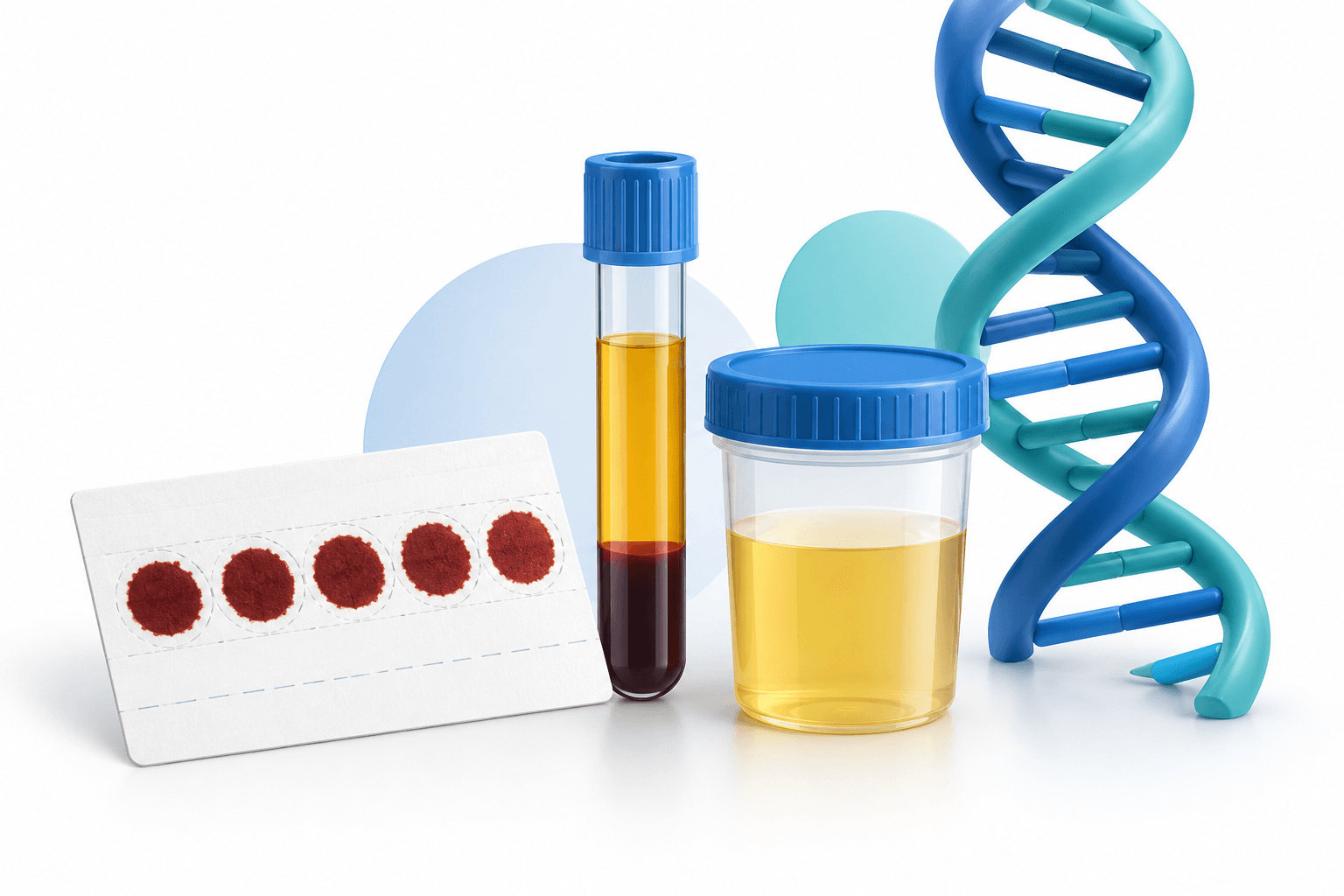
Niki BioSolutions said on October 26, 2026, that its subsidiary DiamiR Biosciences received New York State approval to add dried blood spots, plasma and urine to its APOE genotyping test. The approval, dated October 23, expands the test’s permitted specimen types rather than changing statewide laboratory rules.
Key Takeaways
- The test previously received approval for blood, buccal swab, saliva and tissue specimens in August 2025.
- The additional sample types could simplify remote collection and allow genetic and biomarker testing to share a plasma specimen.
- The authorization is a completed test-specific approval, not a proposed regulatory change.
What changes for APOE genotyping
The New York State Department of Health’s Clinical Laboratory Evaluation Program approved dried blood spots collected on FTA cards, plasma and urine as additional specimens, Niki said. DiamiR offers the test through its CLIA-certified, College of American Pathologists-accredited laboratory.
The test identifies genetic variants associated with Alzheimer’s disease risk and other conditions. The newly approved samples broaden how specimens can be collected; the announcement concerns specimen compatibility, not a new treatment or a change in what the test measures.
Niki said the expanded approval allows it to offer testing across the broader range of samples to licensed healthcare providers in New York and nationwide.
How New York’s approval requirements apply
New York’s assay modification requirements treat a change in specimen type as a change in an approved test’s intended use. The state’s guidance calls for modification submissions and risk assessment, with explicit departmental approval required before patient testing where determined by the risk assignment.
Those requirements explain why adding samples involves regulatory review even when a test already has approval. The state guidance describes the general framework; Niki’s announcement supplies the details of DiamiR’s October 23 authorization.
Potential collection and laboratory benefits
Niki said dried blood spots and urine may be useful in decentralized or remote-collection settings, supporting at-home or point-of-care sample collection and ambient-temperature shipping without phlebotomy or cold-chain logistics.
Plasma compatibility could also allow APOE testing to use the same specimen type as Niki’s microRNA-based brain health assay. President and Chief Operating Officer Alidad Mireskandari said this could eliminate a separate collection and help integrate genetic and biomarker testing.
These are potential workflow benefits, not reported commercial results. At-home specimen collection also remains distinct from performing the test at home: the samples would be sent to a laboratory for testing.
Read More News
Disclaimer
This FinanceVelix article provides general information, not personalized financial, investment, legal, or tax advice. Market prices, interest rates and economic conditions can change; investments carry a risk of loss. Facts reflect the material available when published and may change. Check important information independently and consult a qualified professional when needed. Mentioning an asset, company, or service is not an endorsement.


Comments
Be respectful. No spam, impersonation or private credentials. Ordinary posts and comments appear immediately; suspicious links are held for review.
Please wait…