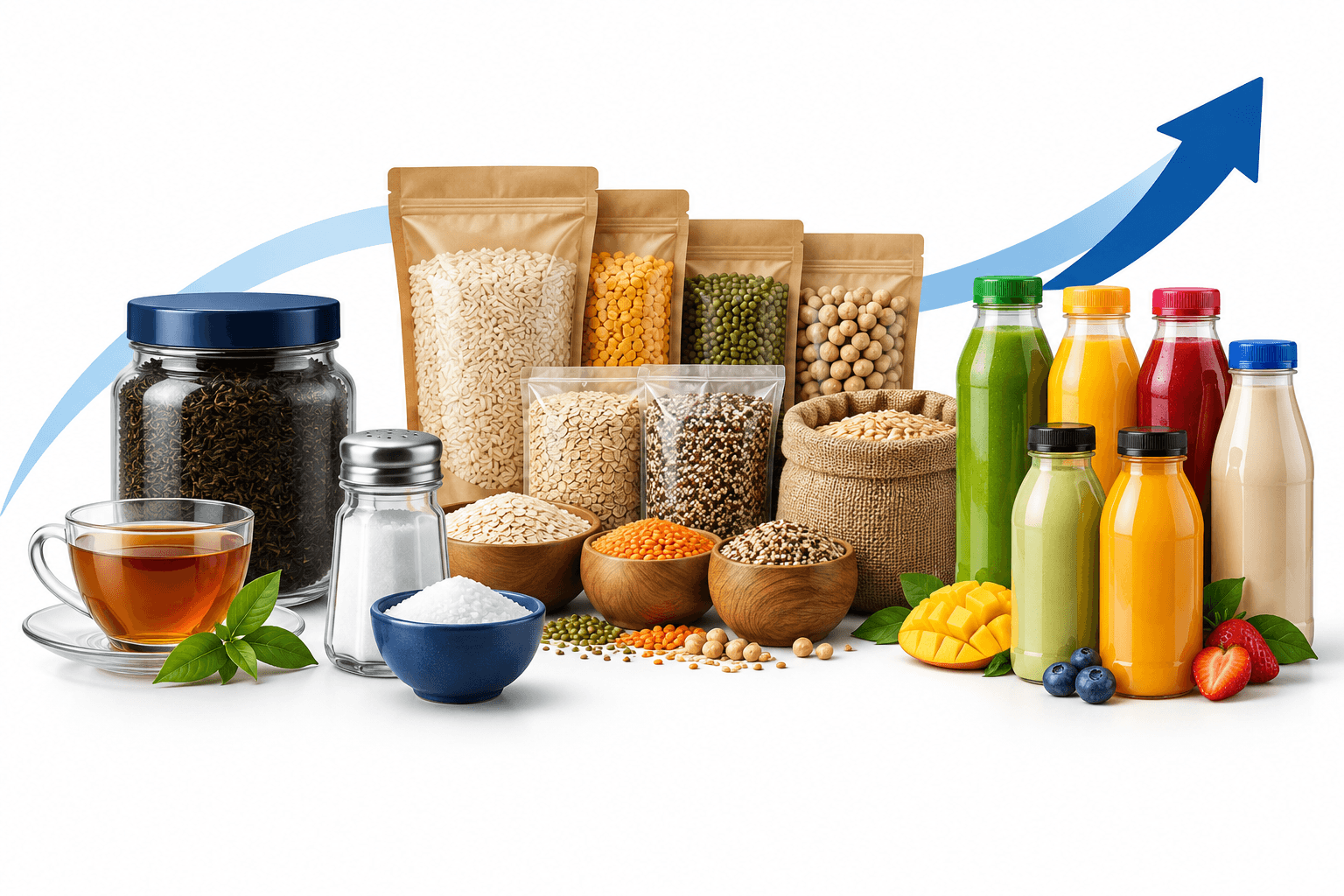
Tata Consumer earnings for July–September 2026 showed consolidated net profit attributable to shareholders rising 16% year on year to ₹469.30 crore. Packaged foods, premium salt and ready-to-drink beverages supported growth despite sluggish tea demand and higher domestic input costs. Standalone profit moved in the opposite direction, falling as exceptional charges weighed on earnings.
Key Takeaways
- Consolidated revenue rose 14%, supported by 11% underlying volume growth in the India-branded business.
- Exceptional charges of ₹64.37 crore weighed on standalone profit, although profit before exceptional items and tax increased.
- Newer growth businesses expanded 40%, increasing their share of India business revenue to 38%.
Tata Consumer earnings show stronger consolidated profitability
Consolidated revenue from operations increased to ₹5,661.13 crore from ₹4,965.90 crore a year earlier. Net profit attributable to shareholders rose from ₹404.46 crore, while earnings before interest, taxes, depreciation and amortization increased 18% to ₹794 crore. The EBITDA margin widened to 14% from 13.6%.
The July–September reporting period is the second quarter of FY2026–27, the fiscal quarter identified in the company’s Q2 FY2026–27 board-meeting notice listing.
India business revenue rose 17.4% to ₹3,666.13 crore, but segment operating profit grew more slowly, increasing 13.9% to ₹408.54 crore. Inflation in key inputs narrowed the segment’s operating margin to 11.1% from 11.5%, contrasting with the improvement in the consolidated EBITDA margin.
Managing Director and CEO Sunil D’Souza said the company had delivered its second consecutive quarter of double-digit revenue growth in FY27, backed by strong underlying volume growth in India.
| Item | Details |
|---|---|
| Salt | Revenue increased 15% year on year in July–September 2026. |
| Tata Sampann | Revenue increased 57% year on year. |
| Ready-to-drink beverages | Revenue increased 47% year on year. |
Exceptional charges explain the standalone profit decline
Standalone net profit fell 14.9% to ₹242.81 crore from ₹285.19 crore, even as revenue increased 17% to ₹4,207.50 crore.
The standalone figures included ₹64.37 crore in exceptional charges, including a ₹57-crore fair-value loss on a financial instrument held in an associate. Profit before exceptional items and tax rose 8.9% to ₹418.91 crore, showing that the reported net-profit decline did not reflect a fall in that underlying earnings measure.
For April–September 2026, consolidated profit attributable to shareholders increased 21.3% to ₹896.28 crore and revenue rose 13% to ₹11,010.01 crore. Standalone profit declined 4.2% over the same six months despite 15.6% revenue growth.
Newer categories gain weight as tea demand stays subdued
The company’s growth businesses generated ₹1,438 crore in revenue, up 40%, lifting their share of India business revenue from 32% to 38%. The shift shows newer food and beverage categories contributing more alongside the established tea and salt operations.
Tea volumes were flat, and India tea and coffee revenue declined 1%. Salt performed more strongly, with 9% volume growth and a 17% increase in premium salt volumes. Ready-to-drink beverages recorded 34% volume growth.
Capital Foods and Organic India grew 15%, with domestic sales rising 24%, although overseas shipments were disrupted.
International profit improves despite weaker underlying sales
International revenue increased 7% in reported terms but declined 2% in constant currency, reflecting weak UK tea demand. The distinction matters: reported sales growth did not translate into growth after removing currency effects.
International segment operating profit nevertheless rose 23.2% to ₹182.10 crore from ₹147.76 crore, helping offset domestic margin pressure.
Tata Starbucks revenue increased 15%. Seven net new outlets brought its network to 505 stores across 81 cities.
Read More News
Disclaimer
This FinanceVelix article provides general information, not personalized financial, investment, legal, or tax advice. Market prices, interest rates and economic conditions can change; investments carry a risk of loss. Facts reflect the material available when published and may change. Check important information independently and consult a qualified professional when needed. Mentioning an asset, company, or service is not an endorsement.




Comments
Be respectful. No spam, impersonation or private credentials. Ordinary posts and comments appear immediately; suspicious links are held for review.
Please wait…