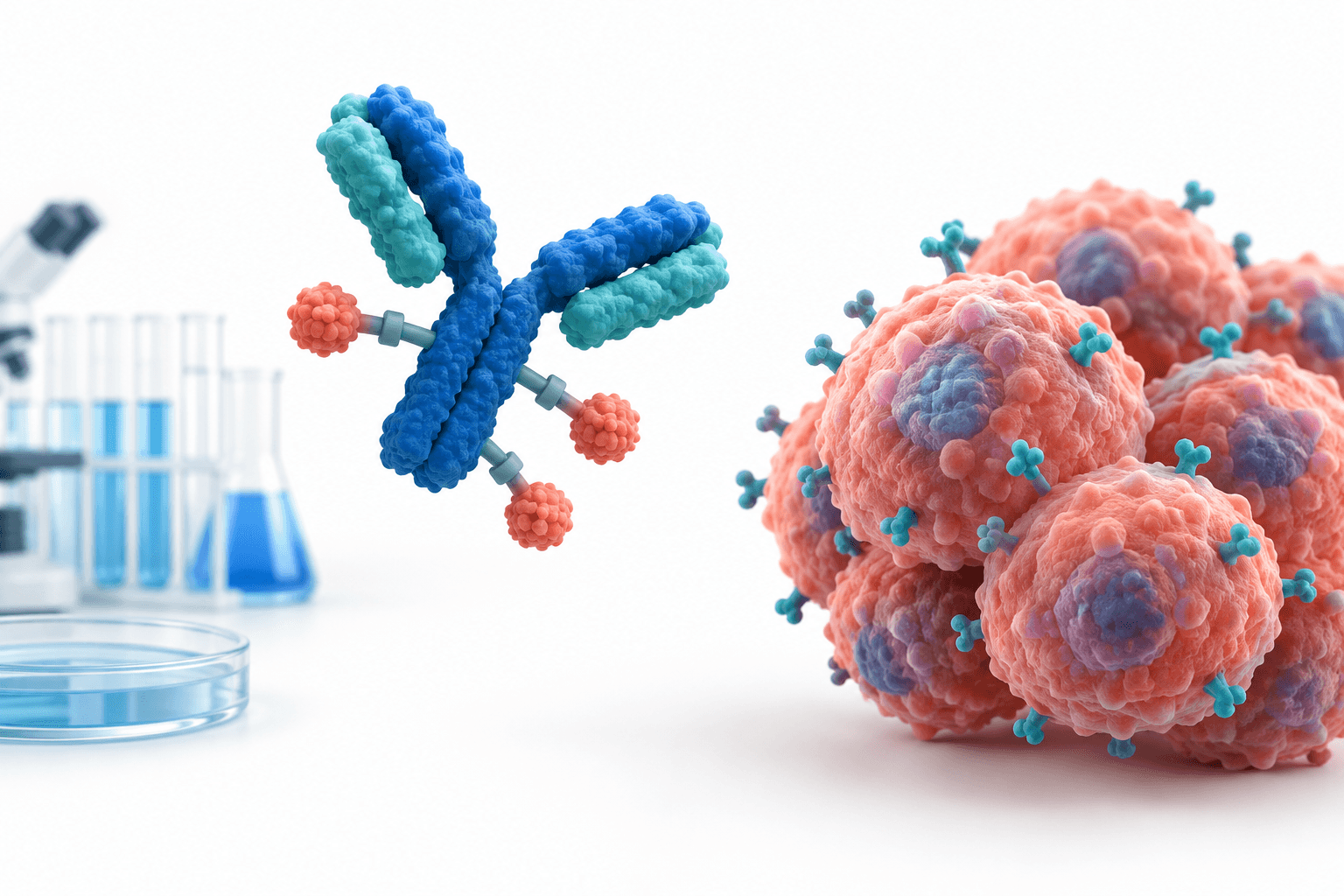
Merck announced on October 26, 2026, that its Phase 3 Sac-TMT trial reduced the risk of death by 32% compared with chemotherapy in certain patients with advanced or recurrent endometrial cancer. The FDA has accepted the investigational treatment’s application for priority review, setting a target decision date of June 15, 2027.
Key Takeaways
- TroFuse-005 showed improvements in both overall survival and progression-free survival after prior chemotherapy and immunotherapy.
- Severe treatment-related adverse events were more frequent with sac-TMT than with the chemotherapy comparator.
- FDA priority review advances the application but does not constitute approval.
Sac-TMT trial improves two survival measures
Merck’s TroFuse-005 Phase 3 results describe a randomized, open-label study of 776 patients whose cancer had previously been treated with platinum-based chemotherapy and anti-PD-1/L1 immunotherapy. The comparator was a physician’s choice of doxorubicin or paclitaxel.
At a prespecified interim analysis, sacituzumab tirumotecan, known as sac-TMT, significantly improved both primary endpoints: overall survival and progression-free survival. Alongside the 32% reduction in the risk of death, Merck reported a 41% reduction in the risk of disease progression or death.
Those figures describe relative risk reductions during follow-up, not percentage-point reductions in the share of patients who died or experienced progression. Median follow-up was 14.0 months.
The findings concern a specific previously treated patient population. They do not establish the drug’s effectiveness in all endometrial cancers or in earlier treatment settings.
| Item | Details |
|---|---|
| Any-grade treatment-related adverse events | 97.1% with sac-TMT versus 89.6% with chemotherapy. |
| Grade 3 or higher treatment-related adverse events | 54.4% with sac-TMT versus 41.4% with chemotherapy. |
| Treatment discontinuation | 3.1% with sac-TMT versus 4.9% with chemotherapy. |
Safety findings qualify the treatment benefit
Merck said no new safety signals emerged, but treatment-related adverse events of Grade 3 or higher were more common with sac-TMT. The most common severe clinical events included anemia, neutropenia and oral mucositis or stomatitis.
Treatment discontinuations were nevertheless less frequent in the sac-TMT group. Treatment-related adverse events led to death in 0.8% of patients, or three patients, in each group. Merck also said health-related quality of life was maintained over time with sac-TMT.
Priority review advances Merck’s partnered drug
Sac-TMT is an investigational TROP2-directed antibody-drug conjugate developed by Kelun-Biotech. Merck holds exclusive rights to develop, manufacture and commercialize it outside Greater China under the companies’ collaboration agreement.
The FDA application seeks approval for adults with endometrial cancer previously treated with platinum-containing chemotherapy and a PD-1 or PD-L1 inhibitor, separately or in combination. Priority review is a regulatory review status, not a determination that the treatment will be approved.
Merck’s broader sac-TMT development program includes 18 ongoing global Phase 3 trials across multiple tumor types. Those studies represent separate tests of the drug’s potential beyond the population evaluated in TroFuse-005.
Next milestone
The next confirmed regulatory milestone is the FDA’s June 15, 2027 target action date for the application in previously treated endometrial cancer.
Read More News
Disclaimer
This FinanceVelix article provides general information, not personalized financial, investment, legal, or tax advice. Market prices, interest rates and economic conditions can change; investments carry a risk of loss. Facts reflect the material available when published and may change. Check important information independently and consult a qualified professional when needed. Mentioning an asset, company, or service is not an endorsement.




Comments
Be respectful. No spam, impersonation or private credentials. Ordinary posts and comments appear immediately; suspicious links are held for review.
Please wait…