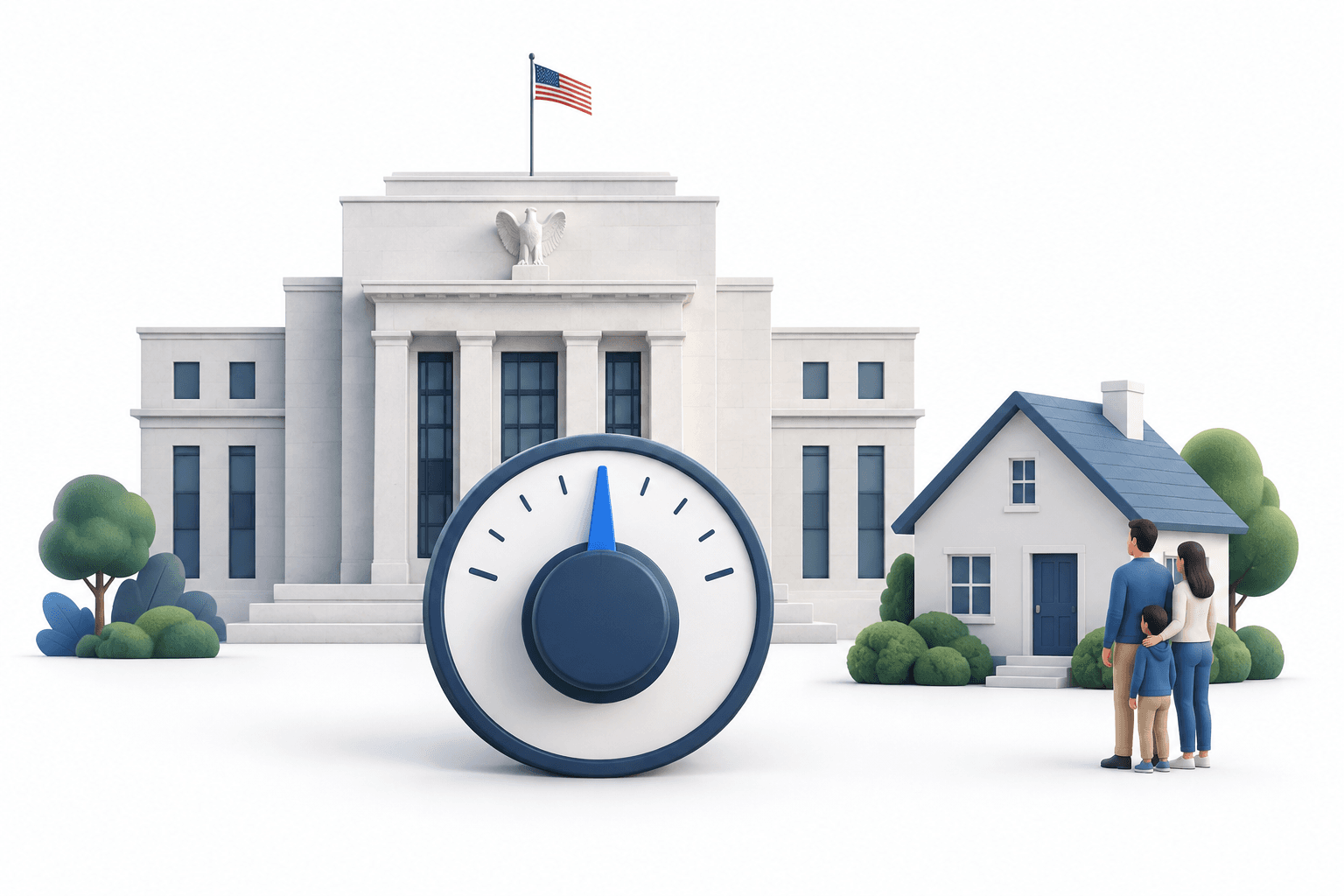
The Fed rate decision on October 28, 2026, is widely expected to leave the benchmark interest rate unchanged at around 3.9%. Investors will focus on the central bank’s inflation assessment, any dissenting votes and Chair Kevin Warsh’s remarks about future policy.
Key Takeaways
- Futures markets indicate little chance of an October rate increase after senior policymakers played down the prospect.
- Inflation has exceeded economists’ expectations for two consecutive months, while mortgage rates remain elevated.
- The meeting comes less than a week before US midterm elections and amid questions about the Fed’s independence.
Fed rate decision follows September increase
The Federal Open Market Committee meets on October 27 and 28 after unanimously raising rates in September. Financial markets initially considered a quarter-percentage-point increase in October following hotter-than-expected inflation data, but expectations have since shifted toward a hold.
Vice Chair Philip Jefferson has pointed to the sharp rise in longer-term market interest rates, suggesting policymakers need more time to assess financial conditions before their next move. Higher borrowing costs can restrain spending, but they also affect households and businesses.
Inflation and mortgage costs remain in focus
Inflation remains above the Fed’s 2% annual target. Rising fuel costs have also raised concerns that transportation expenses could be passed on to consumers through the prices of groceries, vehicles and other goods.
The average rate on a 30-year mortgage reached a three-year high of 7.4% earlier in October before easing to 7.32% in the week before the meeting. It was just under 6.2% a year earlier. Oxford Economics estimates that this year’s increase has put homeownership out of reach for another 5 million households.
Persistent inflation could keep further tightening under consideration in the coming months, though an increase at the December meeting is not a confirmed decision.
Guidance and dissent could shape the response
Warsh has expressed reservations about forward guidance, arguing that advance signals about policy can constrain the Fed’s ability to respond to changing conditions. Investors will examine whether his comments reinforce recent signals from other senior policymakers.
The October decision could also draw dissenting votes. Cleveland Fed President Beth Hammack and Dallas Fed President Lorie Logan are among officials considered most likely to favor an increase; both have expressed concern that policy may not be tight enough to slow activity and inflation.
Independence remains under scrutiny
The Fed’s September increase came despite President Donald Trump’s preference for lower borrowing costs. That decision eased some concerns about whether Warsh would prioritize the White House’s preferences over the Fed’s inflation mandate.
Questions remain about communications between Trump and Warsh. Trump has said he spoke with the chair before the September meeting, while Warsh declined to discuss their communications at his subsequent news conference. Trump has also renewed efforts to remove Fed Governor Lisa Cook after the Supreme Court blocked an earlier attempt in June.
Read More News
Disclaimer
This FinanceVelix article provides general information, not personalized financial, investment, legal, or tax advice. Market prices, interest rates and economic conditions can change; investments carry a risk of loss. Facts reflect the material available when published and may change. Check important information independently and consult a qualified professional when needed. Mentioning an asset, company, or service is not an endorsement.



Comments
Be respectful. No spam, impersonation or private credentials. Ordinary posts and comments appear immediately; suspicious links are held for review.
Please wait…