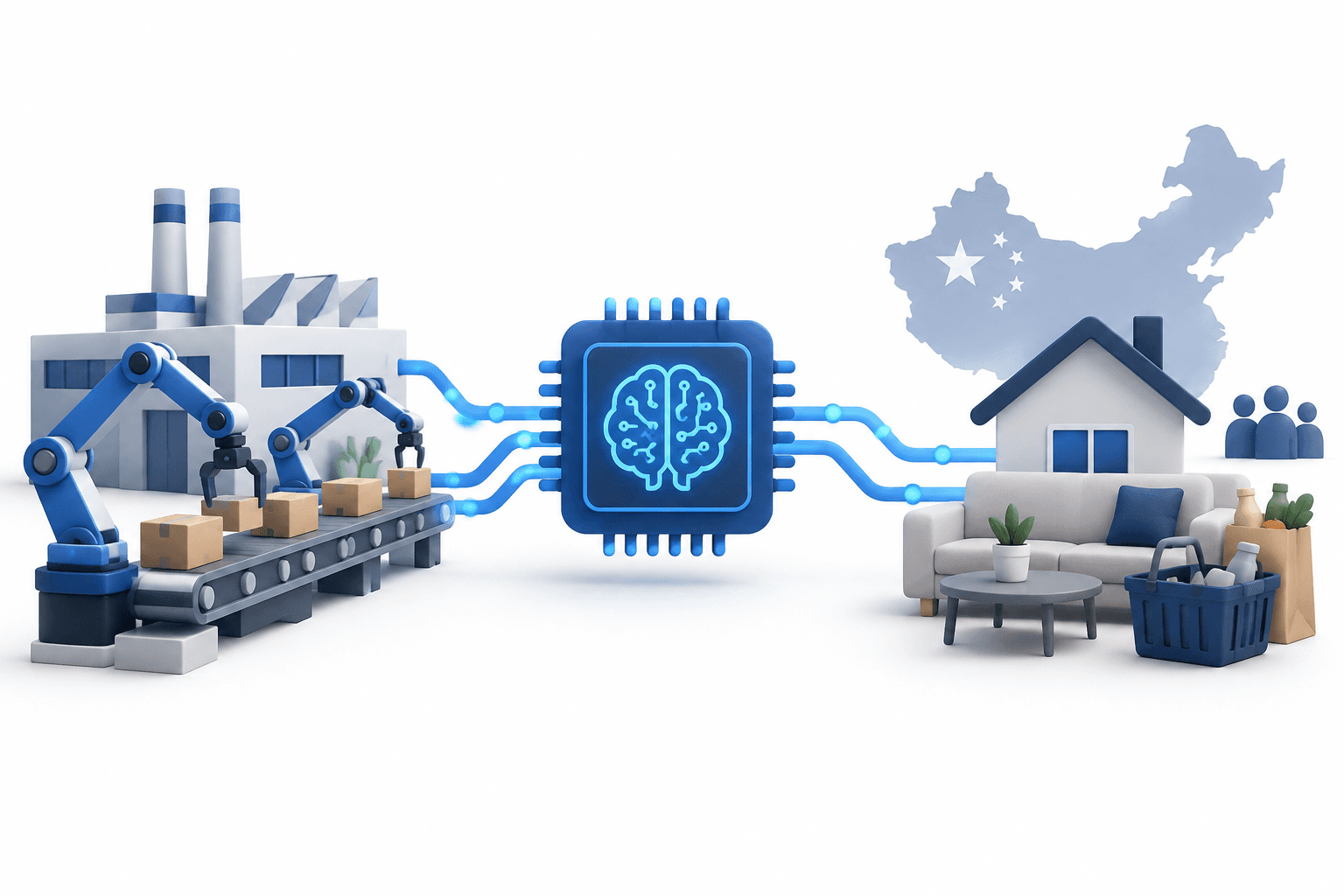
China AI investment is spreading into more industries, but weak domestic demand and limited commercial returns could prevent it from delivering broad economic gains in the near term, Fitch Ratings said on October 27, 2026.
Key Takeaways
- Fitch expects wider productivity and growth benefits from AI to emerge gradually.
- Low deployment costs could encourage adoption, while competition may squeeze providers’ pricing power.
- The agency sees a risk that AI investment will benefit stronger sectors more than businesses exposed to weak demand.
China AI investment extends beyond computing
Fitch said spending on AI now reaches beyond chips and computing infrastructure into areas including automation, electricity generation, enterprise software and industrial uses.
The expansion comes as China looks for growth beyond property, investment and credit expansion. The State Council’s AI+ initiative aims to integrate the technology across industries, services, consumer activity and the public sector.
Much of the current activity, however, remains focused on infrastructure, hardware, automation and their supply chains. Across much of the AI value chain, businesses are still at an early stage of turning the technology into revenue.
Lower costs do not guarantee returns
Fitch said cheaper deployment and the availability of open-weight models could help AI reach more users. At the same time, intense competition could make it harder for companies to charge higher prices and earn returns on their investments.
In Fitch’s comparison, Chinese providers generally have strengths in deployment costs, open-weight model availability and appeal to cost-sensitive markets. US providers are generally stronger in frontier model performance, global cloud infrastructure, enterprise penetration, pricing power and monetization visibility.
Domestic weakness could widen the divide
Exports, industrial production and strategic investment continue to support Chinese economic activity, Fitch said. Household deleveraging, subdued confidence and weak private investment are constraining momentum.
The agency warned that AI could reinforce that imbalance: policy-supported and export-oriented sectors may benefit from investment, while businesses exposed to weak domestic demand and property stress could face more difficult credit conditions.
Read More News
Disclaimer
This FinanceVelix article provides general information, not personalized financial, investment, legal, or tax advice. Market prices, interest rates and economic conditions can change; investments carry a risk of loss. Facts reflect the material available when published and may change. Check important information independently and consult a qualified professional when needed. Mentioning an asset, company, or service is not an endorsement.



Comments
Be respectful. No spam, impersonation or private credentials. Ordinary posts and comments appear immediately; suspicious links are held for review.
Please wait…