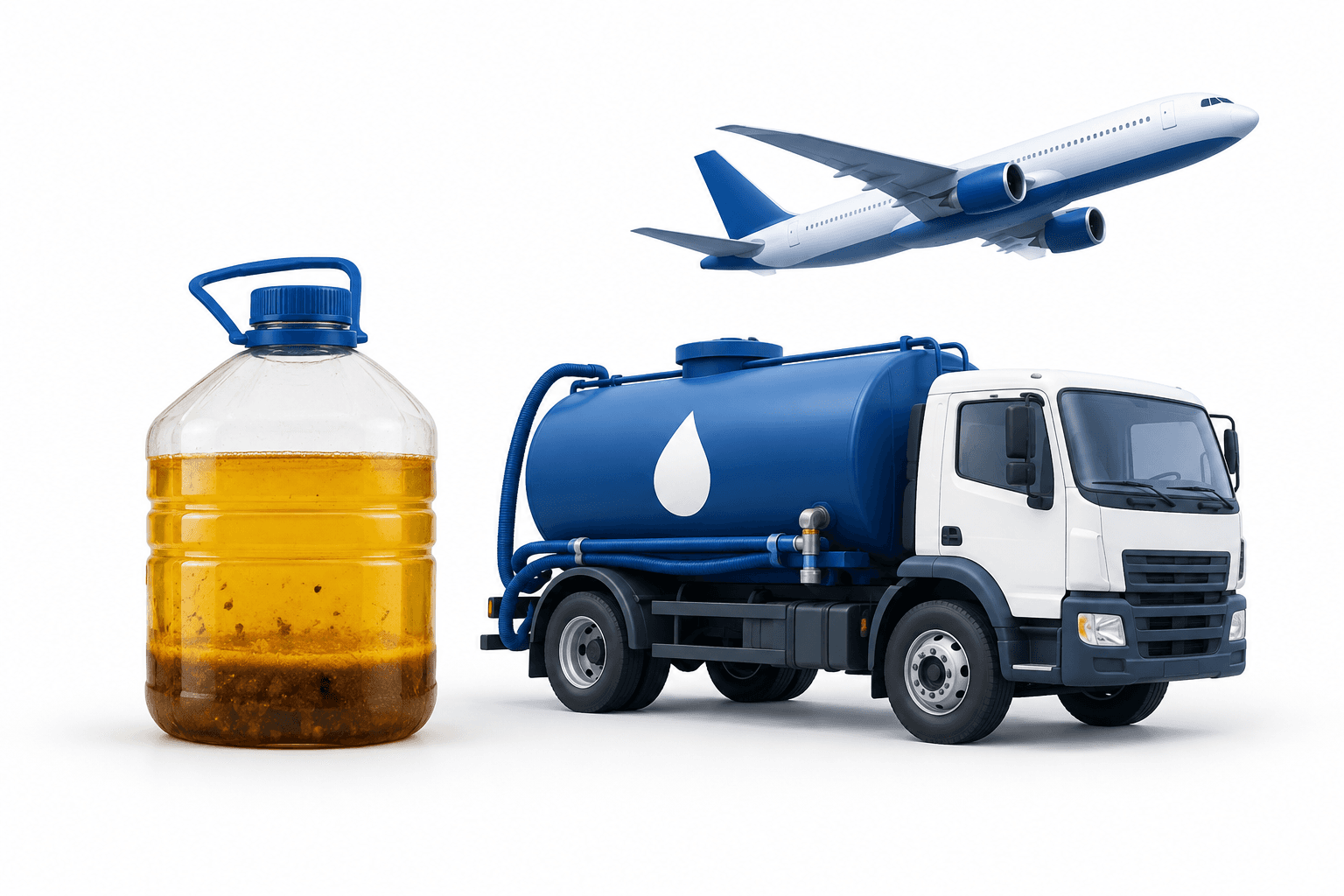
Asian seaborne used cooking oil benchmark prices had risen about 10% in 2026 as of October 27, after hitting a record in May, according to Argus Media. In India, refiners are seeking supplies of the waste oil as the country prepares to introduce a sustainable aviation fuel requirement for international flights.
Key Takeaways
- Hindustan Petroleum and Bharat Petroleum have sought a combined 83,000 tons of used cooking oil in tenders closing in October.
- India’s international flights are due to use fuel containing 1% sustainable aviation fuel from January 2027.
- Collectors face a fragmented supply chain and difficulties verifying that oil sold as waste has actually been used.
Used cooking oil demand reaches scattered kitchens
Indian Oil, Hindustan Petroleum and Bharat Petroleum are seeking used cooking oil that can be converted into biofuel. The two latter companies’ tenders close in October 2026; Indian Oil issued a smaller tender earlier in the year. The tender volumes are requests for supply, not confirmed purchases.
India produces about 3 million tons of used oil annually, but the country has no centralized collection system. Only about 5% is collected, according to India’s SAF Association. Gathering larger volumes requires collectors to visit restaurants, hotels and food factories individually.
The benchmark price increase is an observed market move. Although refiners are seeking more supply and collection is difficult, the available information does not establish a specific cause for the rise.
Aviation fuel requirement approaches
From January 2027, international flights departing India will need to use fuel containing 1% sustainable aviation fuel, or SAF. The requirement is set to rise to 5% by 2030, alongside a 5% biodiesel target for road transport.
S&P Global expects India’s SAF demand to reach 250,000 tons by the end of the decade. That is a forecast, rather than current consumption.
Collectors expand while traceability remains a challenge
M11 Energy Transition Chief Executive Mannan Khan said the company has 300 collectors in 24 cities gathering about 1,000 tons a month. He plans to double its depots to 50 by the end of 2026 and add households, food manufacturers and industrial kitchens to its routes.
Münzer Bharat collects about 900 tons a month across more than 20 Indian cities. Its head of trading, Jatin Udwadia, said organized suppliers have a role in helping India meet its SAF requirement.
Collectors document their purchases to help establish that the oil is genuinely used. Verification can become harder as material moves through the supply chain, particularly when waste oil is worth more than fresh oil.
Next milestone
The next confirmed milestone is the January 2027 start of India’s 1% sustainable aviation fuel requirement for departing international flights.
Read More News
Disclaimer
This FinanceVelix article provides general information, not personalized financial, investment, legal, or tax advice. Market prices, interest rates and economic conditions can change; investments carry a risk of loss. Facts reflect the material available when published and may change. Check important information independently and consult a qualified professional when needed. Mentioning an asset, company, or service is not an endorsement.




Comments
Be respectful. No spam, impersonation or private credentials. Ordinary posts and comments appear immediately; suspicious links are held for review.
Please wait…