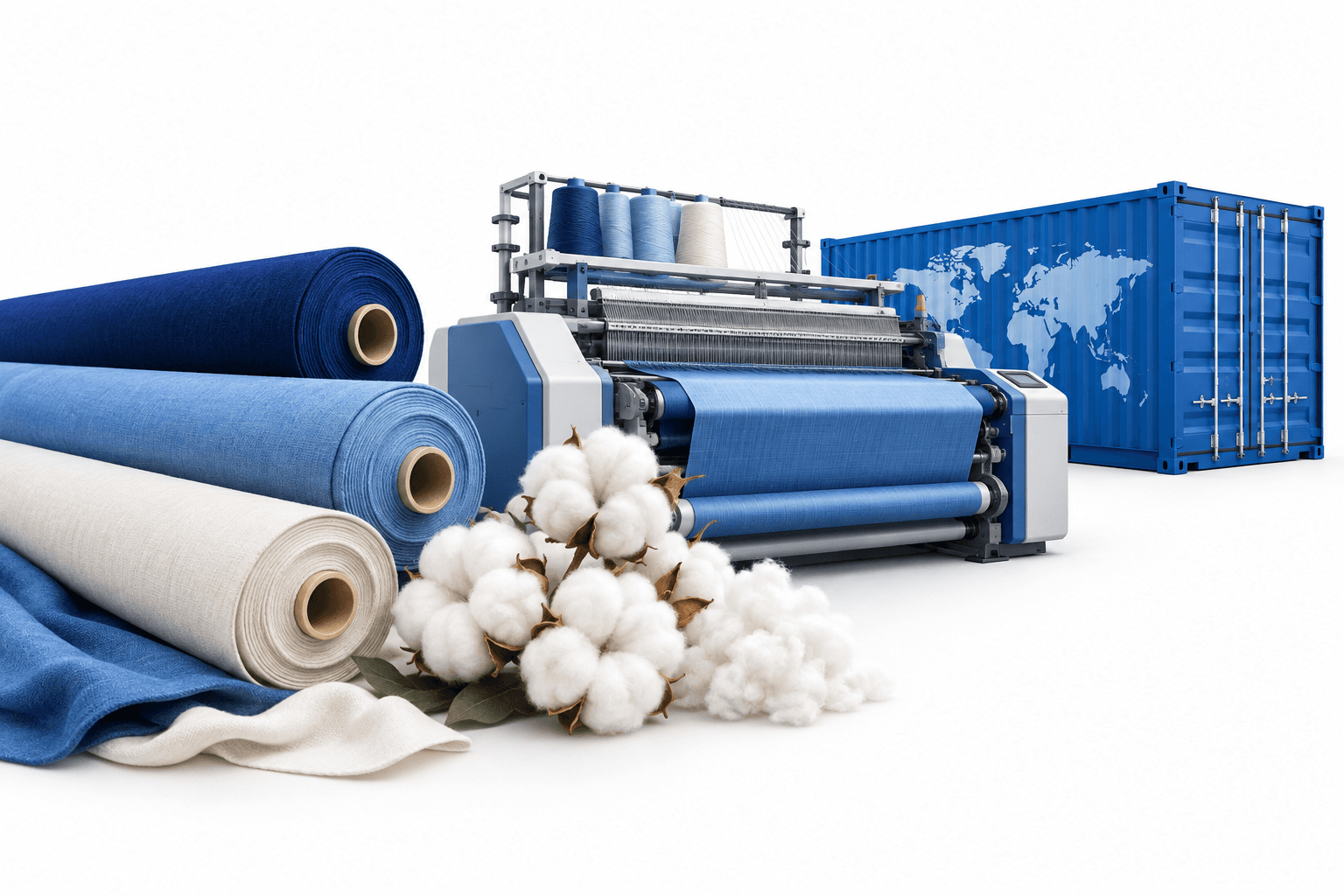
The India textile industry reached nearly $190 billion in FY2026 and is targeting $350 billion by 2030, according to a report by Rubix Data Sciences. Exports rebounded in the first five months of the following fiscal year, even as higher yarn prices and trade uncertainty put pressure on manufacturers.
Key Takeaways
- Textile exports, including handicrafts, rose 10.3% year on year in April–August 2026 after falling 2.7% in FY2026.
- Cotton yarn prices climbed from ₹250 per kilogram in early 2026 to roughly ₹400 in September.
- The government is considering a ₹400 billion textile modernization scheme; it has not been announced as approved.
India textile industry exports recover
Exports fell to $35.8 billion in FY2026, while imports rose 17.1% to $9.6 billion. India remained a net exporter, with outbound shipments worth nearly 3.7 times the value of imports.
Readymade garments accounted for 44% of exports and man-made fibre textiles for 15%. The United States was the largest destination, taking 31% of shipments, followed by the European Union at nearly 16%.
Manufacturers look beyond the US
Shipments to the US fell approximately 7% in FY2026, while deliveries to major European markets grew 9%. The report said trade dynamics shifted after the US introduced an additional 10% duty under Section 301 measures in July 2026 concerning forced-labour enforcement, while broader negotiations stalled.
Raymond Lifestyle plans to reduce the US share of its exports from 65% to between 55% and 60% within two years. Kitex Garments plans to cut its exposure from nearly 100% to between 30% and 35% over the next two to three years.
Rising costs and proposed investment
The increase in cotton yarn prices coincided with a decline in local cotton production to 290.91 lakh bales in the 2025–26 season, from 352.48 lakh bales in 2020–21. Authorities granted an exemption from the 11% cotton import duty through October 31, 2026.
The proposed five-year Textile Expansion and Employment Scheme would support machinery upgrades, advanced technology and modernization of traditional clusters. Separately, investment proposals for seven approved textile and apparel parks reached ₹685.9 billion by August 2026.
Next milestone
The next confirmed date to watch is October 31, 2026, when the current cotton import duty exemption is scheduled to end.
Read More News
Disclaimer
This FinanceVelix article provides general information, not personalized financial, investment, legal, or tax advice. Market prices, interest rates and economic conditions can change; investments carry a risk of loss. Facts reflect the material available when published and may change. Check important information independently and consult a qualified professional when needed. Mentioning an asset, company, or service is not an endorsement.



Comments
Be respectful. No spam, impersonation or private credentials. Ordinary posts and comments appear immediately; suspicious links are held for review.
Please wait…