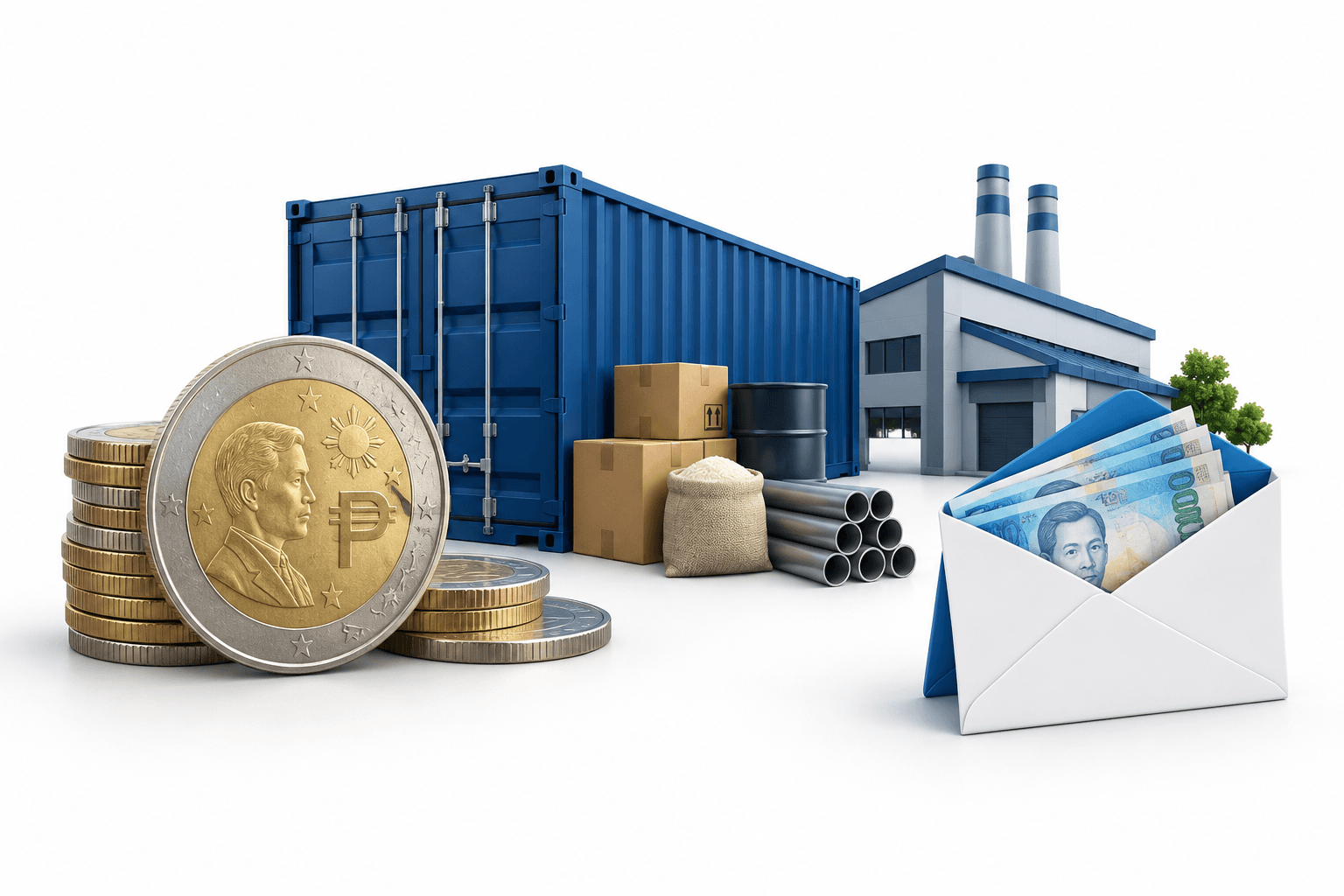
The Philippine peso closed at a record low of 63.615 per US dollar on October 23, 2026, after weakening beyond 63 per dollar earlier in the month. HSBC Global Research economist Aris Dacanay said the depreciation could help manufacturers and families receiving dollar remittances, although higher import costs could offset some of those benefits.
Key Takeaways
- The peso ended Friday at 63.615 per dollar, a record low.
- Dacanay said a weaker currency could make Philippine goods more competitive and raise the peso value of dollar remittances.
- Higher costs for imported necessities and manufacturing inputs could erode those gains.
Philippine peso weakness and manufacturing
Dacanay, a senior economist at HSBC Global Research, said depreciation makes locally produced goods cheaper for foreign buyers and can encourage domestic consumers to choose them over imports. He also said the currency shift could help narrow the trade deficit.
The economist said 2026 marked the first material and sustained growth in Philippine manufacturing since 2018. He attributed support for export demand partly to the weaker peso and said overall Philippine export growth had reached 14% year to date.
The peso’s decline has occurred amid external pressures and domestic economic vulnerabilities. The available information does not establish the contribution of any individual factor to its record-low close.
Remittances offer relief, but imports cost more
Families receiving money from overseas Filipino workers can exchange each dollar for more pesos when the currency weakens. Dacanay said that can increase recipients’ purchasing power even when the dollar amount sent remains unchanged.
But households also face higher peso costs for imported fuel, food and other necessities. Those increases can offset some of the benefit from remittances.
Manufacturers face their own cost pressures
A weaker currency also raises the peso cost of imported raw materials, components and machinery. Manufacturers may have to absorb those expenses or pass them on through higher prices, potentially reducing their competitive advantage.
Dacanay said the Philippines remained at a competitiveness disadvantage to regional peers including Thailand, Malaysia and Indonesia when inflation differences were considered. He called for measures to lower inflation and business costs, including reducing trade barriers and tackling smuggling, hoarding and cartels.
Read More News
Disclaimer
This FinanceVelix article provides general information, not personalized financial, investment, legal, or tax advice. Market prices, interest rates and economic conditions can change; investments carry a risk of loss. Facts reflect the material available when published and may change. Check important information independently and consult a qualified professional when needed. Mentioning an asset, company, or service is not an endorsement.

Comments
Be respectful. No spam, impersonation or private credentials. Ordinary posts and comments appear immediately; suspicious links are held for review.
Please wait…