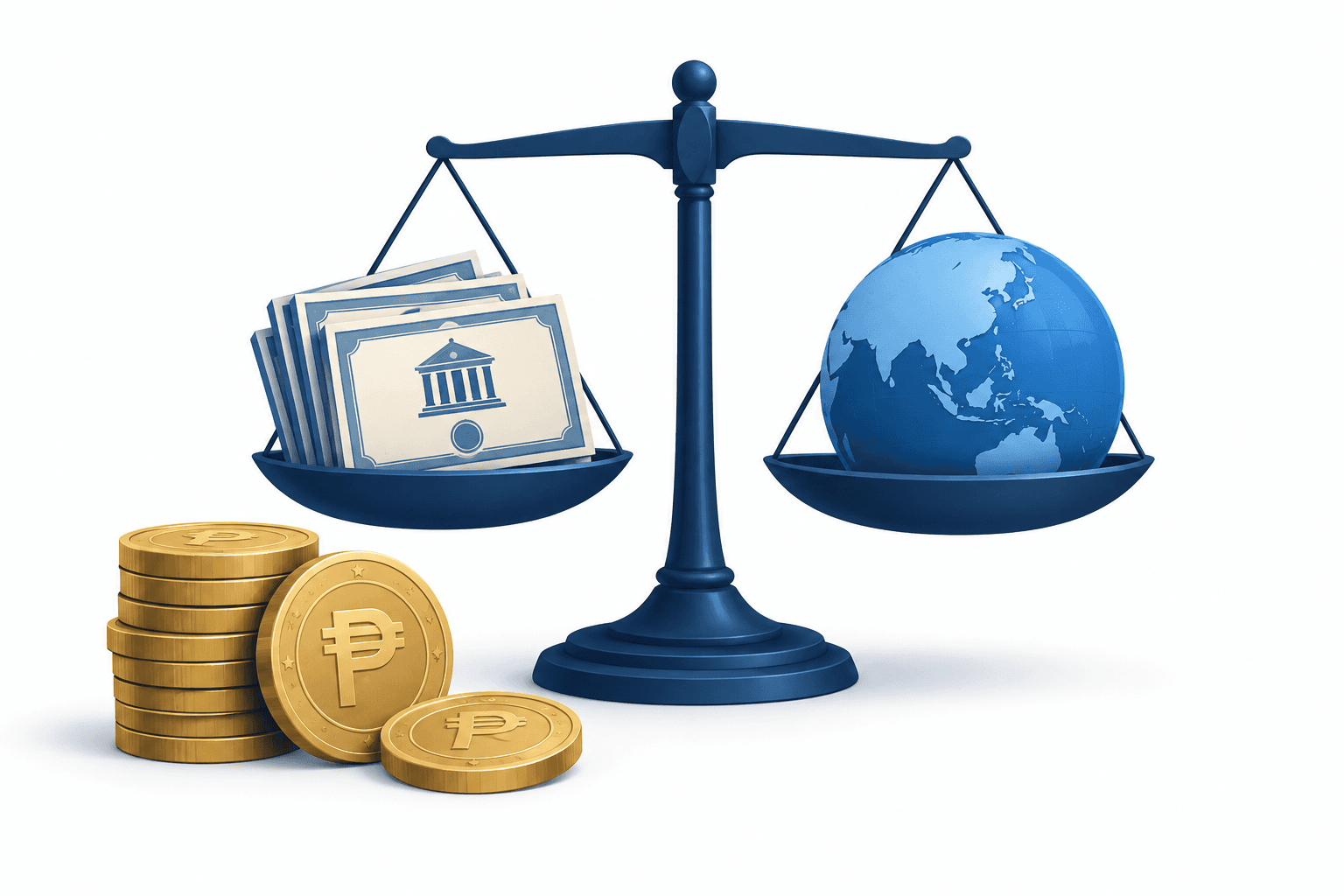
Philippine government borrowing was nearly unchanged at ₱2.394 trillion in the first nine months of 2026, as an increase in external borrowing offset a decline in domestic funding, Bureau of the Treasury data showed.
Philippine government borrowing shifts overseas
Gross borrowing from January through September was slightly below the ₱2.395 trillion recorded in the same period of 2025. External borrowing rose to ₱600.04 billion from ₱434.60 billion, while domestic borrowing fell to ₱1.793 trillion from ₱1.960 trillion.
External funding included ₱314.37 billion in global bond proceeds, ₱166.92 billion in program loans and ₱118.75 billion in project loans. Domestic borrowing consisted of ₱424.98 billion in Treasury bills and ₱1.37 trillion in fixed-rate Treasury bonds.
September borrowing and outstanding debt
In September alone, gross borrowing rose 8.2% to ₱139.45 billion from ₱128.91 billion a year earlier. External borrowing reached ₱21.85 billion, up from ₱8.37 billion, while domestic borrowing fell to ₱117.60 billion from ₱120.55 billion.
Separately, the government’s outstanding debt reached a record ₱19.61 trillion at the end of August, up from ₱19.39 trillion a month earlier. Domestic debt accounted for 67.53% of the total and external debt for 32.47%.
Read More News
Disclaimer
This FinanceVelix article provides general information, not personalized financial, investment, legal, or tax advice. Market prices, interest rates and economic conditions can change; investments carry a risk of loss. Facts reflect the material available when published and may change. Check important information independently and consult a qualified professional when needed. Mentioning an asset, company, or service is not an endorsement.



Comments
Be respectful. No spam, impersonation or private credentials. Ordinary posts and comments appear immediately; suspicious links are held for review.
Please wait…