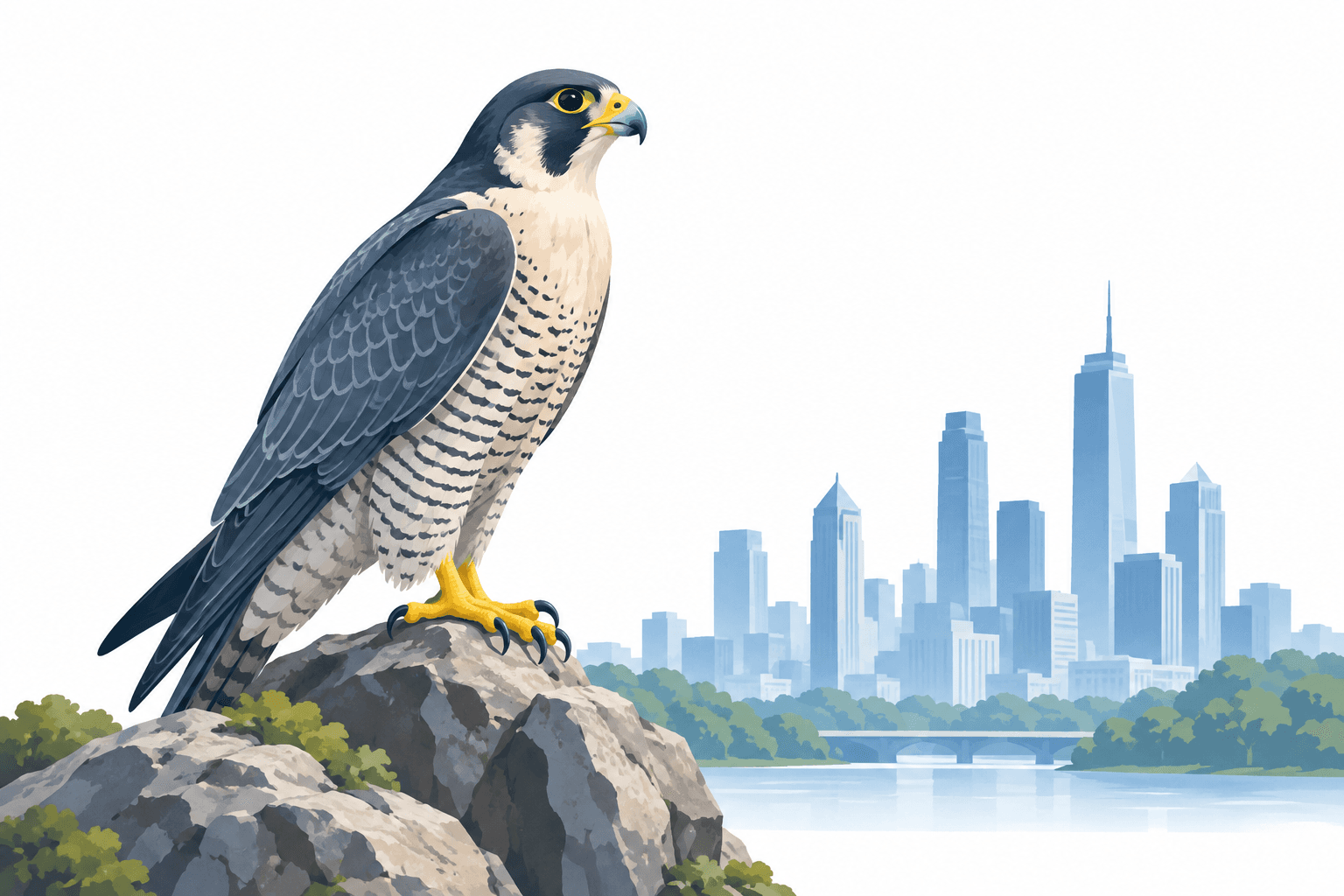
Peregrine falcon recovery in North America followed decades of captive breeding and releases after pesticide exposure devastated the birds’ populations. By the late 1990s, the effort had restored 1,650 breeding pairs in the United States and Canada, according to the U.S. Fish and Wildlife Service.
How peregrine falcon recovery began
After World War II, widespread use of the pesticide DDT caused it to build up in peregrine falcons. Their eggs became too thin to hatch, and by the 1960s and 1970s the birds had disappeared from many areas of the eastern United States and the Midwest. Peregrine falcons were listed as endangered in 1970.
Conservationists began experimental releases of captive-bred birds in 1974 and 1975. A technique called hacking placed young falcons in artificial nest sites, where they gradually became accustomed to their surroundings before release.
Breeding pairs returned
More than 6,000 peregrine falcons were released through recovery efforts beginning in 1974. Federal and state agencies, universities and private conservation groups participated in the wider program, which included monitoring released birds and their breeding populations.
Falcons also adapted to cities, nesting on skyscrapers and bridges where other birds provided prey. In 1999, the U.S. Fish and Wildlife Service removed the American peregrine falcon from the federal endangered species list.
Read More News
Disclaimer
This FinanceVelix article provides general information, not personalized financial, investment, legal, or tax advice. Market prices, interest rates and economic conditions can change; investments carry a risk of loss. Facts reflect the material available when published and may change. Check important information independently and consult a qualified professional when needed. Mentioning an asset, company, or service is not an endorsement.



Comments
Be respectful. No spam, impersonation or private credentials. Ordinary posts and comments appear immediately; suspicious links are held for review.
Please wait…