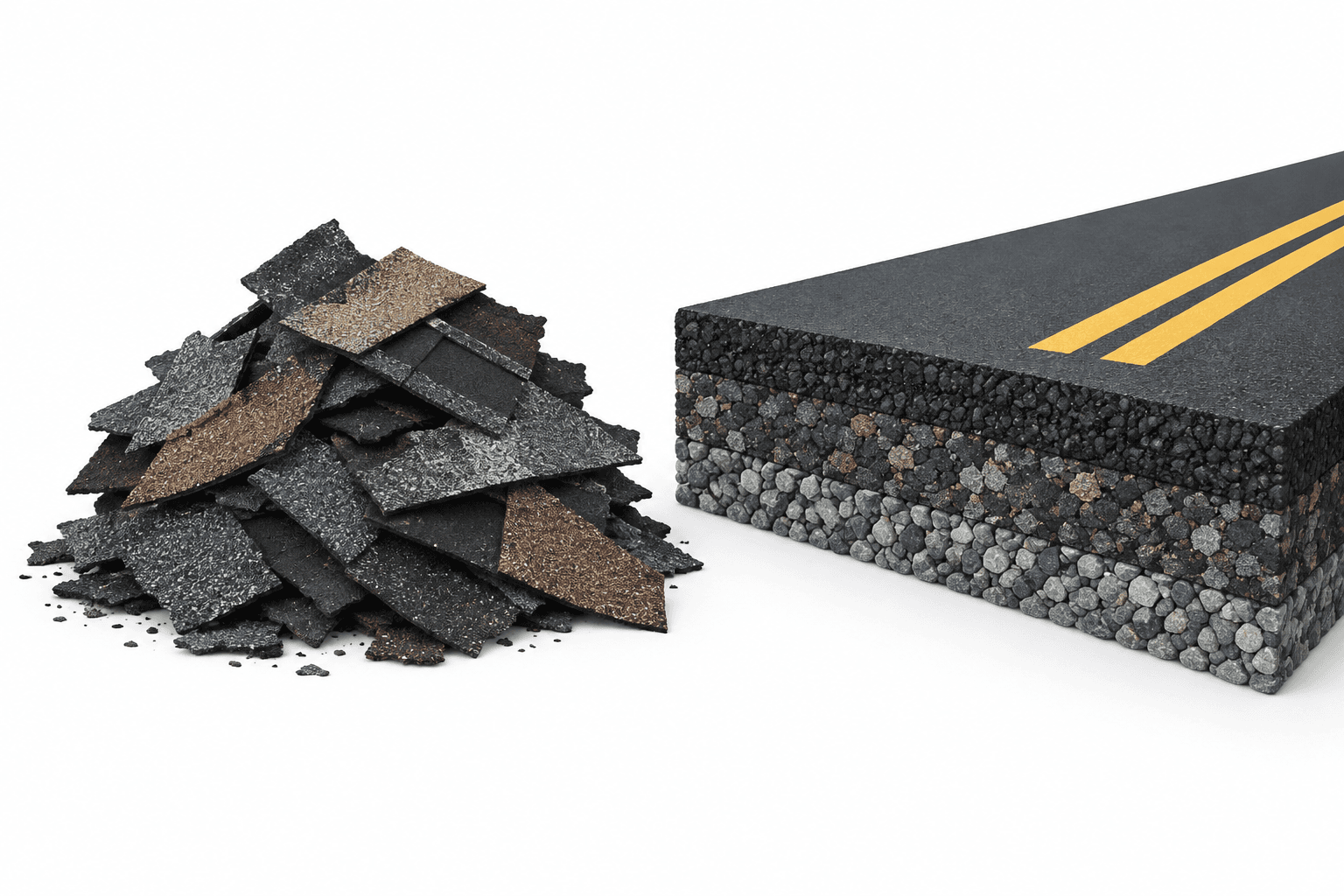
Recycled shingle asphalt performed at least as well as conventional control sections during the first several years of a Minnesota highway trial, according to researchers who documented the project. The finding, based on conditions through the end of 1995, came with limits: the test used factory scrap, not shingles removed from roofs.
Key Takeaways
- The Highway 25 test mixes contained 5% and 7% manufacturer shingle scrap by weight of aggregate.
- Federal research identifies cracking risks associated with the aged binder in post-consumer shingles.
Recycled shingle asphalt on Highway 25
Minnesota Department of Transportation researchers David Janisch and Curt Turgeon documented the trial south of Mayer, where road sections containing shingle scrap were compared with a control section. By the end of 1995, the scrap sections were performing at least as well.
The material was primarily tab punch-outs from a Shakopee factory, with some discolored or damaged shingles mixed in. Cracking at regular intervals was the main issue across the road, with no discernible difference between the shingle and control sections.
The researchers cautioned that their data set was limited. They also noted that sections with high in-place air voids faced a risk of raveling or stripping over time. Minnesota had capped manufacturer scrap at 5% at the time of the report.
Potential savings depend on processing costs
Shingles contain asphalt binder, which can replace some virgin material in pavement. Janisch and Turgeon found that each percent of shingle scrap supplied 0.27% to 0.30% asphalt cement in wearing-course mixes.
That substitution is economical only if processing the scrap costs less than the binder it replaces; the Minnesota report did not quantify the cost. The Federal Highway Administration says reclaimed shingles can also replace some aggregate and keep material out of landfills.
Factory scrap and old roofing differ
The federal agency says factory-waste shingles typically contain about 20% asphalt binder, compared with about 30% in post-consumer shingles. Binder in the latter is more aged, oxidized, stiff and brittle, which the agency says is likely to reduce a mixture’s resistance to cracking.
An accelerated-loading study cited by the agency found that a mix containing 6% shingles had less than 15% of the fatigue life of a virgin-mix control. The agency says typical shingle content is 3% to 5% by weight.
The federal brief estimated that about 921,000 tons of shingles went into asphalt mixtures in 2019, down 12.5% from 2018 and the lowest total since 2010.
Read More News
Disclaimer
This FinanceVelix article provides general information, not personalized financial, investment, legal, or tax advice. Market prices, interest rates and economic conditions can change; investments carry a risk of loss. Facts reflect the material available when published and may change. Check important information independently and consult a qualified professional when needed. Mentioning an asset, company, or service is not an endorsement.




Comments
Be respectful. No spam, impersonation or private credentials. Ordinary posts and comments appear immediately; suspicious links are held for review.
Please wait…