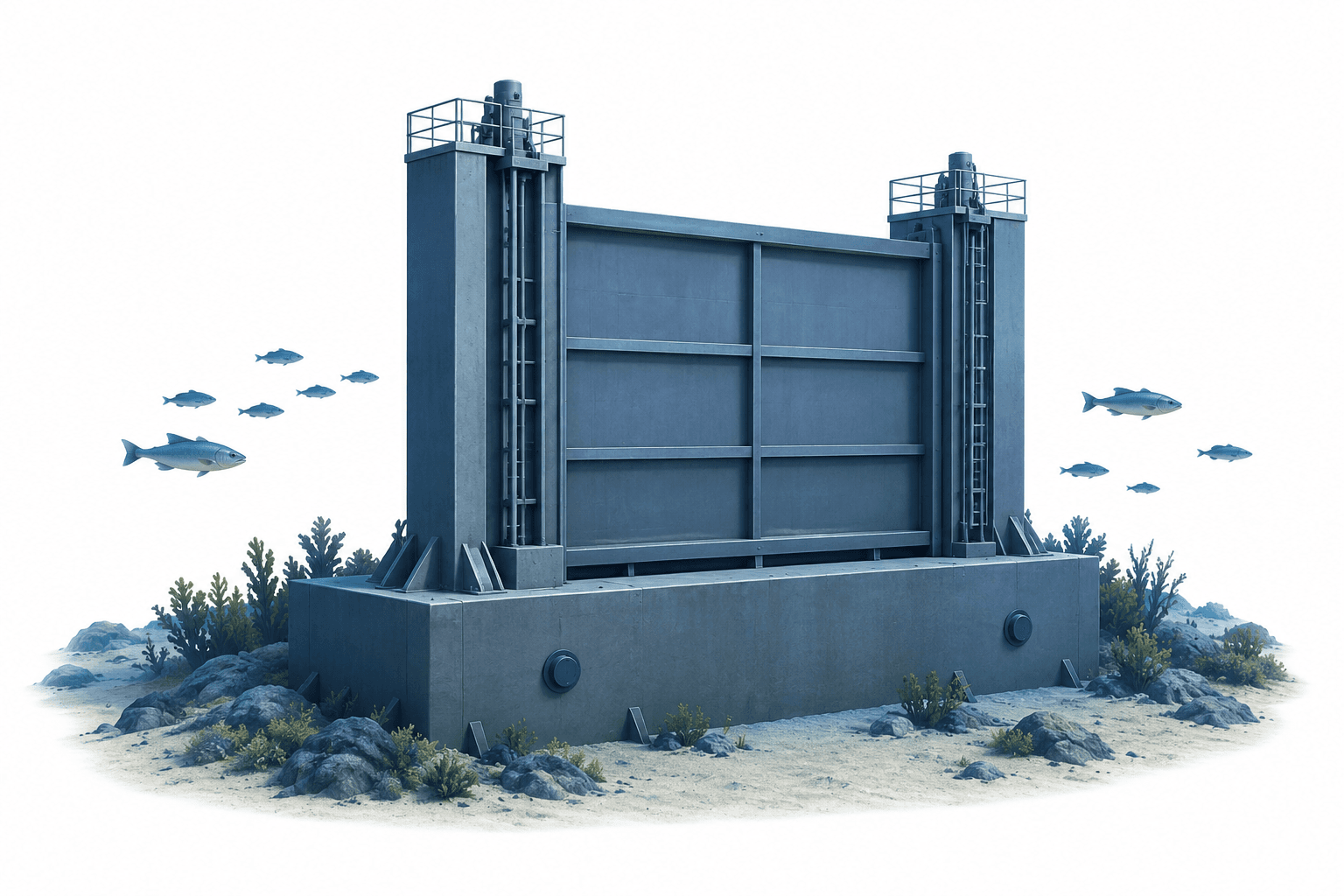
A 150-foot steel gate was placed at a New Jersey reef site on June 8, 2020, as part of an artificial habitat project. State marine fisheries staff expected the structure to last more than 75 years, but that was a projection rather than a demonstrated lifespan.
Key Takeaways
- The former dry dock gate rests at Deepwater Reef in 125 feet of water.
- The Sportfishing Fund sponsored the deployment.
- Research on artificial reefs does not establish how this particular gate has performed.
How the New Jersey reef gate was prepared
A caisson gate normally blocks the open end of a dry dock. The Deepwater Reef structure was made from heavy-gauge steel plates, with ballast in its keel, and extends 30 feet above the seafloor.
The New Jersey Division of Fish & Wildlife said structures used in such deployments are emptied of machinery and fluids and cleaned. The U.S. Coast Guard and the state Department of Environmental Protection inspect them before sinking.
What research says about artificial reefs
The state said artificial reef deployments have become home to more than 150 marine organisms, including black sea bass, tautog, lobsters, crabs and mussels. That description applies to artificial reef deployments generally, not a specific survey of the gate.
A 2020 review of 39 studies found that artificial reefs supported fish density, biomass, species richness and diversity comparable to those of natural rocky and coral reefs. The researchers also found that outcomes varied by location and material. Published before the gate was deployed, the review cannot establish its individual performance.
Read More News
Disclaimer
This FinanceVelix article provides general information, not personalized financial, investment, legal, or tax advice. Market prices, interest rates and economic conditions can change; investments carry a risk of loss. Facts reflect the material available when published and may change. Check important information independently and consult a qualified professional when needed. Mentioning an asset, company, or service is not an endorsement.



Comments
Be respectful. No spam, impersonation or private credentials. Ordinary posts and comments appear immediately; suspicious links are held for review.
Please wait…