
US Treasury Secretary Scott Bessent said dollar stablecoins could strengthen the dollar’s global role and create demand for US government debt, making digital assets part of America’s economic and technological competition.
Key Takeaways
- Bessent said more than 90% of stablecoins are denominated in US dollars.
- He suggested Treasury could coordinate with other regulators after a digital-asset market structure bill failed to advance.
- Stablecoins’ effect on demand for US assets depends partly on their backing and what investors use them to replace.
Why Bessent sees dollar stablecoins as strategic
Speaking alongside Ripple CEO Brad Garlinghouse at Ripple’s Swell conference on October 27, 2026, Bessent argued that technological leadership is increasingly important to the influence of global reserve currencies. He placed digital assets alongside artificial intelligence and semiconductors in the strategic competition between the United States and China.
Bessent said dollar-denominated stablecoins could broaden access to dollar-based financial services, particularly in emerging economies facing inflation and currency depreciation. He also suggested that growing adoption could help finance the US Treasury.
How reserves affect Treasury demand
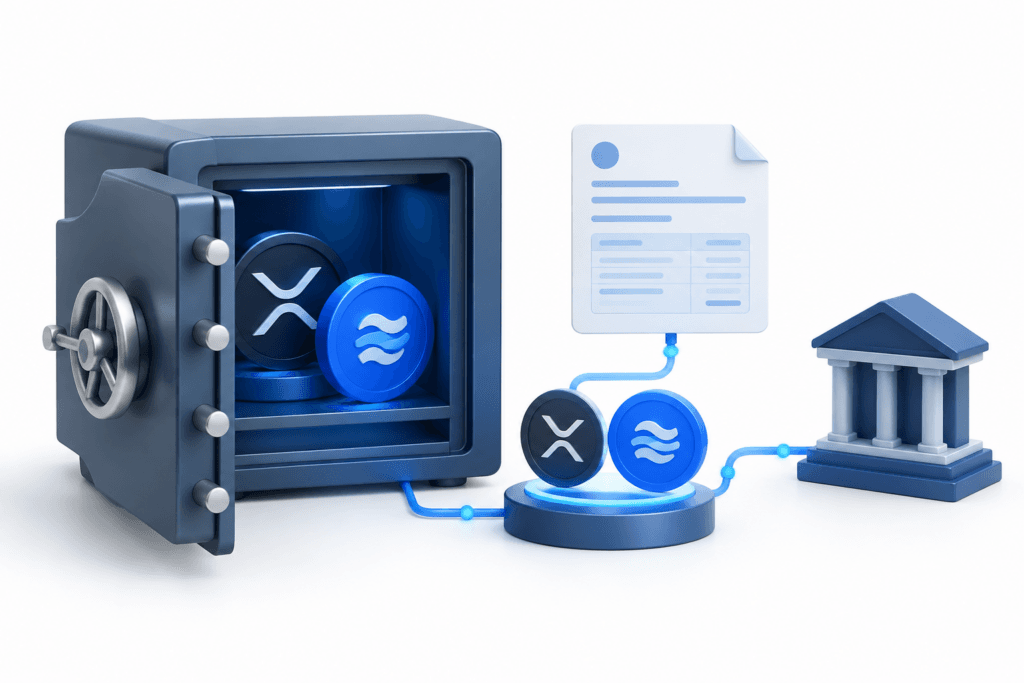
Stablecoin issuers can hold cash and short-term US Treasury securities among their liquid reserves. Greater issuance of tokens backed by those assets can therefore increase issuers’ holdings of government debt.
The overall effect is not automatic: a stablecoin purchase may replace an existing dollar deposit or another dollar-denominated investment. March 2026 research published by the Federal Reserve Bank of Richmond also found that the implications depend on how stablecoins are backed and how adoption develops.
Regulation remains in focus
The GENIUS Act, enacted in July 2025, established a federal framework for payment stablecoins, including reserve backing and redemption requirements. Treasury’s proposed implementation framework, published in August 2026, addresses when issuers must obtain a license and how payment stablecoins may be offered or sold in US markets.
Bessent described the failure to advance the Digital Asset Market Clarity Act as disappointing. He suggested Treasury could work with the Securities and Exchange Commission and Commodity Futures Trading Commission to clarify regulatory expectations. He also raised concerns about crypto companies losing access to traditional financial services.
Next milestone
The GENIUS Act’s expected effective date is January 18, 2027, when a person generally must have an appropriate federal or state license to issue a payment stablecoin in the United States.
Read More News
Disclaimer
This FinanceVelix article provides general information, not personalized financial, investment, legal, or tax advice. Market prices, interest rates and economic conditions can change; investments carry a risk of loss. Facts reflect the material available when published and may change. Check important information independently and consult a qualified professional when needed. Mentioning an asset, company, or service is not an endorsement.



Comments
Be respectful. No spam, impersonation or private credentials. Ordinary posts and comments appear immediately; suspicious links are held for review.
Please wait…