Physical AI safety is the focus of a certification concept presented by Accenture and TÜV SÜD on October 21, 2026, at NVIDIA GTC Berlin. Their proposed Physical AI Safety Suite uses NVIDIA technologies to assess industrial automation before deployment, aiming to help factories and warehouses introduce robots safely alongside workers.
Key Takeaways
- The companies presented a joint concept, rather than announcing a completed commercial rollout.
- Digital twins and simulations would move safety checks earlier in factory and warehouse design.
- TÜV SÜD estimates the digital process could bring production online up to 30% sooner.
Table of Contents
- Physical AI safety checks move earlier in planning
- Standards remain the basis for approval
- Three layers cover layouts, fleets and individual robots
- Conclusion
Physical AI safety checks move earlier in planning
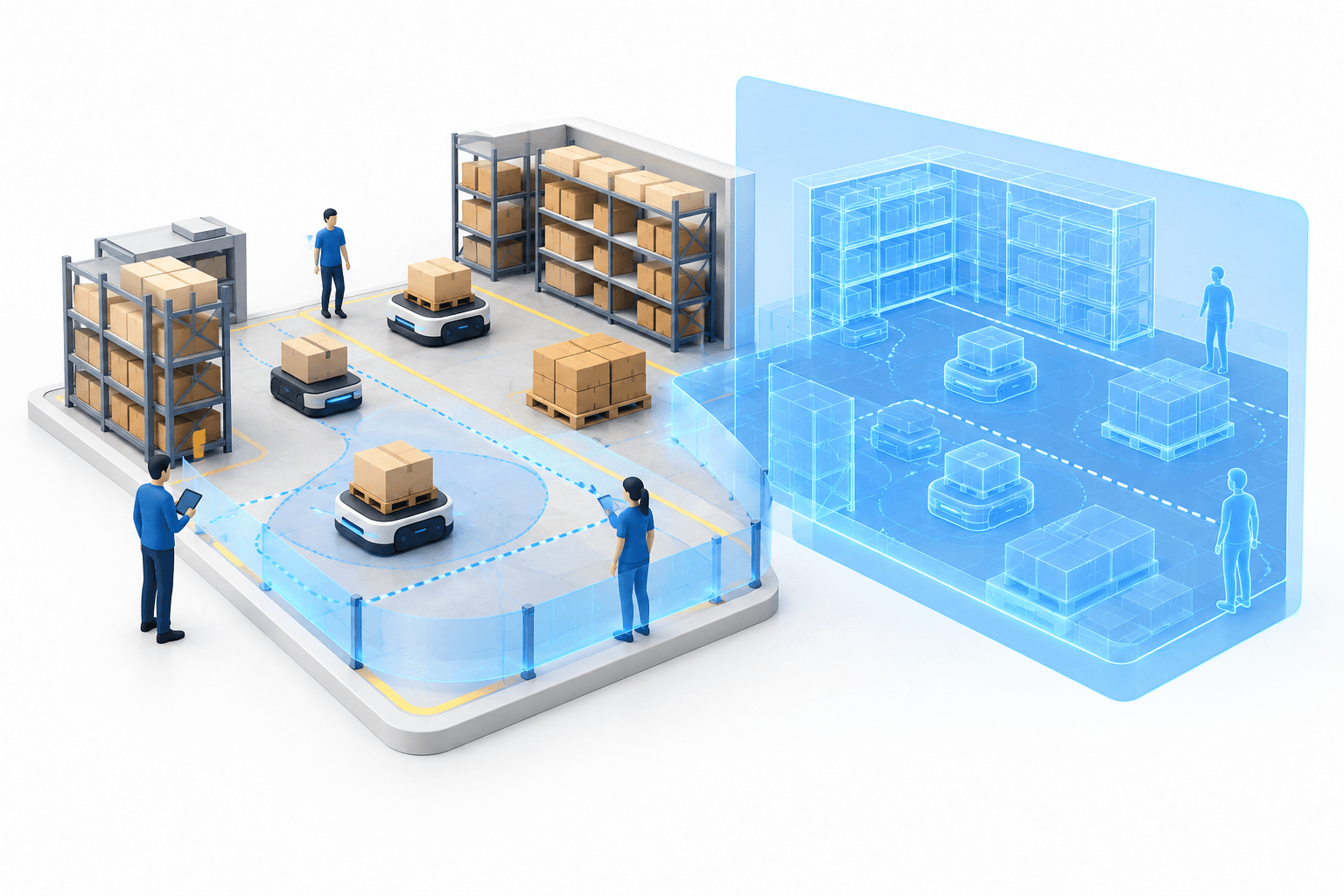
Accenture and TÜV SÜD’s certification collaboration announcement describes a suite that partially digitizes facility assessments, equipment checks and preparation of certification packages. The aim is to identify safety problems while layouts and workflows can still be changed, rather than after equipment has been installed.
The concept combines digital twins, AI agents and simulations to generate evidence for independent review. TÜV SÜD would provide assessment and assurance while retaining responsibility for certification.
That distinction matters: simulation-generated evidence is intended to support certification, not replace independent scrutiny or automatically approve a robot for use.
| Item | Details |
|---|---|
| Layout assessment | Examines routes, clearances, mixed-use zones and collaboration areas before deployment or reconfiguration. |
| Fleet assessment | Models robot behavior and potential hazards, including workers becoming trapped by autonomous mobile robots. |
| Individual-robot assessment | Tests certification-relevant scenarios and can help engineers determine safety-sensor placement before a physical prototype exists. |
Standards remain the basis for approval
The companies identified ISO 3691-4, which specifies safety requirements for driverless industrial trucks and systems, including autonomous mobile robots, as one relevant standard. Navigating requirements and repeatedly validating safety concepts can take several weeks at a medium-sized production plant.
TÜV SÜD estimates that the proposed digital process could bring production online up to 30% sooner. That is an estimate of potential improvement, not a reported result from a completed customer deployment.
The practical objective is to reduce dependence on installed equipment and site visits during assessment, while finding issues early enough to avoid rework once a facility is operating.
Three layers cover layouts, fleets and individual robots
The suite’s design spans factory layouts, interactions across robotic fleets and the operating conditions of individual machines. NVIDIA Omniverse, Cosmos and Isaac Sim support simulation, while NVIDIA Halos and IGX Thor are intended to help identify hazards during operation.
For fleet monitoring, the concept includes facility-mounted cameras that extend perception beyond an individual robot’s view. At the individual-machine level, simulated scenarios would test site-specific conditions such as loads, speed, flooring and lighting.
Conclusion
The proposal seeks to make safety assessment an earlier part of automation engineering while preserving independent certification. The next scheduled presentation was a joint demonstration and speaking session at GTC Berlin on October 22, 2026.
Read More News
Disclaimer
This FinanceVelix article provides general information, not personalized financial, investment, legal, or tax advice. Market prices, interest rates and economic conditions can change; investments carry a risk of loss. Facts reflect the material available when published and may change. Check important information independently and consult a qualified professional when needed. Mentioning an asset, company, or service is not an endorsement.