Amazon announced TorchNeuron software on October 19, 2026, saying it would allow developers to run existing PyTorch code on its AWS Trainium AI chips with a single configuration change rather than a rewrite. The tool targets a software-switching barrier that has helped underpin Nvidia’s position in AI computing.
Key Takeaways
- Amazon says developers can move existing PyTorch code to Trainium without rewriting it.
- The company plans an open-source release at the PyTorch Conference on October 20.
- Easier migration could help Trainium adoption, but does not establish a broad cost or performance advantage over Nvidia.
Table of Contents
- TorchNeuron software focuses on the migration hurdle
- Why software matters to the Nvidia challenge
- Early users span voice AI and drug discovery
- Conclusion
TorchNeuron software focuses on the migration hurdle
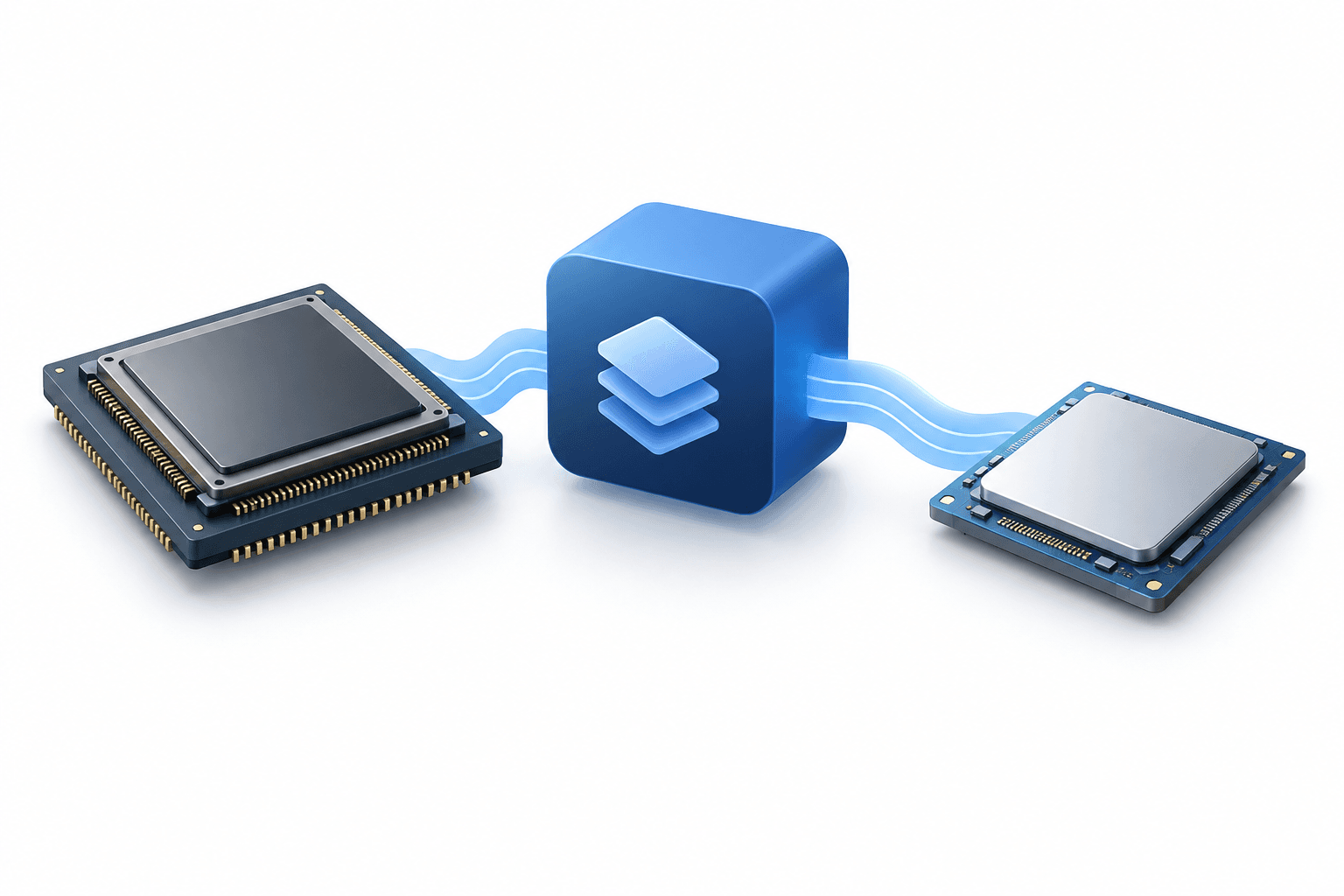
Choosing a different AI processor can mean adapting software as well as changing hardware. Amazon’s TorchNeuron announcement describes a native PyTorch backend designed to reduce that work by connecting existing applications to Trainium through PyTorch’s standard mechanism for registering new hardware.
Amazon says developers can retain the tools they already use to test, debug and scale models. In a company demonstration, engineers ran the same training script on a conventional chip and on Trainium, changing only the setting that selected the hardware. Amazon said the model learned the same things at the same rate.
That demonstration supports the company’s portability claim, but it is not a comprehensive benchmark across workloads. Moving an application and optimizing its performance are separate tasks; Amazon also provides tools for custom low-level code and training across multiple chips.
| Item | Details |
|---|---|
| Supported chip generations | Trainium2 and Trainium3 |
| Planned release license | Apache 2.0 |
| Scheduled release venue | PyTorch Conference North America, October 20, 2026 |
Why software matters to the Nvidia challenge
Nvidia’s competitive position extends beyond its processors to CUDA, the software platform developed over more than a decade to support workloads on its hardware. Amazon is seeking to make its own chips easier to adopt without requiring developers to rebuild their PyTorch applications.
The practical opportunity is to reduce engineering time spent on migration. If the approach works across more production workloads, it could make Trainium a more accessible alternative for AWS customers. The announcement alone does not establish how much customers would save or whether they would shift spending away from Nvidia.
Early users span voice AI and drug discovery
Amazon identified early users across several AI fields. It said voice AI company Cartesia ran its standard inference pipeline with minimal changes to its PyTorch code, while the Lieber Institute for Brain Development is exploring Trainium for biological, chemical and language models used in drug research.
These examples show the range of applications being tested, rather than a measure of broad commercial adoption. Amazon also says it is contributing changes to PyTorch to reduce hardware-specific dependencies beyond its own chips.
Conclusion
TorchNeuron addresses the software work involved in adopting Amazon’s AI hardware, rather than proving a hardware advantage by itself. As of the October 19 announcement, the next scheduled milestone is the October 20 open-source release.
Read More News
Disclaimer
This FinanceVelix article provides general information, not personalized financial, investment, legal, or tax advice. Market prices, interest rates and economic conditions can change; investments carry a risk of loss. Facts reflect the material available when published and may change. Check important information independently and consult a qualified professional when needed. Mentioning an asset, company, or service is not an endorsement.