NVIDIA local AI hardware is getting a broader rollout and new software for shared development, with DGX Spark 64GB systems set to arrive from partners on October 23 and Windows-based DGX Station systems expected in December. Outlined at GTC Berlin on October 21, 2026, the updates extend from private desktop agents to enterprise-managed machines serving teams, with several software features still scheduled rather than available.
Key Takeaways
- DGX Spark 64GB systems begin rolling out on October 23; manually configured clusters already support up to eight units.
- DGX Station gains enterprise management integrations, while its planned Windows version targets manufacturing applications and on-premises agents.
- Recursive Flint is available for local coding, alongside new model support and inference optimizations whose performance figures are reported by NVIDIA.
Table of Contents
- NVIDIA local AI rollout: what is available now?
- How DGX Spark becomes a shared development backend
- What changes for enterprise DGX Station users?
- Recursive Flint adds another local coding option
- Model and inference updates broaden the software stack
- Conclusion
NVIDIA local AI rollout: what is available now?
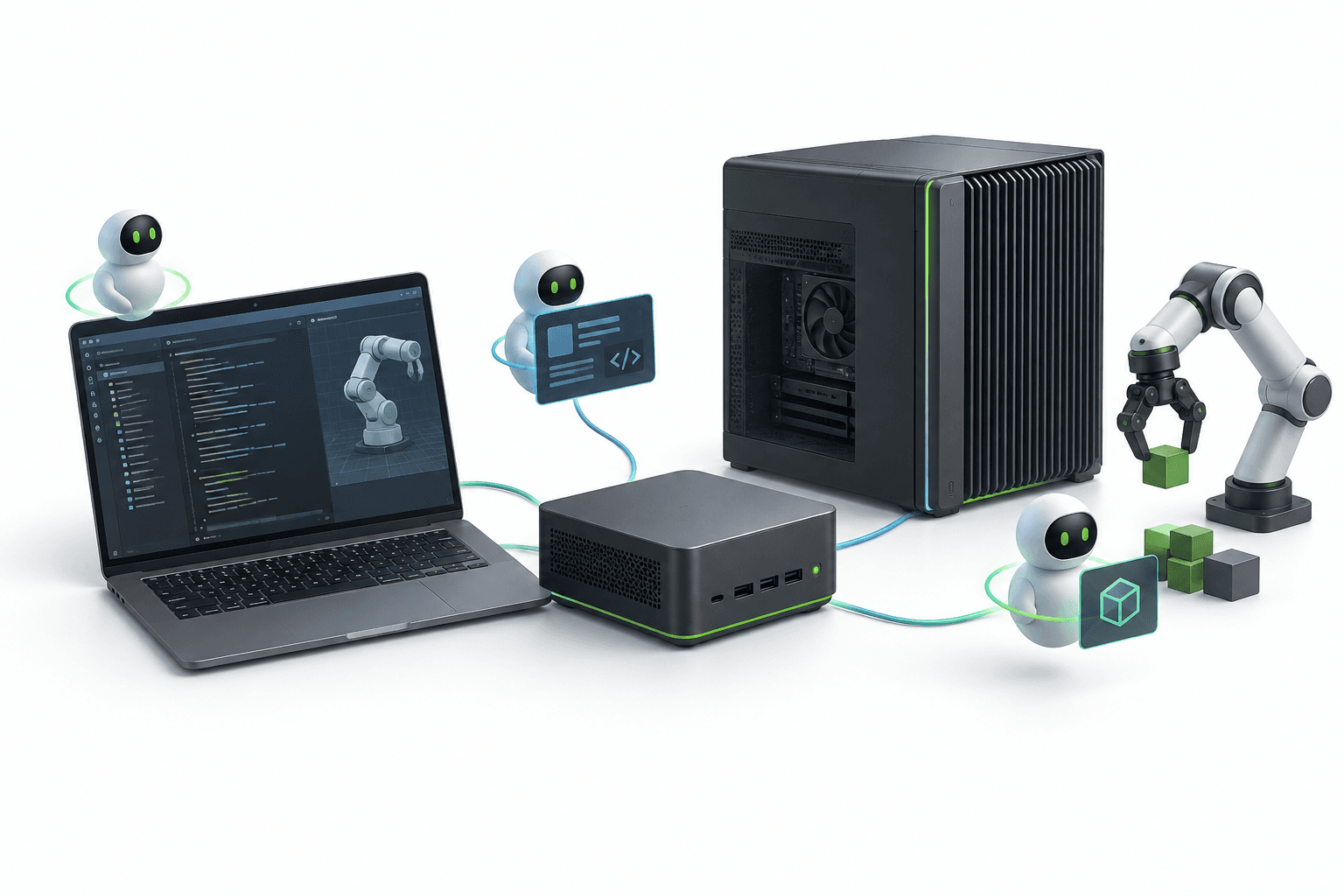
The announcements span distinct audiences: RTX Spark runs personal agents on Windows PCs, DGX Spark supports Linux application development, and DGX Station targets larger enterprise workloads. The practical distinction is not just hardware capacity, but whether users need an individual desktop assistant, a shared development backend or a managed team inference service.
RTX Spark launched on October 16. NVIDIA says laptops from ASUS, Dell Technologies, HP, Lenovo, Microsoft and MSI are available, with Acer to follow. Underdog Desktop Agent is also available for download. Its Husky inference engine runs models entirely on the device, according to NVIDIA, keeping the agent’s processing local rather than sending user data off the PC.
Linux-based DGX Station systems are already shipping. The Windows version remains a future release: NVIDIA expects partner systems in December. Its GTC Berlin local AI report also separates currently available capabilities from tools due later this month and an upcoming early-access service.
| Item | Details |
|---|---|
| DGX Spark 64GB | Partner rollout begins Friday, October 23. |
| DGX Spark clustering | Manual configurations support up to eight units; NVIDIA Sync support for eight units is planned this month. |
| Sync Model Launcher | Due later this month to select and download models and containers suited to the configuration. |
| DGX Station for Windows | Partner systems expected in December, with manufacturing application and agent support. |
| NVIDIA Cloud Functions | Coming in early access to Linux-based DGX Station for shared local model endpoints. |
| Recursive Flint | Available with open weights under the Apache 2.0 license for supported NVIDIA local hardware. |
How DGX Spark becomes a shared development backend
The new DGX Spark 64GB configuration starts rolling out from partners on Friday, October 23. NVIDIA lists models including Nemotron 3.5 Bolt 74B 24GB and Qwen3.8 27B among the workloads it can run.
For developers needing more capacity, DGX Spark now supports manually configured clusters of up to eight systems through its built-in ConnectX-7 networking. NVIDIA describes an eight-unit setup with 1TB of unified memory as a backend that small teams can share, running concurrent sessions against the same model. The additional capacity supports larger models, longer contexts and concurrent agents.
That manual clustering capability is separate from NVIDIA Sync’s planned support for eight DGX Sparks. Sync is also due to receive Model Launcher later this month. The launcher is designed to download a model and container suited to the hardware configuration, connect the model to OpenCode and load DGX Spark Skills for maintenance and troubleshooting.
The October DGX Spark software update adds a Wi-Fi Assistant for switching networks while the machine runs in appliance mode. It also brings workflow-focused maintenance and troubleshooting guidance into NVIDIA Sync through OpenCode.
What changes for enterprise DGX Station users?
DGX Station offers 748GB of coherent memory and up to 20 petaflops of AI performance, according to NVIDIA. Sync now supports connections between two Linux-based DGX Station systems, while new management integrations address how enterprises provision and oversee the machines.
The integrations cover Absolute Security, Splunk by Cisco, Fleet Device Management, Microsoft Intune, Perforce Puppet, Progress Software Chef and Tanium. Their intended role is to bring DGX Station into existing enterprise setup and management processes, rather than leaving it as a separately administered development machine.
The planned Windows version extends that approach into engineering software. NVIDIA lists support for manufacturing applications from companies including Dassault Systèmes, MathWorks, Rockwell Automation and Siemens. Users will also be able to run agents through Hermes Agent, Perplexity or Aible on premises.
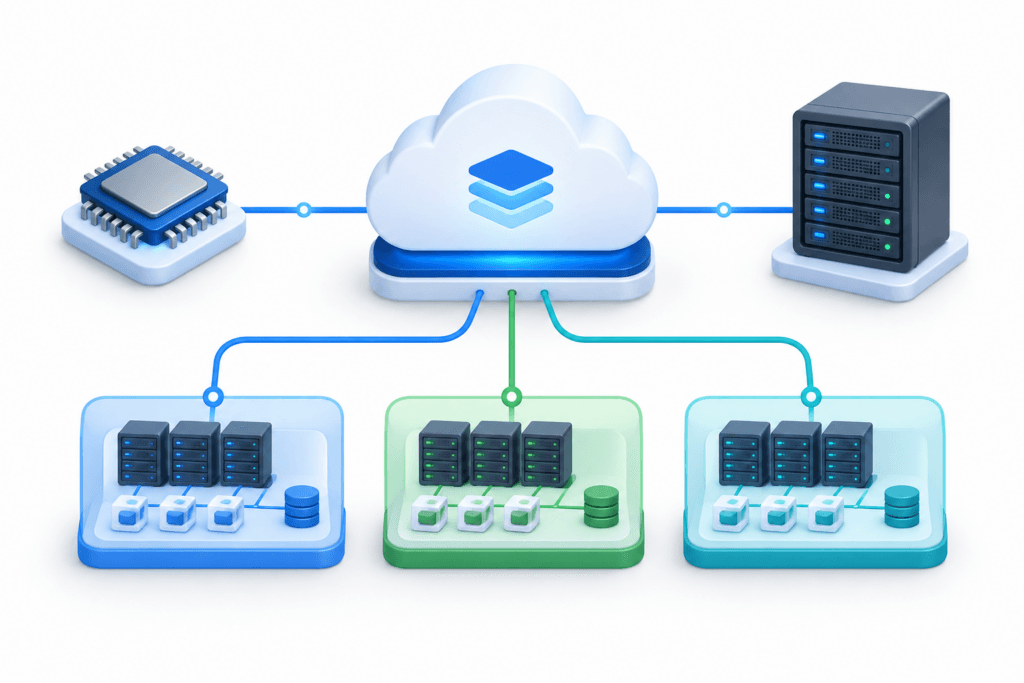
Separately, NVIDIA Cloud Functions is coming in early access to Linux-based DGX Station. Teams will be able to register local model endpoints in a shared catalog and reach them through an OpenAI-compatible entry point. NVIDIA says this will let developers replace the model behind an endpoint without changing application code, while colleagues access shared models without direct machine access.
Recursive Flint adds another local coding option
Recursive Superintelligence released Recursive Flint on October 21. The coding model uses a 40-billion-parameter mixture-of-experts architecture with 2.5 billion active parameters. Its open weights are available on Hugging Face under the Apache 2.0 license.
NVIDIA reports generation speeds above 220 tokens per second on a 64GB RTX Spark. It also says specialized kernels developed through Recursive’s automated research system increased generation speed by 55% without changing the model’s weights. These are reported performance results, not independently verified measurements.
Flint can run on RTX Spark, DGX Spark, GeForce RTX and RTX PRO hardware. Developers can also post-train it using NVIDIA’s NeMo tools, giving teams a route from downloading the model to adapting it for their own coding workflows.
Model and inference updates broaden the software stack
NVIDIA is adding support for models from Nemotron, GLM, DeepSeek, Qwen, MiniMax and Liquid AI, alongside Black Forest Labs’ FLUX image models. Nemotron Bolt E4B 4GB is scheduled to release on October 23, with local voice assistants and embedded interfaces among its intended uses.
New memory-optimized checkpoints aim to leave more capacity available for the cache used during inference. NVIDIA also reports improvements in the llama.cpp and vLLM engines: agentic tasks run up to 1.4x faster in a specified RTX PRO workload and up to 1.3x faster in a DGX Spark workload, while a DGX Station workload delivers up to 1.2x higher throughput.
For robotics teams, NVIDIA has released three open-source reference workflows for DGX Station covering reinforcement-learning refinement, dexterous manipulation training and world-model post-training for synthetic data generation. Those workflows are available releases, distinct from the forthcoming Windows hardware and Cloud Functions early access.
Conclusion
The updates give local AI users more ways to move from individual agents to shared, managed workloads. Manual Spark clustering, enterprise integrations and Recursive Flint are available now; the next rollout milestones are the October Spark hardware release, this month’s Sync additions and Windows DGX Station systems expected in December.
Read More News
Disclaimer
This FinanceVelix article provides general information, not personalized financial, investment, legal, or tax advice. Market prices, interest rates and economic conditions can change; investments carry a risk of loss. Facts reflect the material available when published and may change. Check important information independently and consult a qualified professional when needed. Mentioning an asset, company, or service is not an endorsement.