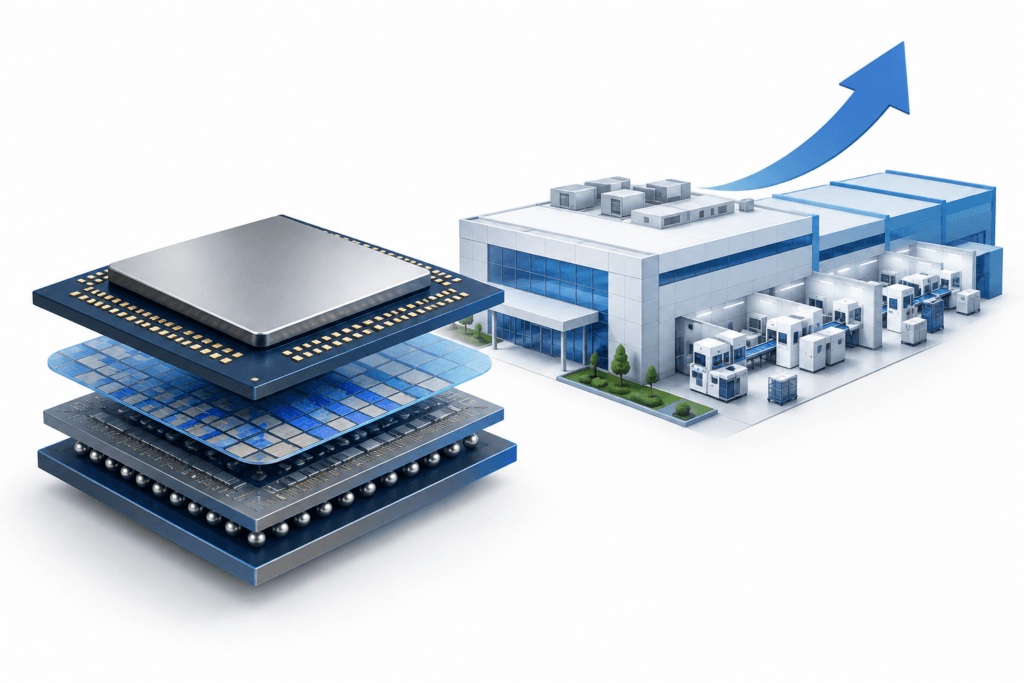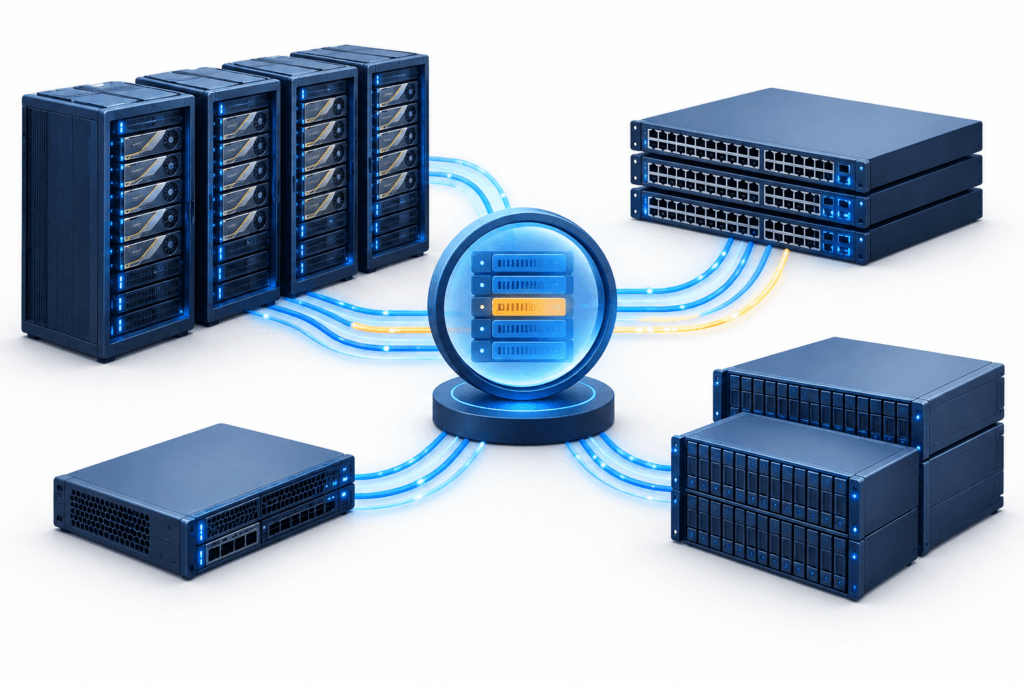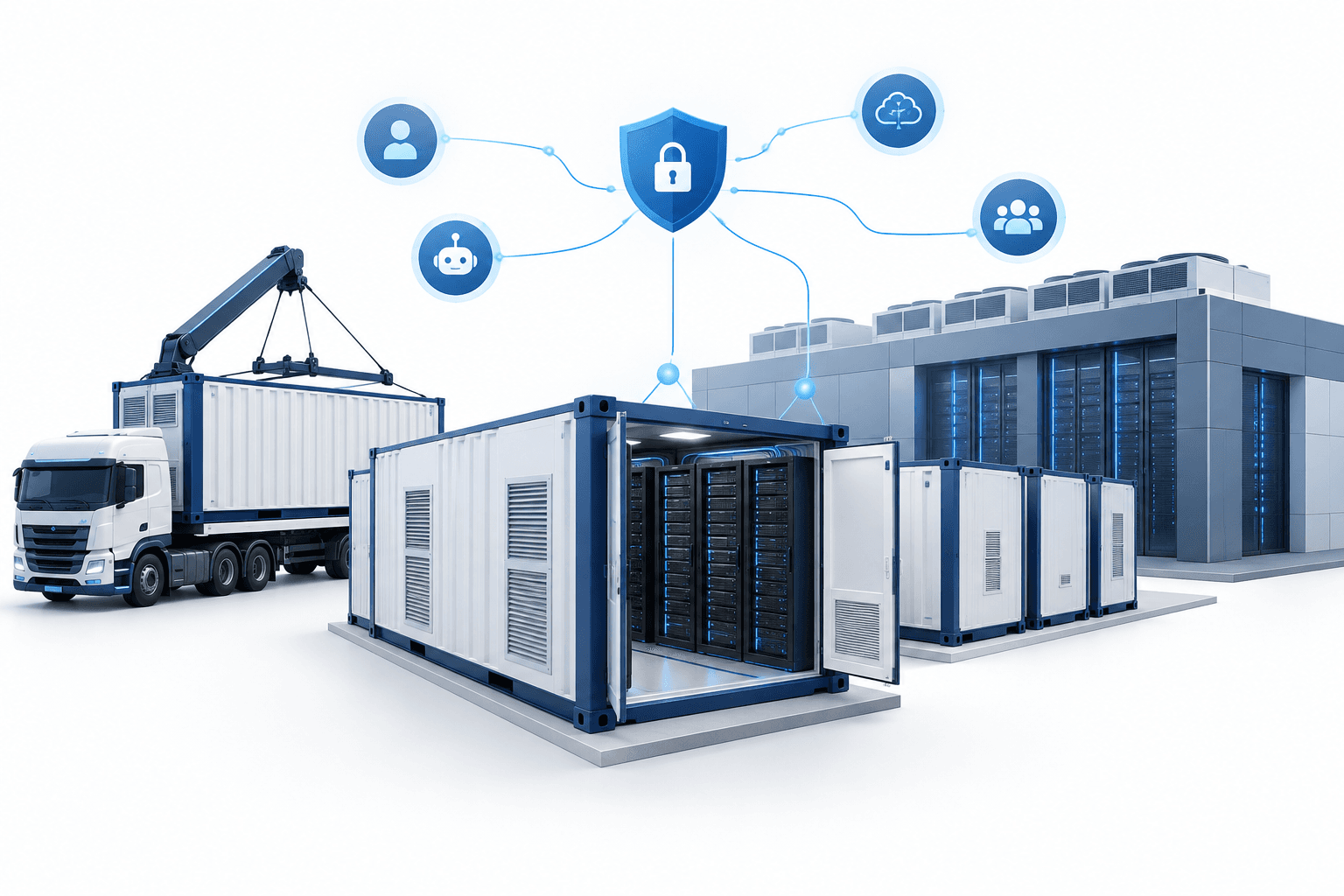
NVIDIA announced NVIDIA DSX POD at GTC Berlin on October twenty-first, offering a modular approach to AI factories that the company says can cut onsite deployment from six months to 14 days once site utilities are ready. The reference design packages complete Vera Rubin systems in containers built, integrated and validated by partners before delivery, shifting more of the installation work away from the customer’s site.
Key Takeaways
- DSX POD is a partner-built reference design for modular Vera Rubin AI factories, with the shorter deployment window conditional on site utilities being ready.
- NVIDIA paired its infrastructure announcements with new designs for agent security and tools for connecting agents to enterprise knowledge.
- Huang placed the launches within NVIDIA’s European expansion, citing nearly $10 billion in commitments to the region’s technology ecosystem.
Table of Contents
- NVIDIA DSX POD moves integration ahead of delivery
- Europe’s AI push links capital with operating efficiency
- Agent security becomes part of the infrastructure
- Enterprise knowledge is the next deployment layer
- Industrial examples show different stages of adoption
- Conclusion
NVIDIA DSX POD moves integration ahead of delivery
The central change is where an AI factory comes together. Rather than leaving integration and validation until equipment reaches its destination, DSX POD calls for partners to complete those steps inside modular containers before shipping them. NVIDIA presented this as a change to the supply chain for building data centers, not simply another rack-scale hardware offering.
The distinction matters when interpreting the deployment claim. The 14-day window concerns onsite deployment after utilities are ready; it is not a stated timetable for the entire project. The report does not establish a total construction schedule or disclose DSX POD pricing and customer delivery dates.
Huang said Vera Rubin is in full production and extends NVIDIA’s computing platform beyond individual models and large language models to processing the entire AI agent. He framed the broader AI factory platform as a combination of hardware, system software, CUDA-X libraries and models.
| Item | Details |
|---|---|
| DSX POD | New reference design for complete Vera Rubin AI factories assembled, integrated and validated by partners in modular containers. |
| Deployment timetable | NVIDIA says onsite deployment can shrink from six months to 14 days once site utilities are ready. |
| DSX efficiency claims | The broader platform can reduce cooling-water consumption by up to 100% and use up to 30% less power for the same AI output, according to NVIDIA. |
| OpenShell reference architecture | New security design combines policy controls, kernel-level sandboxing and monitoring between agents and affected systems. |
| Agent Knowledge Foundation | New models and libraries connect agents to enterprise documents and structured database information. |
| Adaptive radiation therapy | NVIDIA and Siemens Healthineers are developing an AI-enabled system; the report does not describe it as a completed deployment. |
Europe’s AI push links capital with operating efficiency
The Berlin keynote followed NVIDIA’s visits to Paris, London, Stockholm and Dublin. According to the company’s account, NVIDIA is committing nearly $10 billion to Europe’s technology ecosystem and working with more than 12,000 partners. That is a commitment figure, rather than a statement that the full amount has already been spent.
Huang’s argument was that European companies should produce AI, not only consume it. He named businesses including L’Oréal, Revolut, Spotify, Merck, Vodafone, Porsche and HSBC as European companies working with NVIDIA on AI, placing the infrastructure announcements alongside an existing business audience.
NVIDIA also said its DSX AI Factory Platform can reduce water consumption for cooling by up to 100% and deliver the same AI output using up to 30% less power. These are stated capabilities of the broader platform, separate from the DSX POD deployment-time claim. The keynote report does not provide project-specific operating results for those savings.
Agent security becomes part of the infrastructure
Faster infrastructure deployment was only part of NVIDIA’s pitch. Huang described agents as systems that combine a model with an orchestration harness, memory, a sandbox, knowledge and tools. Because they can access files, networks and other resources, their usefulness also creates a need to control what they are allowed to do.
NVIDIA introduced the OpenShell Reference Architecture for Safe AI Agents to address that problem. It is a full-stack design built on OpenShell, an open-source, policy-controlled runtime with kernel-level sandboxing positioned between an agent and the systems it can affect.
Huang said agent privileges should be minimal and activity monitored, with permissions and policy enforcement adapting dynamically. The practical distinction is between giving an agent access to a tool and giving it unrestricted access to the surrounding system. NVIDIA presented security as an engineering requirement for deploying agents, rather than a property of the underlying model alone.
Enterprise knowledge is the next deployment layer
NVIDIA’s Agent Knowledge Foundation addresses a separate obstacle: connecting an agent to information a business already holds. The newly introduced collection of models and libraries covers both unstructured documents and structured database information.
The tools highlighted include Nemotron capabilities for parsing documents, embedding queries and reranking relevant information, as well as new Kumo models for predictions from structured data. These functions connect the agent’s reasoning process with company-specific material rather than relying only on knowledge contained in a general model.
Huang also positioned NVIDIA’s open models as starting points that companies can post-train on proprietary data for particular uses. CUDA-X libraries provide another component: accelerated simulators, solvers and data-processing engines that agents can use as tools. Together, the announcements describe an operating stack spanning permissions, knowledge and execution.
Industrial examples show different stages of adoption
A keynote video illustrated how those components could work together. At Lila Sciences, agents helped design a potential B-cell lymphoma therapy through virtual experiments guiding an automated laboratory. At Siemens’ Erlangen factory, agents helped prepare products for production by testing plans in a digital twin. A Dassault Systèmes example showed engineering agents using simulation to identify a vehicle-design problem and refine the design.
Those demonstrations should be distinguished from projects still under development. NVIDIA and Siemens Healthineers are developing AI-enabled radiation therapy that combines treatment-planning agents, digital twins and live imaging and sensor data. The described system would adapt targeting as a patient’s body and tumor change during treatment.
The examples give the infrastructure strategy a concrete purpose: agents that can work with specialized data and tools in laboratories, factories and engineering environments. They do not, by themselves, establish that every announced technology is commercially deployed or that the claimed infrastructure savings have been achieved at those sites.
Conclusion
DSX POD gives NVIDIA’s European AI push a specific infrastructure proposition: move integration offsite and shorten deployment once utilities are ready. The accompanying security and knowledge tools address how businesses would operate agents on that infrastructure, while pricing, delivery schedules and project-level efficiency results remain undisclosed in the keynote report.
Read More News
Disclaimer
This FinanceVelix article provides general information, not personalized financial, investment, legal, or tax advice. Market prices, interest rates and economic conditions can change; investments carry a risk of loss. Facts reflect the material available when published and may change. Check important information independently and consult a qualified professional when needed. Mentioning an asset, company, or service is not an endorsement.