Navan AI agents are using NVIDIA’s Nemotron 3.5 Super VL in production after the business travel software company fine-tuned and deployed the model within three weeks of receiving early access. In an October 16, 2026 announcement, Navan said the model was handling customer interactions at a reduced cost.
Key Takeaways
- The deployment is completed, rather than a planned trial of NVIDIA’s model.
- Navan reported stronger travel-task performance in its own evaluations, but did not quantify production cost savings.
- Self-hosting allows Navan to customize and replace models while controlling deployment.
Table of Contents
- Navan AI agents move beyond answering questions
- Internal tests compare quality with response efficiency
- Self-hosting preserves flexibility over model choices
- Conclusion
Navan AI agents move beyond answering questions
Navan’s technical announcement describes a system designed to carry out travel tasks, not simply generate conversational replies. A canceled flight can require searching live inventory, explaining alternatives, checking company policy and coordinating changes to hotel or car reservations.
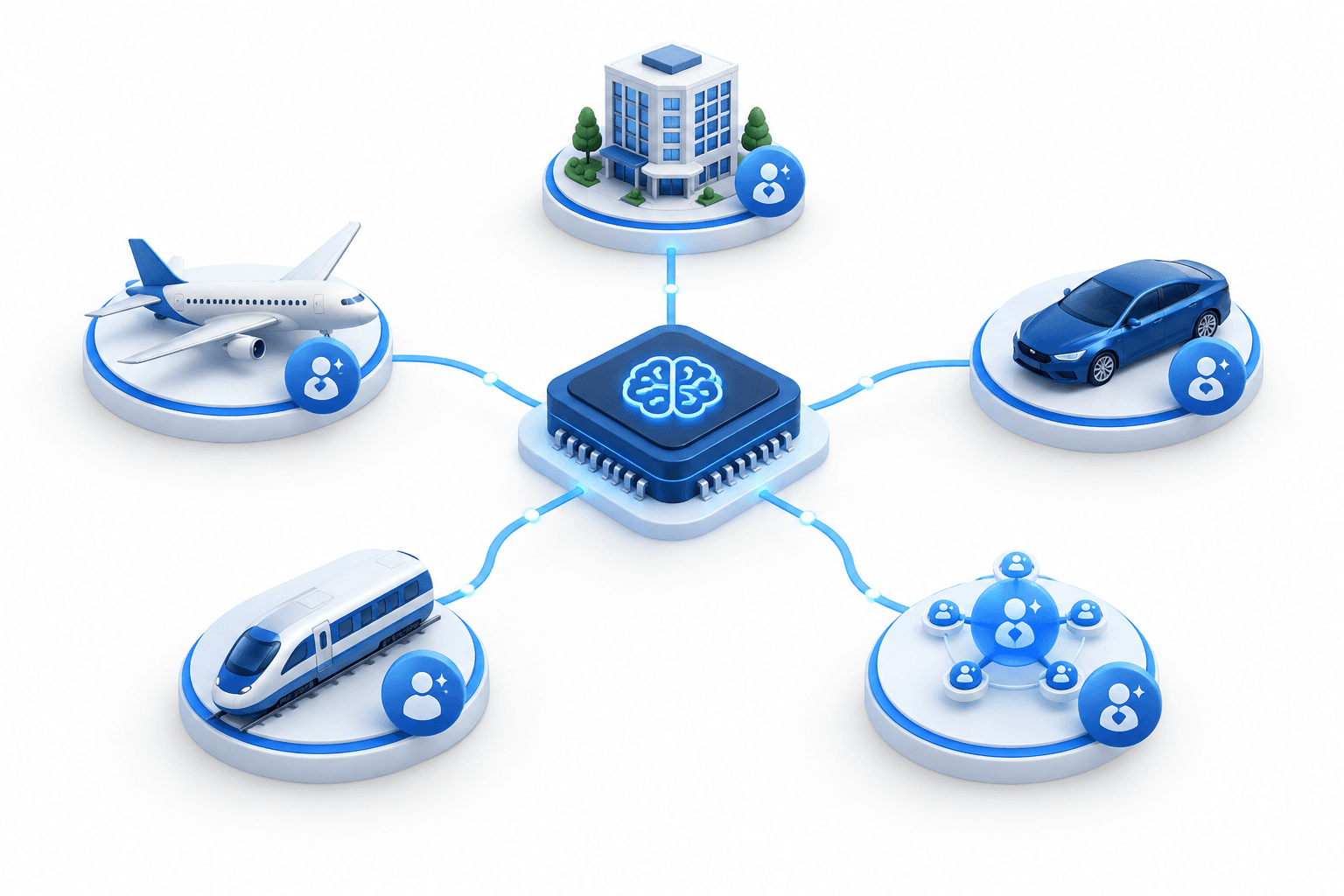
In its account of the Nemotron production deployment, Navan said it adapted one model using the combined experience of five agents: an orchestrator and specialists for hotels, flights, cars and trains. Each agent retains responsibility for its own tools and decisions while sharing information across the trip.
That design makes task completion the practical test of the integration. A quick response is not sufficient if the system cannot use booking tools correctly or follow the traveler’s constraints.
| Item | Details |
|---|---|
| Model capacity | Roughly 120 billion parameters, with about 12 billion activated per step. |
| Fine-tuning method | LoRA fine-tuning using the NVIDIA NeMo AutoModel open library. |
| Final training information | Approximately 10 million tokens. |
| Validation | Nearly 2,000 validation tests in the final training set. |
Internal tests compare quality with response efficiency
Navan used Qwen 3.8-27B, its existing self-hosted production baseline, as the main comparison. The company tested models using the same prompts, tools, travel scenarios and scoring system.
The fine-tuned Nemotron model beat or tied competing models on six of seven measures in Navan’s evaluation. The company highlighted tool use, task completion, grounding in real information and conversation quality as areas of strength.
These are company-reported test results, not independently verified performance findings. The evaluation focused on text-based travel tasks, even though the model also supports other input types. Navan said the deployed model reduced costs, but did not disclose a percentage saving or dollar amount.
Self-hosting preserves flexibility over model choices
Navan said self-hosting gives it greater control over speed, cost and reliability because it manages how models are customized, tested, deployed and updated. It also allows the company to replace a model without rebuilding the entire system around it.
The integration therefore expands Navan’s model portfolio rather than establishing one permanent model for every workflow. Its stated approach is to evaluate models against travel-specific requirements and test the complete assistant with real tools, including its ability to recover when something goes wrong.
Conclusion
The confirmed milestone is a live deployment serving customer interactions. Navan’s announcement provides internal evidence of improved task performance, while leaving the scale of production cost savings undisclosed.
Read More News
Disclaimer
This FinanceVelix article provides general information, not personalized financial, investment, legal, or tax advice. Market prices, interest rates and economic conditions can change; investments carry a risk of loss. Facts reflect the material available when published and may change. Check important information independently and consult a qualified professional when needed. Mentioning an asset, company, or service is not an endorsement.