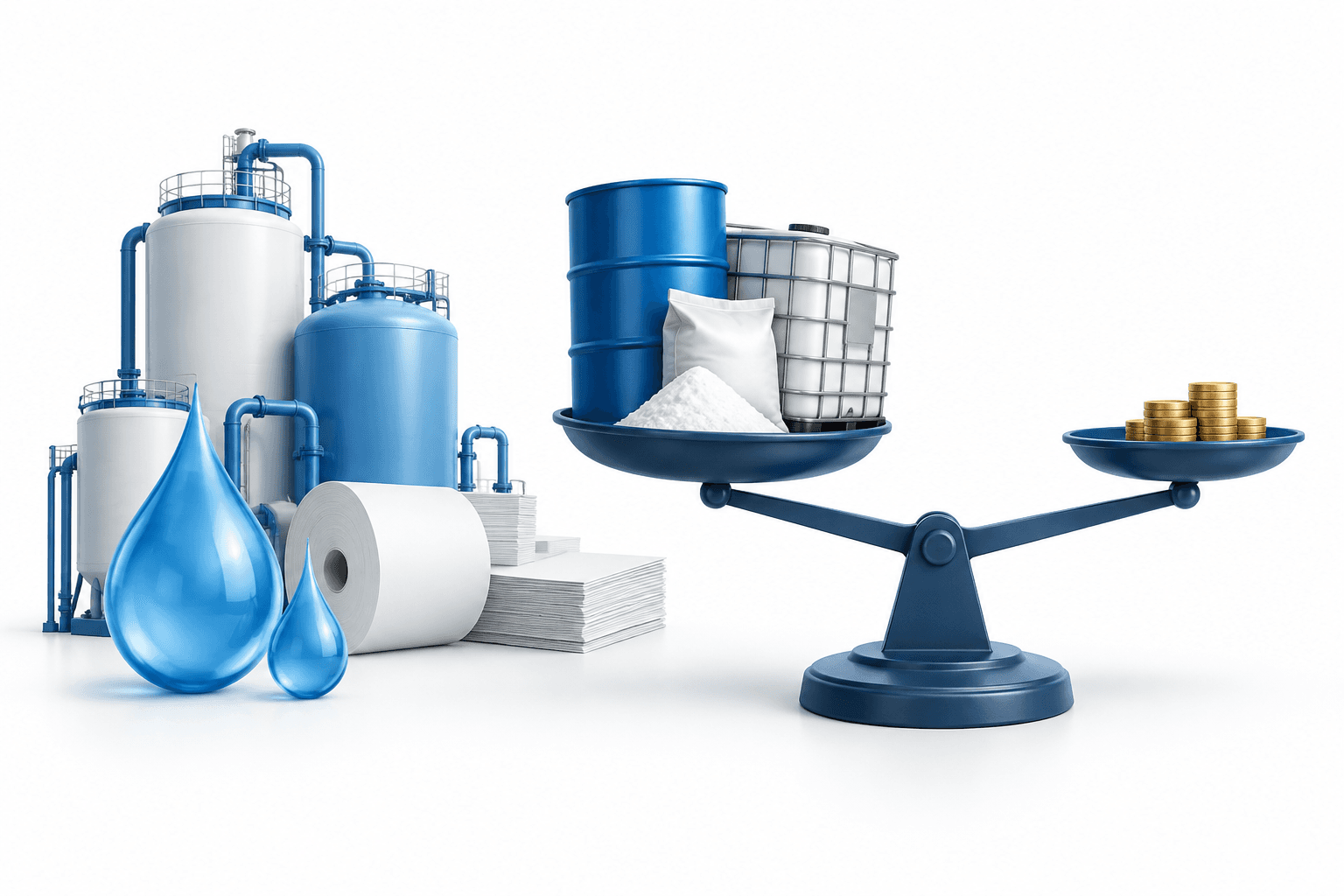
Kemira earnings for the third quarter of 2026 showed an 18% decline in operative EBITDA despite higher revenue, as raw material inflation outpaced customer price increases. In results released on October 23, the chemicals company reported operative EBITDA of EUR 112.8 million on revenue of EUR 708.9 million, while retaining its full-year outlook.
Key Takeaways
- Acquisitions drove the 3% revenue increase; organic revenue was unchanged.
- The operative EBITDA margin fell to 15.9%, with packaging and hygiene facing the greatest pressure.
- Kemira maintained its 2026 guidance despite expecting price increases to cover only about half of its estimated cost headwind.
Table of Contents
- Kemira earnings reveal a widening price-cost gap
- Packaging and hygiene struggles to pass on costs
- Cash generation weakens as acquisitions continue
- Full-year guidance holds despite volatile input costs
- Conclusion
Kemira earnings reveal a widening price-cost gap
Kemira’s January–September 2026 interim report showed third-quarter revenue rising from EUR 687.7 million a year earlier. However, revenue in local currencies excluding acquisitions and divestments was stable, meaning the reported increase did not reflect underlying organic expansion.
Sales prices increased year over year, but volumes declined. Both prices and volumes improved sequentially. The distinction matters: the company generated more revenue than a year earlier without selling more overall volume.
Higher variable costs reduced quarterly profitability by EUR 35 million, while customer price increases provided EUR 11 million of support. That left a negative EUR 24 million price-cost effect on operative EBITDA. Lower fixed costs contributed a further EUR 8 million, but did not close the gap.
The group’s operative EBITDA margin declined from 20.0% to 15.9%. Diluted earnings per share fell to EUR 0.21 from EUR 0.38.
| Item | Details |
|---|---|
| Water Solutions operative EBITDA margin | Q3 2026: 19.7%; Q3 2025: 23.1%. |
| Packaging & Hygiene Solutions operative EBITDA margin | Q3 2026: 9.3%; Q3 2025: 13.6%. |
| Fiber Essentials operative EBITDA margin | Q3 2026: 19.3%; Q3 2025: 24.1%. |
Packaging and hygiene struggles to pass on costs
Packaging & Hygiene Solutions recorded 4% organic revenue growth, supported by higher prices and volumes. Profitability nevertheless weakened as raw material inflation and a less favorable sales mix outweighed those gains.
Chief Executive Antti Salminen said soft packaging and paper markets, particularly in Europe and Asia-Pacific, made it difficult to pass higher costs on to customers. During the earnings call, he described cost pass-through as a global challenge rather than an issue confined to one region.
Water Solutions revenue increased 5%, mainly through acquisitions, while organic growth was 1%. Customer price increases began contributing toward the end of the quarter. Fiber Essentials organic revenue fell 6% as both prices and volumes declined; maintenance at the Olkiluoto nuclear power plant also reduced its quarterly result by approximately EUR 2 million.
Cash generation weakens as acquisitions continue
Operating cash flow declined to EUR 57.0 million from EUR 132.2 million a year earlier, reflecting lower EBITDA and higher net working capital. Net debt reached EUR 649 million, with gearing at 40% and leverage at 1.4 times trailing 12-month EBITDA.
Kemira continued expanding its water business. It acquired the business of US-based ANMAC Water Treatment Service in July and Italy’s activated carbon reactivation services provider REPUR in August. The SIDRA Wasserchemie acquisition closed at the beginning of October after German regulatory approval, placing that completion outside the third quarter.
Full-year guidance holds despite volatile input costs
Kemira retained its 2026 revenue outlook of EUR 2.6 billion to EUR 3.0 billion and operative EBITDA outlook of EUR 400 million to EUR 500 million. For January–September, revenue was EUR 2,079.3 million and operative EBITDA was EUR 341.8 million.
Management continued to estimate that raw material and logistics inflation would add around EUR 100 million to its full-year cost base, with roughly half offset through price increases. These remain outlook assumptions rather than completed mitigation.
Salminen said the company did not expect a major change in fourth-quarter demand. Some improvement from formula-based pricing in Fiber Essentials was expected, although volatile input costs continued to limit visibility.
Conclusion
Kemira’s next scheduled financial update is its 2026 financial statements bulletin on February 9, 2027. The key issue will be whether customer pricing and cost control narrow the profitability gap while demand remains subdued.
Read More News
Disclaimer
This FinanceVelix article provides general information, not personalized financial, investment, legal, or tax advice. Market prices, interest rates and economic conditions can change; investments carry a risk of loss. Facts reflect the material available when published and may change. Check important information independently and consult a qualified professional when needed. Mentioning an asset, company, or service is not an endorsement.



Comments
Be respectful. No spam, impersonation or private credentials. Ordinary posts and comments appear immediately; suspicious links are held for review.
Please wait…