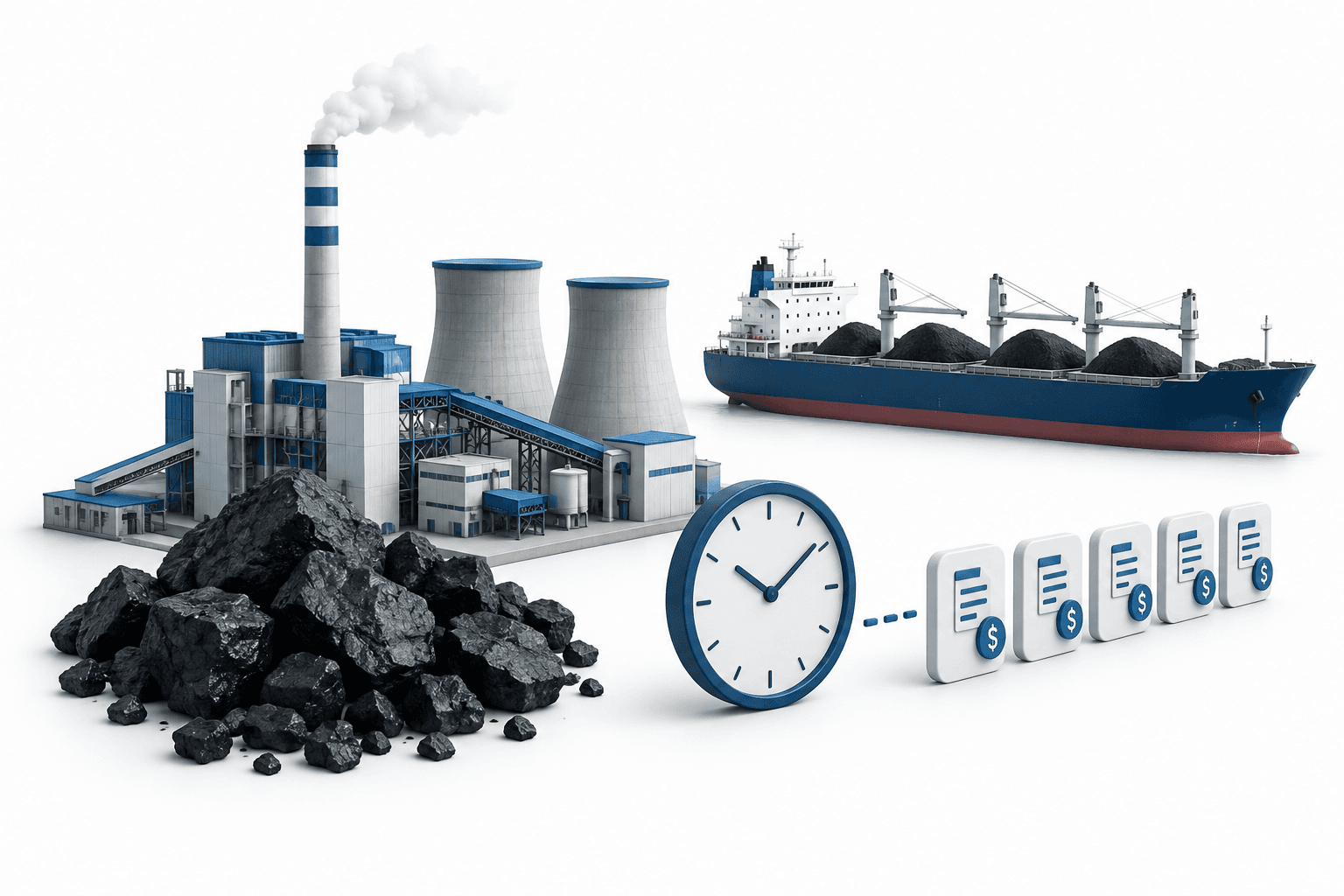
Adani Power’s landed imported-coal costs rose about 50% year on year in the second quarter of FY27, but recovering that increase through tariffs at its Gujarat project will take more than six months. Chief Executive Officer S B Khyalia outlined the delay on October 26, 2026, contrasting it with the company’s Bangladesh contract, where international fuel-price changes are reflected immediately in billing.
Key Takeaways
- Quarterly fuel expenses rose 41.8%, reflecting higher generation volumes and more expensive imported coal.
- Gujarat’s indexed tariff mechanism delays cost recovery, unlike the immediate billing adjustment under the Bangladesh contract.
- Poorer domestic coal quality also increased effective fuel costs, without automatic tariff compensation.
Table of Contents
- Adani Power fuel expenses outpace operating earnings
- Gujarat and Bangladesh contracts recover costs differently
- Domestic coal quality creates a separate cost pressure
- Conclusion
Adani Power fuel expenses outpace operating earnings
Adani Power’s Q2 FY27 results announcement put fuel expenses at ₹10,229.38 crore, up from ₹7,216.23 crore a year earlier. The increase reflected both higher volumes and a 50% rise in the landed cost of imported coal.
The larger fuel bill did not prevent operating earnings from growing. Continuing earnings before interest, taxes, depreciation and amortization rose 18.5% to ₹6,320.97 crore, supported by higher volumes, improved tariffs and merchant-market realizations, and control of operating expenses.
However, fuel expenses grew faster than continuing operating earnings. The distinction matters because provisions allowing fuel costs to be passed through to customers do not necessarily recover those costs in the same quarter.
| Item | Details |
|---|---|
| First-half fuel expenses | ₹19,768.50 crore in H1 FY27 versus ₹14,535.04 crore a year earlier; up 36%. |
| Quarterly electricity sales | 26.4 billion units in Q2 FY27 versus 23.7 billion units in Q2 FY26; up 11.5%. |
| Continuing total revenue | ₹17,528.35 crore in Q2 FY27; up 28.5% year on year. |
| Results release date | October 23, 2026, covering the second quarter of financial year 2026–27. |
Gujarat and Bangladesh contracts recover costs differently
Most of Adani Power’s capacity has provisions for fuel-cost pass-through, Khyalia said. At the Gujarat project, however, tariffs are linked to an index, creating a delay between a change in coal prices and its recovery through electricity charges.
“This increase in fuel cost of imported one will get reflected almost after more than six months,” Khyalia told investors. He said the increase would not appear in tariffs in the immediately following quarter.
Khyalia said the delay had slightly reduced the margin the company could otherwise have earned. He also clarified that per-unit realization at the Gujarat project was not below the actual cost of fuel. A recovery lag therefore should not be confused with a claim that electricity was being sold below fuel cost.
The Bangladesh power purchase agreement works differently. Its tariffs are linked to international prices, allowing increases to be reflected immediately in billing, Khyalia said. Adani Power supplies Bangladesh from its 1,600-MW Godda plant in Jharkhand.
Domestic coal quality creates a separate cost pressure
The effective cost of domestic coal also increased during the September quarter, even though Coal India’s notified prices did not rise. Khyalia attributed this to monsoon-related deterioration in coal quality, which required more coal to generate each unit of electricity.
Unlike imported-coal price increases covered by contractual pass-through provisions, the extra consumption caused by poorer domestic coal quality does not automatically translate into higher tariffs.
Khyalia said power tariffs, including merchant rates, would need to rise to some extent. That was management’s assessment of pricing pressure, not an announced tariff increase or a confirmed timetable for higher market prices.
Conclusion
The next issue for Adani Power is when Gujarat’s indexed tariffs reflect the higher imported-coal costs already incurred. Management has indicated a lag of more than six months, rather than recovery in the immediately following quarter; the Bangladesh contract does not carry the same delay.
Read More News
Disclaimer
This FinanceVelix article provides general information, not personalized financial, investment, legal, or tax advice. Market prices, interest rates and economic conditions can change; investments carry a risk of loss. Facts reflect the material available when published and may change. Check important information independently and consult a qualified professional when needed. Mentioning an asset, company, or service is not an endorsement.