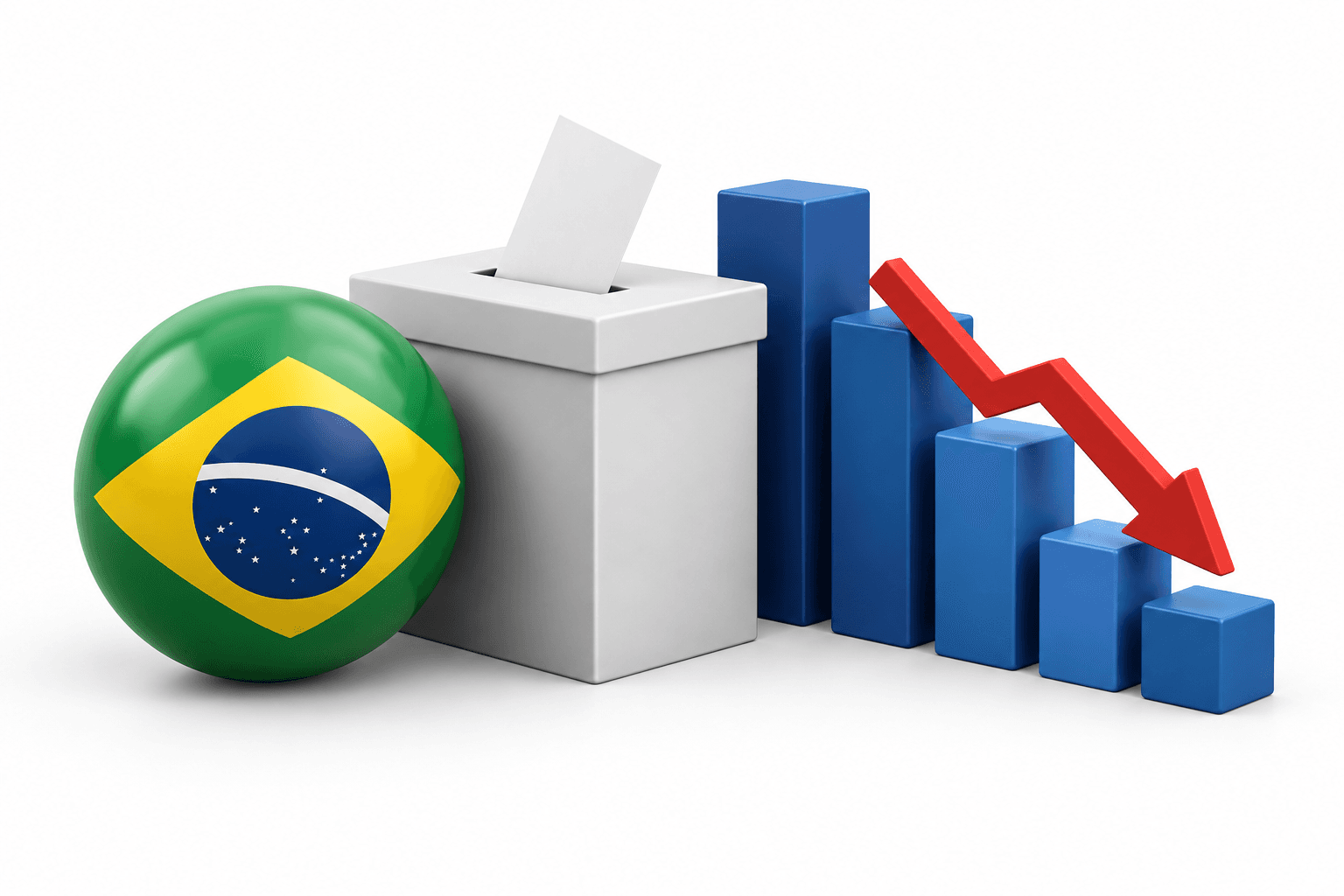
Brazil stocks traded in the United States fell sharply on October 26, 2026, after President Luiz Inácio Lula da Silva won reelection in a runoff that prediction markets had heavily favored his rival to win. The iShares MSCI Brazil ETF fell 22%, while several major Brazilian companies recorded double-digit declines.
Key Takeaways
- Lula defeated Flávio Bolsonaro by 51.8% to 48.2% in the October 25 runoff.
- U.S.-traded Brazilian banks, Petrobras and Ambev fell sharply on Monday.
- Kalshi and Polymarket had assigned Bolsonaro a greater than 80% chance of victory after first-round voting.
Brazil stocks fall across banks and major companies
The selloff extended beyond the iShares MSCI Brazil ETF, which trades under the ticker EWZ. U.S.-traded shares of Itaú Unibanco fell 20%, while Banco Bradesco dropped nearly 30%.
Brewer Ambev and oil producer Petrobras each declined more than 15%. The reported moves followed the election result; they do not, by themselves, establish which policy expectations or other factors drove investors to sell.
Lula wins a runoff that markets favored Bolsonaro to take
Lula secured 51.8% of the vote against 48.2% for Flávio Bolsonaro, the son of former president Jair Bolsonaro, according to Brazil’s Superior Electoral Court.
Prediction-market pricing had pointed in the opposite direction. Following the first round on October 4, both Kalshi and Polymarket gave Bolsonaro a greater than 80% chance of winning. Lula’s implied probability on Kalshi was still 21% just after 8:30 p.m. Eastern time on October 25.
Political polls, by contrast, had shown a tight race in the days before the runoff. That distinction matters: a market price reflects traders’ assessment of an outcome, rather than a survey of voters.
What prediction-market odds actually represent
Kalshi’s explanation of how contract prices are determined describes probabilities as market-assigned assessments formed through participants trading opposing views. Prices can therefore change as traders reassess an event’s likely outcome.
A low implied probability is not a prediction that an outcome cannot happen. Lula’s victory was contrary to the outcome traders favored, but a single result alone does not establish whether a platform’s probabilities are consistently reliable.
Read More News
Disclaimer
This FinanceVelix article provides general information, not personalized financial, investment, legal, or tax advice. Market prices, interest rates and economic conditions can change; investments carry a risk of loss. Facts reflect the material available when published and may change. Check important information independently and consult a qualified professional when needed. Mentioning an asset, company, or service is not an endorsement.




Comments
Be respectful. No spam, impersonation or private credentials. Ordinary posts and comments appear immediately; suspicious links are held for review.
Please wait…