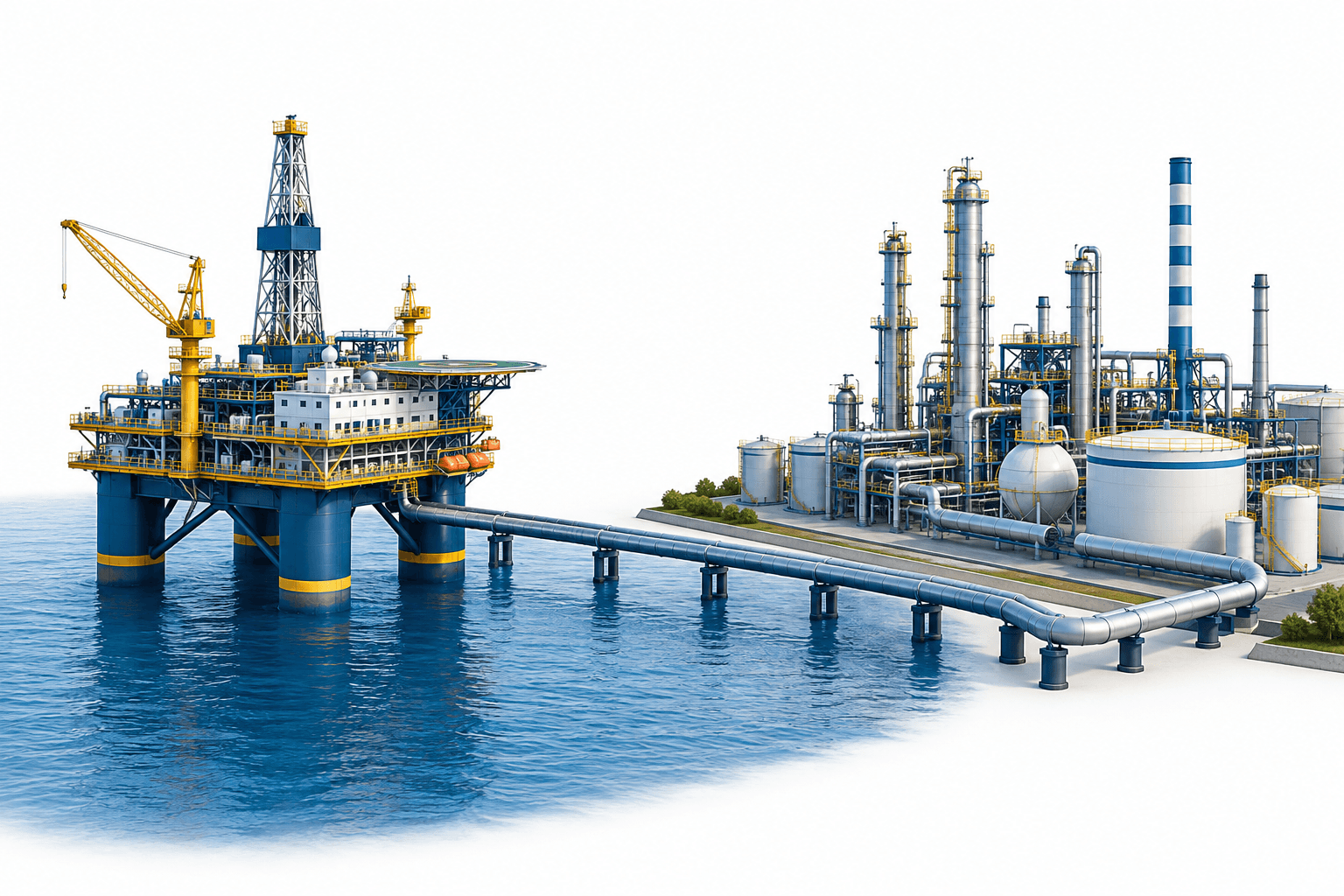
ONGC earnings before interest, taxes, depreciation and amortization could rise 15–20% in the financial year ending March 2027, S&P Global Ratings said on October 26, 2026. The agency expects stronger oil and gas production earnings and a recovery at the Indian energy producer’s refining subsidiaries.
Key Takeaways
- S&P forecasts consolidated EBITDA of ₹1.3 lakh crore to ₹1.4 lakh crore in fiscal 2027.
- Refining subsidiaries HPCL and MRPL returned to positive combined EBITDA in the September quarter.
- Despite the earnings outlook, S&P expects fiscal 2027 operating cash flow to fall as working capital needs rise.
ONGC earnings outlook and oil price assumptions
S&P expects ONGC’s upstream operations to be the main driver of the projected EBITDA increase. It anticipates domestic oil and gas production of about 10 million tonnes per quarter, equivalent to 73.5 million barrels of oil, supporting quarterly EBITDA of ₹25,000 crore to ₹30,000 crore.
The forecast assumes Brent crude averages $95 a barrel for the rest of 2026 and $80 a barrel in 2027. A subsequent decline in oil prices could moderate the contribution from exploration and production.
Refining recovery follows June-quarter losses
Hindustan Petroleum Corp Ltd and Mangalore Refinery and Petrochemicals Ltd, ONGC’s downstream subsidiaries, recorded combined EBITDA of ₹12,000 crore in the quarter ended September 30, reversing negative EBITDA of about ₹17,500 crore in the preceding quarter, S&P said.
The June-quarter result was heavily affected by the Middle East conflict, which disrupted energy markets and increased supply-chain costs. S&P expects improved refining margins and lower losses at HPCL to support downstream EBITDA of about ₹17,000 crore in fiscal 2027.
The agency expects HPCL to benefit from higher refined-fuel selling prices relative to procurement costs and lower fuel excise duties since March 2026. It also cautioned that substantial downstream losses can materially weaken group earnings.
Cash flow and credit outlook
S&P nevertheless expects consolidated operating cash flow to decline to ₹75,000 crore–₹80,000 crore in fiscal 2027 from ₹1.1 lakh crore in fiscal 2026. It attributes the anticipated fall to higher working capital requirements associated with elevated oil and fuel prices, particularly in the downstream business.
The agency said ONGC’s funds from operations-to-debt ratio could improve to about 60% over the next 12–24 months, above its 40% threshold for a BBB+ standalone credit profile. The assessment was not a rating action; S&P said ONGC’s ratings remain constrained by India’s sovereign ratings of BBB/Stable/A-2.
Read More News
Disclaimer
This FinanceVelix article provides general information, not personalized financial, investment, legal, or tax advice. Market prices, interest rates and economic conditions can change; investments carry a risk of loss. Facts reflect the material available when published and may change. Check important information independently and consult a qualified professional when needed. Mentioning an asset, company, or service is not an endorsement.




Comments
Be respectful. No spam, impersonation or private credentials. Ordinary posts and comments appear immediately; suspicious links are held for review.
Please wait…