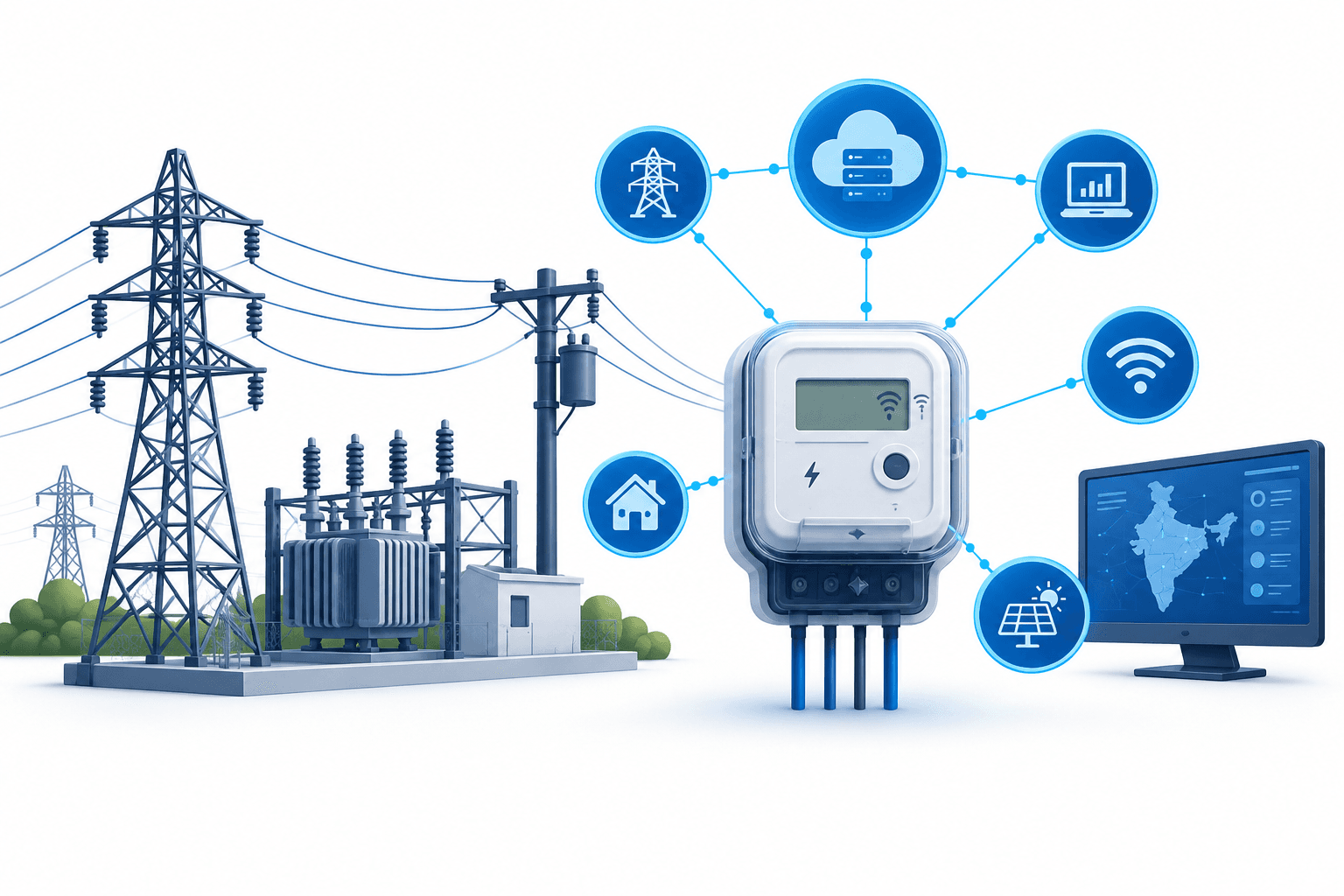
The India power grid could be upgraded under a digitalisation framework released by the Central Electricity Authority (CEA) in October 2026. The blueprint proposes connecting distribution utilities’ meters, billing systems and control software in stages, rather than treating them as separate projects.
Key Takeaways
- The first proposed phase, from 2026 to 2029, focuses on readiness, data quality, smart meters and cybersecurity.
- Software integration would follow through 2032, with advanced automation extending beyond 2035.
- Human engineers would retain ultimate veto power over critical grid switching.
India power grid upgrades would proceed in stages
The CEA recommends that utilities first improve visibility of their networks, clean up their data and integrate software before moving to automation and optimisation. The framework also calls for physical network upgrades to advance alongside digital improvements.
The proposed schedule begins with readiness assessments, data cleanup, smart-meter deployment and cybersecurity baselines in 2026–29. A second phase, running until 2032, would integrate systems such as geographical information, billing and data controls. A final phase extending beyond 2035 would introduce more intelligence and automation, including self-healing capabilities and renewable-energy management systems.
| Item | Details |
|---|---|
| 2026–29 | Readiness assessments, data cleanup, smart meters and cybersecurity baselines. |
| Until 2032 | Integration of software systems across utility departments. |
| Beyond 2035 | Advanced automation and renewable-energy management integration. |
Existing tools and safeguards
Some distribution companies are already testing digital tools. Smart meters can support two-way communication, prepaid billing and real-time consumption tracking. In Bihar, analytics from Bidgely helped Bihar State Power Holding Company flag 136 suspected theft cases in one month.
The framework also envisages uses for artificial intelligence, including predicting transformer overheating, and digital replicas of grids to simulate extreme weather or heavy electric-vehicle loads. These are potential applications, not evidence that they are available across the national grid.
For cybersecurity, the framework calls for network segmentation, multifactor authentication and continuous monitoring. It also emphasises employee training and specialised digital teams.
Next milestone
The first proposed phase runs from 2026 to 2029, when utilities would assess their readiness and establish the foundations for later integration.
Read More News
Disclaimer
This FinanceVelix article provides general information, not personalized financial, investment, legal, or tax advice. Market prices, interest rates and economic conditions can change; investments carry a risk of loss. Facts reflect the material available when published and may change. Check important information independently and consult a qualified professional when needed. Mentioning an asset, company, or service is not an endorsement.



Comments
Be respectful. No spam, impersonation or private credentials. Ordinary posts and comments appear immediately; suspicious links are held for review.
Please wait…