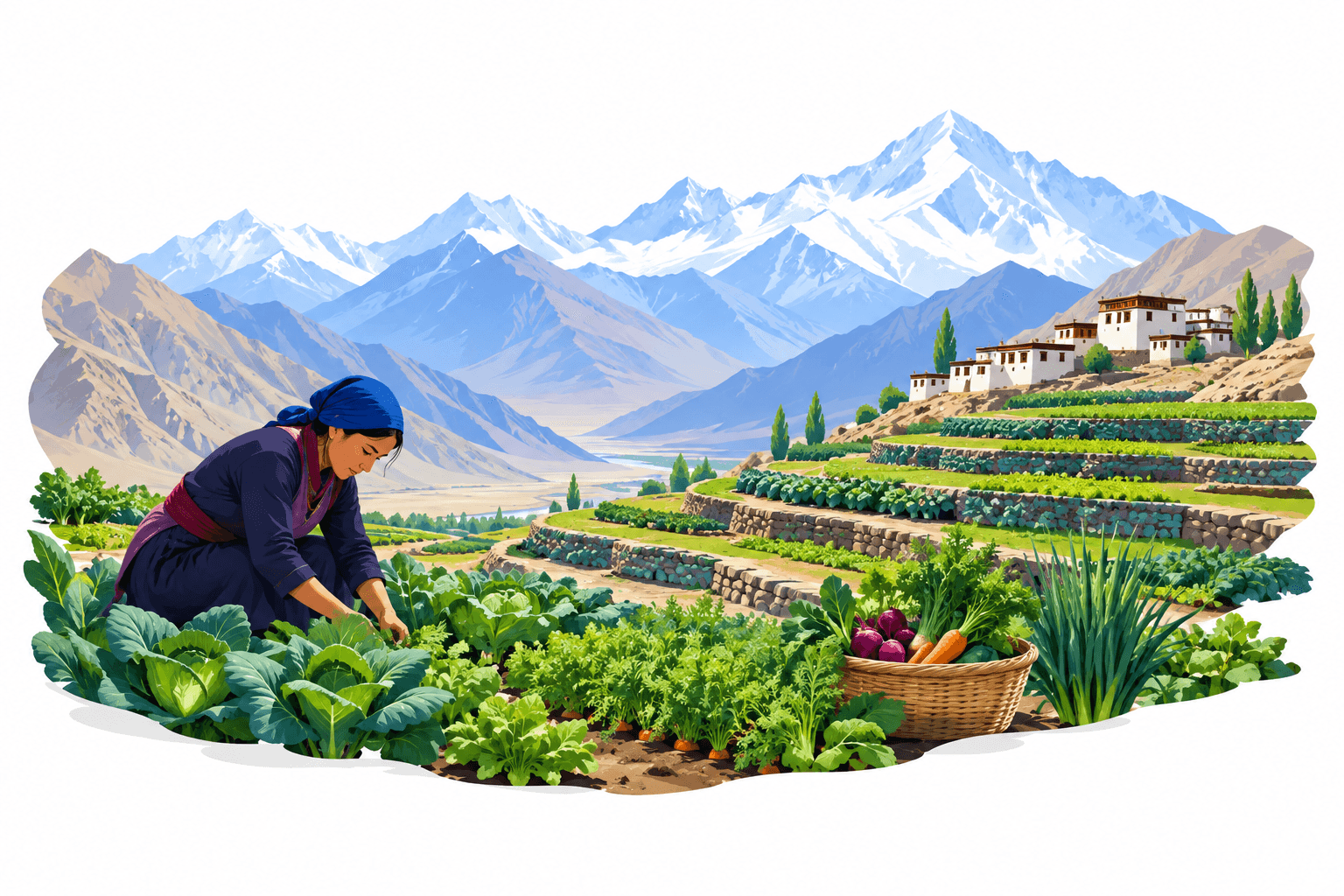
Ladakh organic farming has reached a territory-wide milestone, with Lieutenant Governor Vinai Kumar Saxena declaring the region India’s first fully organic union territory on October 25, 2026. The announcement follows a ban on the sale and use of chemical fertilisers, while work to certify villages continues.
Key Takeaways
- Ladakh banned the sale and use of chemical fertilisers in June 2026.
- Before the announcement, 207 revenue villages had been brought under organic certification; the administration aims to certify all 666 villages.
- A local farmer said certification would matter if it brought better markets and higher incomes.
Ladakh organic farming certification continues
Saxena credited farmers for the milestone and said continued certification and the fertiliser prohibition would protect Ladakh’s Himalayan ecosystem and enhance the value of local produce.
The territory’s Mission Organic Development Initiative, launched in 2020, aims to convert all 666 villages into certified organic hubs. The ₹500-crore initiative supports bio-fertiliser production, seed distribution, protected cultivation and marketing.
The declaration of a fully organic territory is separate from the certification target: the source reported that 207 revenue villages had been brought under certification before the latest announcement.
Farmers look for better markets
Ladakh’s high-altitude, cold-desert climate and short growing season make cultivation difficult. Its crops include barley, wheat, peas, buckwheat and vegetables.
Saxena said the organic transition would strengthen market links and improve farmers’ incomes. Local farmer Tashi said certification would be meaningful for farmers only if it helped them find better markets and earn more.
Read More News
Disclaimer
This FinanceVelix article provides general information, not personalized financial, investment, legal, or tax advice. Market prices, interest rates and economic conditions can change; investments carry a risk of loss. Facts reflect the material available when published and may change. Check important information independently and consult a qualified professional when needed. Mentioning an asset, company, or service is not an endorsement.



Comments
Be respectful. No spam, impersonation or private credentials. Ordinary posts and comments appear immediately; suspicious links are held for review.
Please wait…