Halliburton shares rose 3.8% in premarket trading on October 20, 2026, after the oilfield services company reported third-quarter net income of $417 million and outlined an early outlook for growth in 2027. Revenue increased 1.8% from a year earlier to $5.7 billion, with stronger drilling and evaluation activity offsetting weaker completion and production sales.
Key Takeaways
- Quarterly net income reached $417 million, or $0.50 per diluted share, versus $18 million a year earlier.
- Drilling and Evaluation revenue rose 10% year over year, while Completion and Production revenue declined 4.2%.
- Management expects mid-single-digit revenue growth and operating margins of about 15% in 2027.
Table of Contents
- Halliburton shares advance as quarterly profit rebounds
- Drilling growth offsets weaker completion activity
- Early 2027 outlook assumes no fracturing recovery
- Conclusion
Halliburton shares advance as quarterly profit rebounds
Halliburton’s third-quarter 2026 results announcement showed diluted earnings rising to $0.50 per share from $0.02 a year earlier. Adjusted net income, which excludes impairments and other charges and tax adjustments, was $501 million, or $0.60 per diluted share.
The year-over-year improvement in reported profit came alongside lower impairments and other charges: $107 million, compared with $392 million in the third quarter of 2025. The income tax provision also declined, to $94 million from $199 million. Those changes help explain why net income increased much faster than revenue.
The sequential comparison was more mixed. Reported net income fell from $534 million in the second quarter, while adjusted net income rose from $461 million. Revenue was essentially flat quarter over quarter. Reported operating margin was 10.9%, compared with an adjusted operating margin of 12.8%.
| Item | Details |
|---|---|
| Third-quarter operating cash flow | $368 million |
| Third-quarter free cash flow | $156 million; a company-defined non-GAAP measure |
| Third-quarter share repurchases | Approximately $250 million |
| Dividend paid during the quarter | $0.17 per share |
Drilling growth offsets weaker completion activity
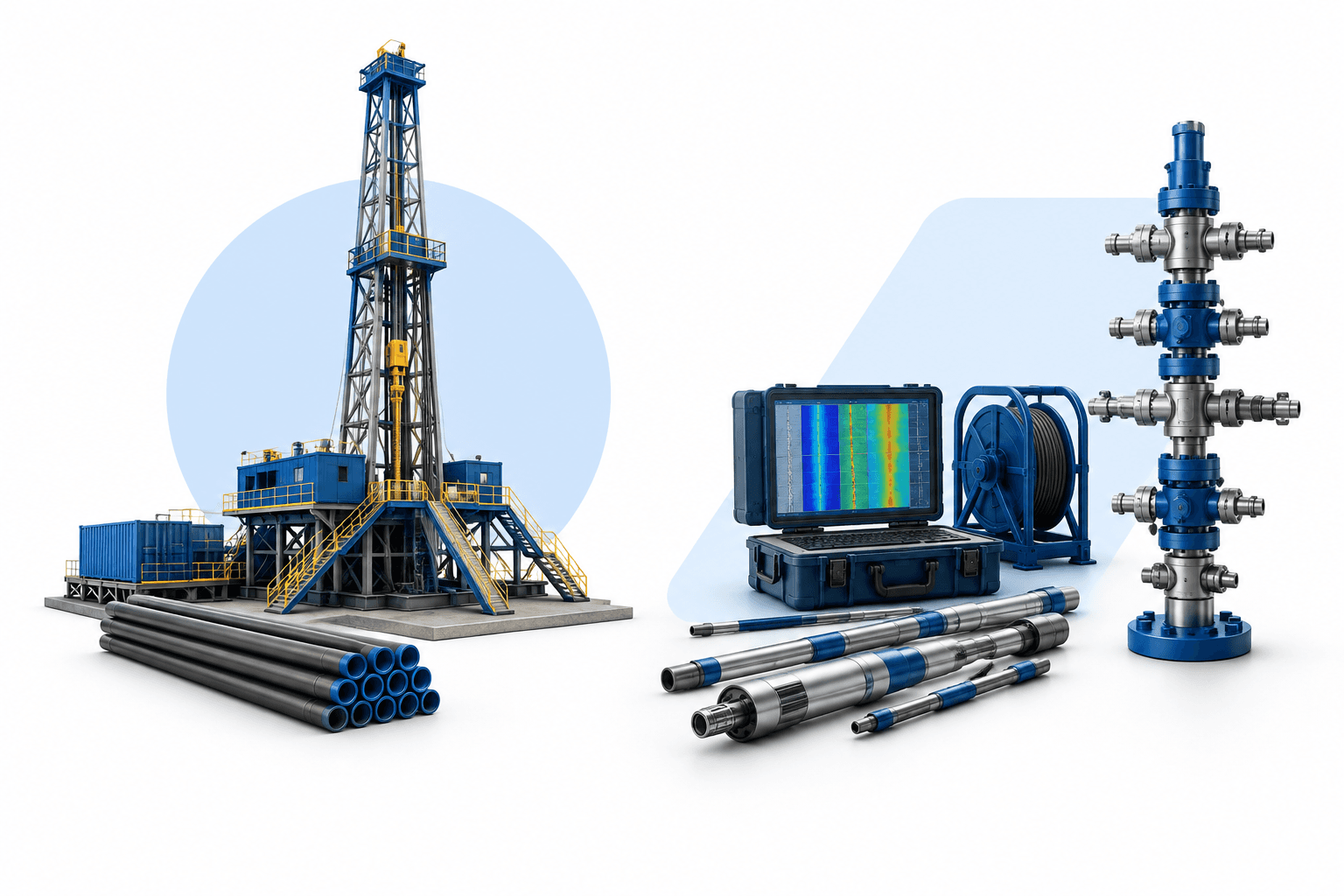
Drilling and Evaluation revenue reached $2.614 billion, up from $2.377 billion a year earlier. Completion and Production revenue declined to $3.089 billion from $3.223 billion.
Compared with the second quarter, Drilling and Evaluation revenue increased 4%, supported by activity in the Middle East and Latin America and increased drilling-related services in the Western Hemisphere. Completion and Production revenue fell 4% sequentially, primarily because of lower stimulation activity in the Western Hemisphere.
The regional figures showed a similar split. North American revenue declined 5% sequentially to $2.2 billion, primarily because of lower pressure-pumping services on U.S. land. International revenue increased 3% to $3.5 billion, including an 8% increase in Middle East/Asia revenue.
Early 2027 outlook assumes no fracturing recovery
Chairman, President and Chief Executive Officer Jeff Miller said the company’s early 2027 outlook calls for mid-single-digit revenue growth and operating margins of about 15%, an improvement of approximately 200 basis points.
That forecast assumes a flat North American market and does not require a recovery in North American hydraulic fracturing. Management therefore presented any such recovery as potential upside, rather than a condition needed to achieve the outlook. These figures are forward-looking expectations, not completed results.
Conclusion
The results combined stronger year-over-year profit with continued weakness in North American activity. The next test is whether Halliburton can deliver the revenue growth and margin improvement outlined in its early 2027 outlook without a hydraulic fracturing recovery.
Read More News
Disclaimer
This FinanceVelix article provides general information, not personalized financial, investment, legal, or tax advice. Market prices, interest rates and economic conditions can change; investments carry a risk of loss. Facts reflect the material available when published and may change. Check important information independently and consult a qualified professional when needed. Mentioning an asset, company, or service is not an endorsement.