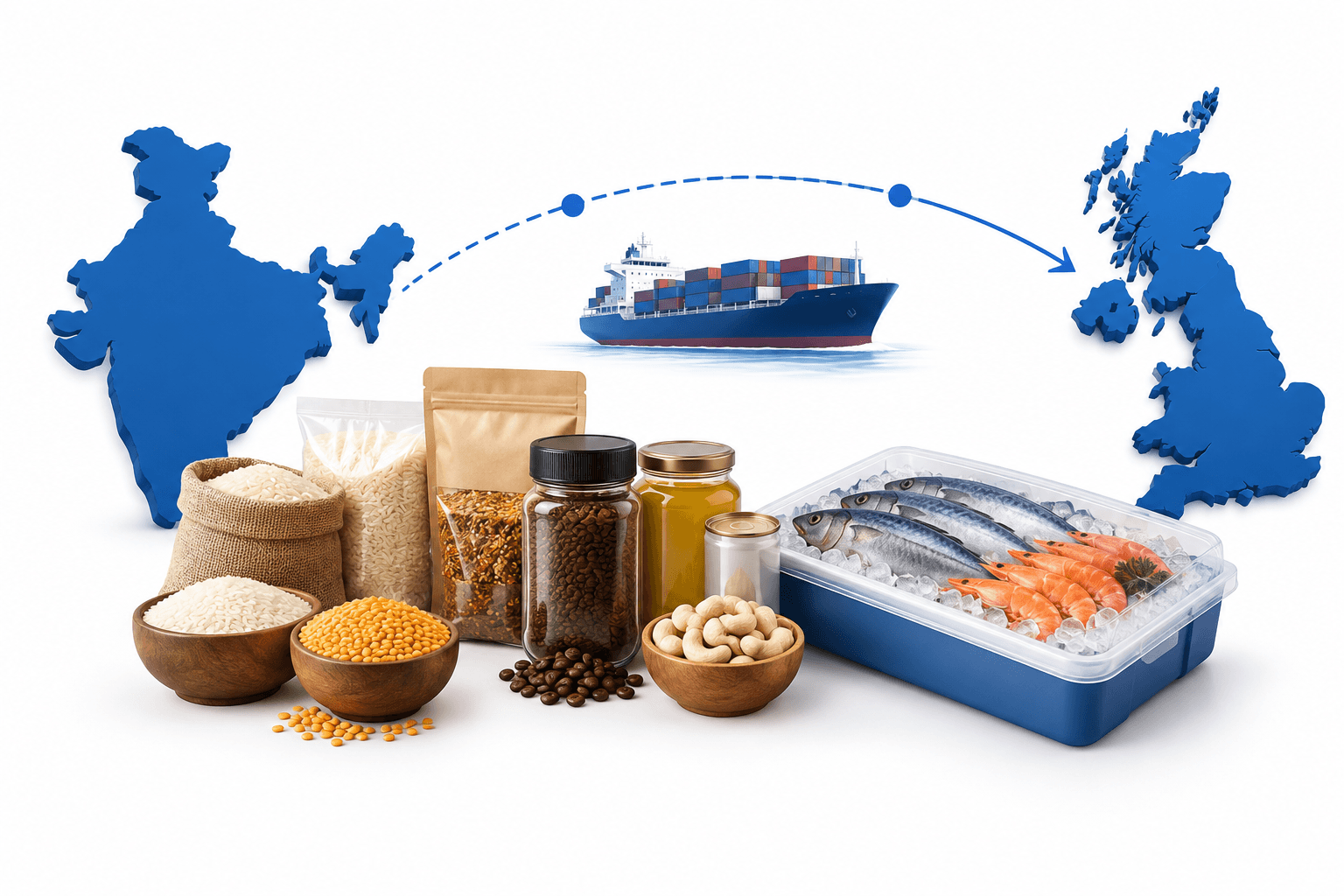
India food exports have substantial room to expand in the UK, the Trade Promotion Council of India said in an October 21, 2026 announcement, citing a 0.6% share of Britain’s annual processed-food imports. The industry body has signed a partnership with the UK-India Business Council to help businesses pursue opportunities under the bilateral trade agreement.
Key Takeaways
- TPCI puts India’s share of UK processed-food imports at $309.5 million out of a $50.68 billion annual market.
- The industry body says the trade agreement has eliminated UK tariffs on processed foods, shrimp and instant coffee.
- A new TPCI–UKIBC partnership will support business connections, trade missions and market intelligence.
Table of Contents
- India food exports start from a small UK market share
- Tariff relief changes the market-access conditions
- Business partnership follows London trade event
- Conclusion
India food exports start from a small UK market share
TPCI Chairman Mohit Singla identified food and beverages as an area for expansion following the India–UK Comprehensive Economic and Trade Agreement, known as CETA. TPCI said the agreement entered into force on July 15, 2026.
The council’s figures put Indian processed-food exports to the UK at $309.5 million, or approximately 0.6% of Britain’s $50.68 billion in annual processed-food imports. The announcement did not specify the reporting period for those figures.
That small share describes the starting point for exporters, not a forecast of future sales. TPCI did not announce an export-growth target or a timetable for increasing India’s share.
| Item | Details |
|---|---|
| Processed-food tariffs | Previously up to 70%; eliminated under CETA, TPCI said. |
| Shrimp tariffs | Previously 4.2%–8.5%; eliminated under CETA, TPCI said. |
| Instant-coffee duties | Eliminated under CETA, TPCI said; no previous rate was specified. |
Tariff relief changes the market-access conditions
Singla said CETA had eliminated UK tariffs of up to 70% on processed foods, duties of 4.2%–8.5% on shrimp and duties on instant coffee.
The tariff changes reduce a border-cost barrier for the affected Indian products. They are distinct from completed export orders: the announcement described improved access and business-development efforts, rather than reporting a measured post-agreement increase in shipments.
Business partnership follows London trade event
The TPCI–UKIBC business collaboration framework focuses on connecting companies, facilitating trade missions, sharing market intelligence and creating opportunities for small and medium-sized enterprises in both countries.
The organisations also held an India–UK food and beverage trade event in London on October 15, 2026, bringing together 48 Indian exporting companies and 150 UK-based importers.
Singla said the organisations would work on bilateral trade development after CETA’s entry into force, with the aim of turning the agreement into commercial outcomes.
Conclusion
The next step outlined by TPCI is practical business collaboration through the UKIBC partnership. Whether that work produces additional orders and shipments will determine how far India food exports expand beyond their current small share of the UK market.
Read More News
Disclaimer
This FinanceVelix article provides general information, not personalized financial, investment, legal, or tax advice. Market prices, interest rates and economic conditions can change; investments carry a risk of loss. Facts reflect the material available when published and may change. Check important information independently and consult a qualified professional when needed. Mentioning an asset, company, or service is not an endorsement.