Audi plans to invest around $4 billion in its first U.S. production site in Georgia, creating approximately 4,500 jobs. The Audi Georgia plant announcement on October 25, 2026, gives President Donald Trump a manufacturing project to promote ahead of the November 3 midterm elections, although production is not planned to begin until the early 2030s.
Key Takeaways
- Audi plans a Georgia factory capable of producing up to 200,000 vehicles annually.
- Construction is scheduled for 2027, with production targeted for the early 2030s.
- Trump credits tariffs, while Audi describes a broader strategy to strengthen its U.S. business.
Table of Contents
- Audi Georgia plant targets premium SUV growth
- Trump claims a tariff win before the midterms
- Manufacturing benefits remain years away
- Conclusion
Audi Georgia plant targets premium SUV growth
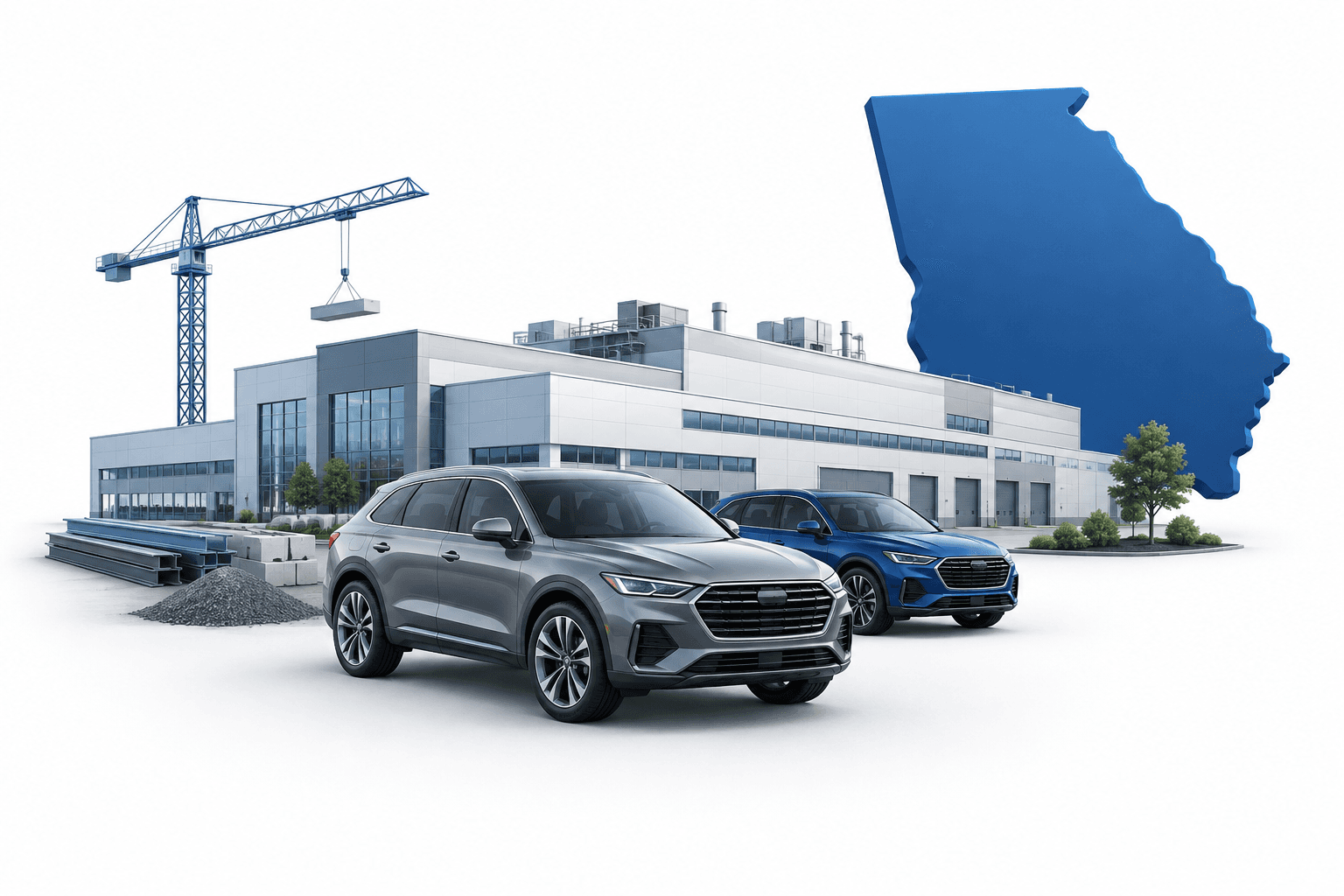
Audi’s announcement of its first U.S. production site outlines a factory designed to build premium SUVs tailored to North American customers. The company identifies the Middle Georgia Mega Site as offering room for future expansion, alongside an established supplier network and logistics infrastructure.
The investment is intended to make North America a third major pillar of Audi’s production network alongside Europe and China. Audi says Germany and Europe will remain its industrial backbone, making the U.S. project an expansion of its manufacturing footprint rather than an announced replacement for European production.
Audi Chairman Gernot Döllner described the project as part of a wider effort to strengthen the brand, product range and local manufacturing base in the United States. The company also expects the investment to create opportunities for regional suppliers, service providers and training partners.
| Item | Details |
|---|---|
| Planned investment | Around $4 billion |
| Planned employment | Approximately 4,500 jobs |
| Annual production capacity | Up to 200,000 vehicles |
| Construction start | Scheduled for 2027 |
| Production start | Planned for the early 2030s |
Trump claims a tariff win before the midterms
At a campaign rally in Perry, Georgia, Trump presented the investment as evidence that his trade policy was attracting manufacturing to the United States. “Without tariffs, they wouldn’t be coming in,” he said.
That is a political claim about the investment’s cause, not a conclusion established by Audi’s announcement. Audi says a stronger North American presence can reduce exposure to trade and currency risks, but it also points to customer demand, local competitiveness and long-term growth as reasons for the project.
The announcement arrives as Republicans seek to retain control of Congress in the November 3 elections. In Georgia, Republican Representative Mike Collins is challenging Democratic Senator Jon Ossoff, giving the planned factory particular significance for Trump’s campaign message on jobs and investment.
Manufacturing benefits remain years away
The distinction between an investment announcement and operating capacity matters. Audi has announced planned spending, employment and production capacity; the factory is not yet producing vehicles, and the approximately 4,500 jobs remain planned positions.
Construction is scheduled to begin in 2027. With vehicle production targeted for the early 2030s, the project represents a long-term commitment to the U.S. market rather than an immediate addition to American vehicle output.
Conclusion
The Audi Georgia plant gives Trump an investment announcement to highlight before the midterms, but its manufacturing timetable extends well beyond the election. The next scheduled project milestone is the start of construction in 2027.
Read More News
Disclaimer
This FinanceVelix article provides general information, not personalized financial, investment, legal, or tax advice. Market prices, interest rates and economic conditions can change; investments carry a risk of loss. Facts reflect the material available when published and may change. Check important information independently and consult a qualified professional when needed. Mentioning an asset, company, or service is not an endorsement.