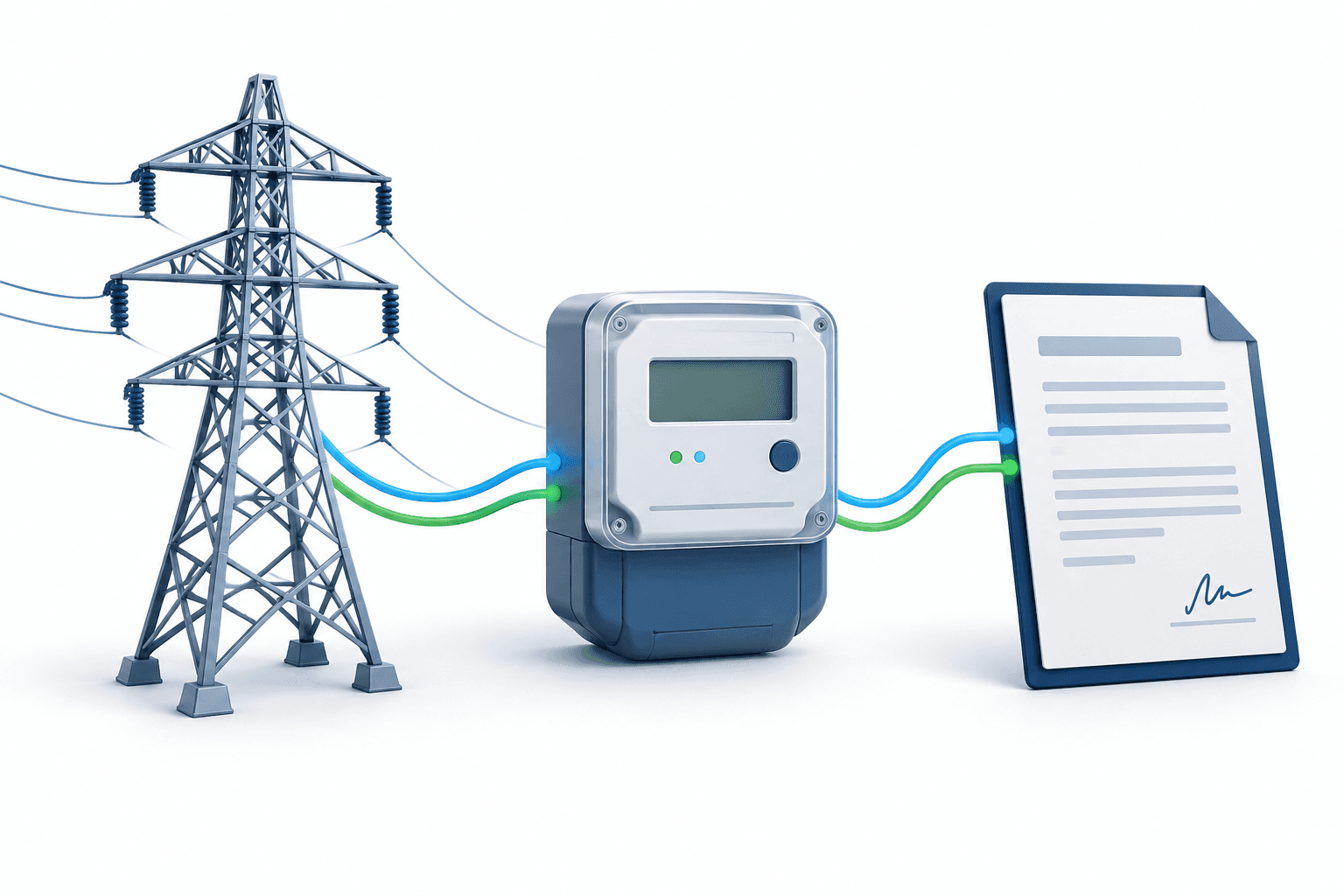
Adani Energy earnings more than doubled in the quarter ended September 30, 2026, with profit after tax rising 145% year over year to Rs 1,364 crore. Adani Energy Solutions reported strong growth across its businesses, but its October 23 earnings call put the focus on a second-half execution challenge: accelerating smart meter installations and completing transmission projects delayed by right-of-way constraints.
Key Takeaways
- Quarterly total income rose 51% to Rs 10,239 crore, while operating EBITDA increased 68% to Rs 3,070 crore.
- Management retained its annual smart meter installation ambition despite a slower first half.
- Long-term power contracts are intended to stabilize revenue, although management expects lower per-unit margins than recent merchant sales.
Adani Energy earnings show broad operating growth
The company’s Q2 FY27 results announcement, released on October 22, showed total EBITDA rising 67% to Rs 3,548 crore. That measure differs from operating EBITDA: the company’s definition includes other income and one-time regulatory income, with an adjustment for corporate social responsibility expenses.
Adani Energy Solutions attributed growth to transmission, smart metering, a larger contribution from its energy solutions platform and steady distribution performance. Total income also included higher Service Concession Arrangement income reflecting increased capital expenditure execution.
The energy solutions platform generated Rs 803 crore of operating EBITDA in the quarter. Across the group, first-half profit after tax reached Rs 2,600 crore, compared with Rs 1,096 crore a year earlier.
| Item | Details |
|---|---|
| Transmission | Q2 FY27 operating revenue: Rs 1,521 crore; operating EBITDA: Rs 1,394 crore. |
| Distribution | Q2 FY27 operating revenue: Rs 3,181 crore; operating EBITDA: Rs 605 crore. |
| Smart metering, Ind AS basis | Q2 FY27 operating revenue: Rs 267 crore; operating EBITDA: Rs 226 crore. |
Smart meter rollout needs a faster second half
The published operating results recorded 3.5 million smart meter installations in the first half, down from 4.2 million in the comparable period. Second-quarter installations were 1.3 million, versus 1.8 million a year earlier, taking the cumulative installed base to about 14.8 million.
On the earnings call, management maintained an annual installation target of about 8–9 million meters. It attributed the slower rollout to customer resistance and utility-specific requirements, including preferences for particular meter types and customer tagging before installation.
Management said education campaigns and progress on those constraints should support faster deployment. It also expected the IntelliSmart acquisition to close within roughly a month, subject to approval from the Competition Commission of India. That timing remained an expectation, not a completed transaction.
Transmission pipeline faces commissioning constraints
The company reported an approximately Rs 87,000 crore transmission construction pipeline after winning the Vizag and Satara projects during the quarter. First-half transmission capital expenditure reached Rs 5,542 crore.
Management said right-of-way issues, particularly in Gujarat, had delayed commissioning. It expected second-half capitalization of roughly Rs 8,000–9,000 crore, supported by projects including WRSR, Khawra and Halwad, and said no downward revision to annual capitalization guidance was planned.
Completion dates remained uncertain for some assets. Management said Navinal could finish within the fiscal year or slip into the first half of the following year, illustrating the difference between a large project pipeline and assets ready to contribute.
Long-term power contracts trade peak margins for stability
Adani Energy Solutions signed a 25-year agreement to supply 2,500 MW of round-the-clock power to Maharashtra State Electricity Distribution Company Limited.
Management described a strategy of securing capacity on both the supply and customer sides rather than relying on merchant-market volatility. It expected long-term contract margins of about Rs 0.80–1 per unit, below recent merchant margins of roughly Rs 1.70–2 per unit.
Those figures are management expectations, not reported future results. The intended benefit is more consistent revenue and volumes, rather than maintaining unusually favorable merchant-market margins.
Read More News
Disclaimer
This FinanceVelix article provides general information, not personalized financial, investment, legal, or tax advice. Market prices, interest rates and economic conditions can change; investments carry a risk of loss. Facts reflect the material available when published and may change. Check important information independently and consult a qualified professional when needed. Mentioning an asset, company, or service is not an endorsement.


Comments
Be respectful. No spam, impersonation or private credentials. Ordinary posts and comments appear immediately; suspicious links are held for review.
Please wait…