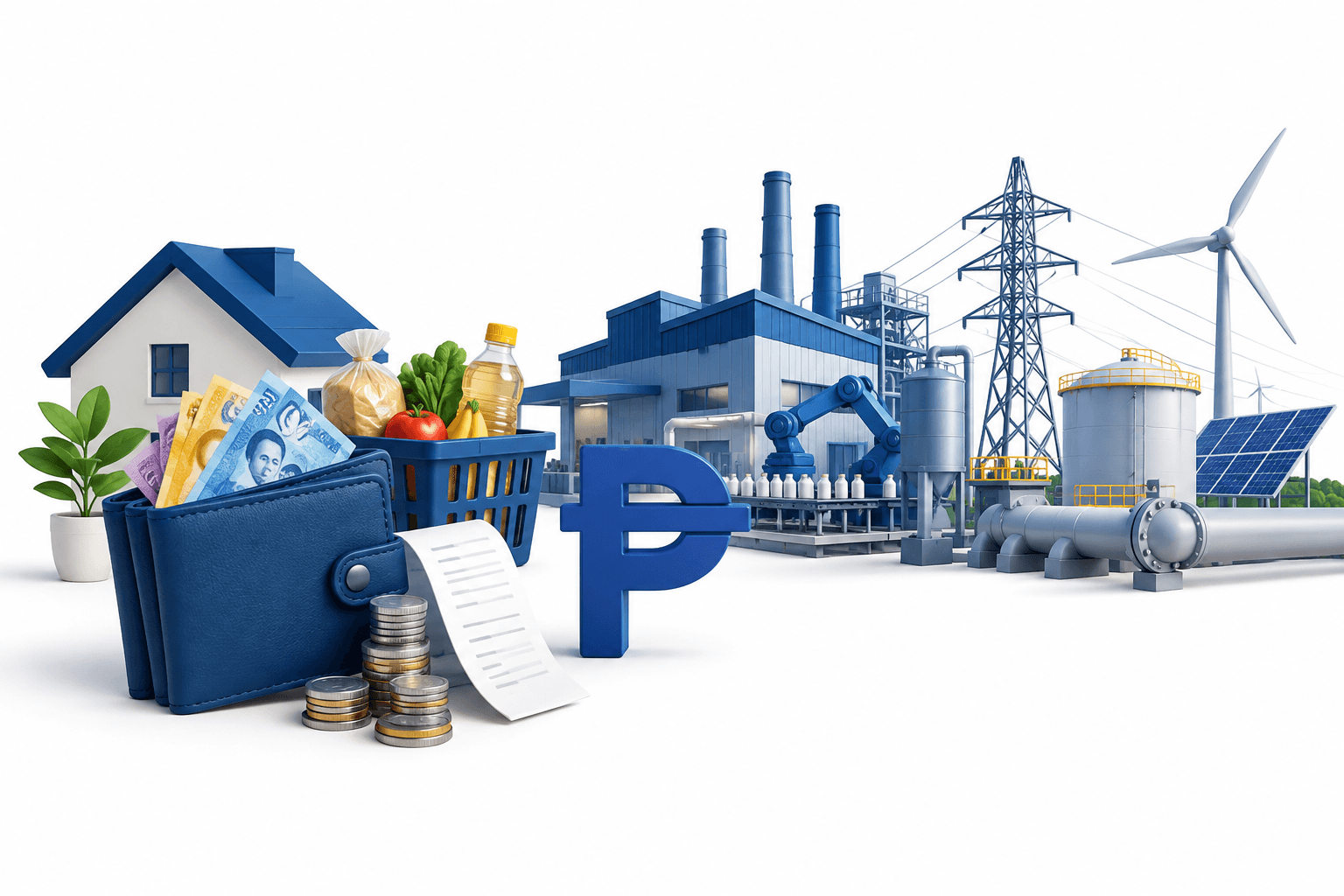
Philippine economic growth faces pressure from inflation, weak private investment and financially vulnerable households, economists said at an October 29, 2026 forum. They called for reforms and stronger investment to support longer-term expansion.
Key Takeaways
- Household consumption growth slowed in the first two quarters of 2026 compared with the same quarters of 2025.
- An economist warned that peso weakness could push inflation close to 8% in October and November.
- Speakers called for stronger private investment, formal job creation and reforms to improve the business climate.
Philippine economic growth and household pressure
Robert Dan Roces, an economist and vice president at SM Investments, said higher consumer spending reflected income gains but did not necessarily mean households were financially secure. He said spending rose faster than income across family income groups between 2023 and 2025.
Roces said about six in 10 Filipinos were above the poverty line but not yet financially secure, leaving them exposed to shocks such as higher food and fuel prices, job losses and medical expenses.
Household consumption growth slowed to 3% in the first quarter of 2026 and 2.8% in the second quarter, from 5.2% and 4.1%, respectively, in the same quarters of 2025, Roces said. He called for more formal jobs, stronger household financial resilience and affordable prices.
Peso weakness and inflation
Emilio Neri Jr., lead economist at Bank of the Philippine Islands, warned that peso depreciation could push inflation close to 8% in October and November 2026. He pointed to the peso touching 64 per US dollar, while expecting inflation eventually to ease if global oil prices normalized.
Neri also identified health care, energy, electronics, manufacturing and education as potential sources of economic activity. He cited continued bank lending to energy and prospective manufacturing investments, including in electric vehicle components.
Investment and reforms
Metrobank chief economist Nicholas Mapa said private investment had not returned to pre-pandemic levels, limiting productive capacity. He also questioned whether higher interest rates could fully address inflation caused by supply shocks such as food and energy prices.
Rizal Commercial Banking chief economist Michael Ricafort called for economic reforms, fiscal discipline and transparency. The World Bank’s August assessment of the Philippines’ upper-middle-income status similarly emphasized reforms to support inclusive growth and better jobs.
Read More News
Disclaimer
This FinanceVelix article provides general information, not personalized financial, investment, legal, or tax advice. Market prices, interest rates and economic conditions can change; investments carry a risk of loss. Facts reflect the material available when published and may change. Check important information independently and consult a qualified professional when needed. Mentioning an asset, company, or service is not an endorsement.


Comments
Be respectful. No spam, impersonation or private credentials. Ordinary posts and comments appear immediately; suspicious links are held for review.
Please wait…