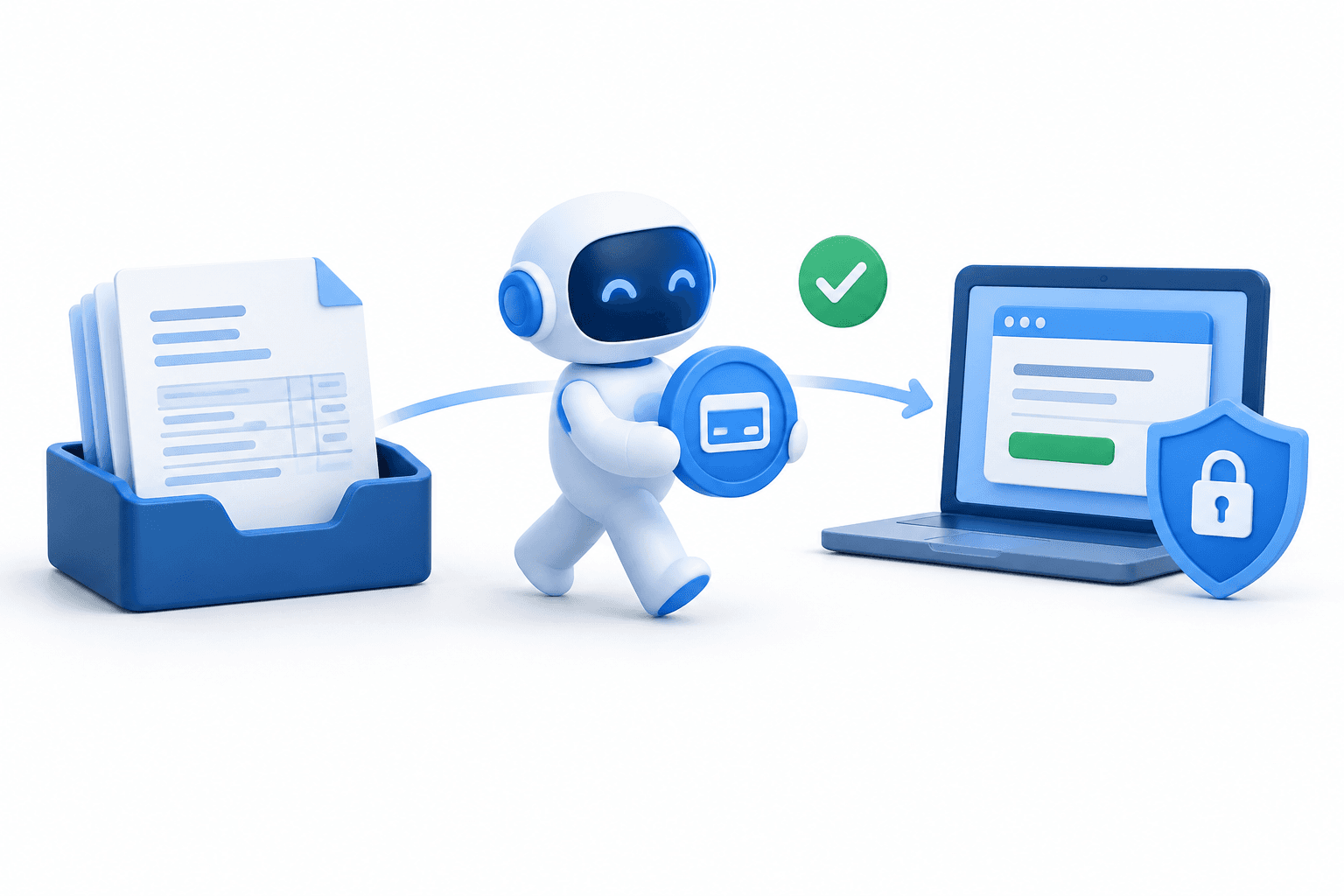
BILL, Visa and Billtrust launched a live AI invoice payments pilot on October 20, 2026, allowing authorized agents to complete previously approved payments through supplier portals. BILL shares rose 5.1% following the announcement, while Visa gained 1.4%. The pilot automates payment execution, not the buyer’s decision to approve an invoice.
Key Takeaways
- The pilot is already processing transactions between participating BILL buyers and Billtrust suppliers.
- Agents use tokenized payment credentials rather than shared supplier-portal logins.
- Buyer approval and supplier acceptance controls remain in place.
Table of Contents
- AI invoice payments target a remaining manual step
- Authentication replaces shared portal credentials
- Live transactions, but benefits remain to be measured
- Conclusion
AI invoice payments target a remaining manual step
The companies’ live invoice-payment pilot addresses a gap in accounts payable automation: an invoice may already be approved, but an employee still has to enter payment information into a supplier portal. Human authentication requirements have limited the ability to automate that final step.
Under the pilot, BILL’s authorized Payment Agent initiates card payments using credentials and controls aligned with the customer’s approved instructions. Billtrust then recognizes and authenticates the agent, allowing it to complete payment on the buyer’s behalf.
The distinction matters for finance teams. The agent does not independently decide which invoices to pay; it executes eligible payments that the buyer has already authorized.
| Item | Details |
|---|---|
| Buyer-side provider | BILL supplies the authorized Payment Agent. |
| Trust infrastructure | Visa provides agent recognition, tokenized credentials and payment-control capabilities. |
| Supplier-side provider | Billtrust authenticates the agent and enables portal access. |
| Payment scope | Card payments tied to specific, buyer-approved supplier invoices. |
Authentication replaces shared portal credentials
Visa’s Trusted Agent Protocol and Agentic Directory support registration and recognition of the BILL Payment Agent. The arrangement uses tokenized payment credentials instead of requiring buyers to share supplier-portal usernames and passwords.
The companies said agent authentication can satisfy protections historically provided by CAPTCHA and other bot-blocking mechanisms without an additional agent login. Suppliers retain their payment acceptance policies, while buyers and suppliers retain visibility into payment authorization and completion.
Visa executive Mark Nelsen described the pilot as a test of how identity, payment controls and transaction visibility can support agents completing payments across platforms.
Live transactions, but benefits remain to be measured
The pilot is operating with participating buyers using BILL and suppliers using Billtrust. It is therefore beyond a proposed demonstration, although the announcement does not establish a broad commercial rollout.
For buyers, the intended benefit is less time spent manually entering payment details. For suppliers, the companies say faster portal payments could improve cash collection while preserving the information needed for processing and reconciliation.
Those are intended operational benefits, not quantified results from the pilot. The announcement provides no measured time savings, transaction volumes or financial contribution.
Conclusion
The next stage is the ongoing live pilot, as the companies continue exploring agent-initiated payments. No broader rollout date was announced; further updates would be needed to establish its scale and measured benefits.
Read More News
Disclaimer
This FinanceVelix article provides general information, not personalized financial, investment, legal, or tax advice. Market prices, interest rates and economic conditions can change; investments carry a risk of loss. Facts reflect the material available when published and may change. Check important information independently and consult a qualified professional when needed. Mentioning an asset, company, or service is not an endorsement.