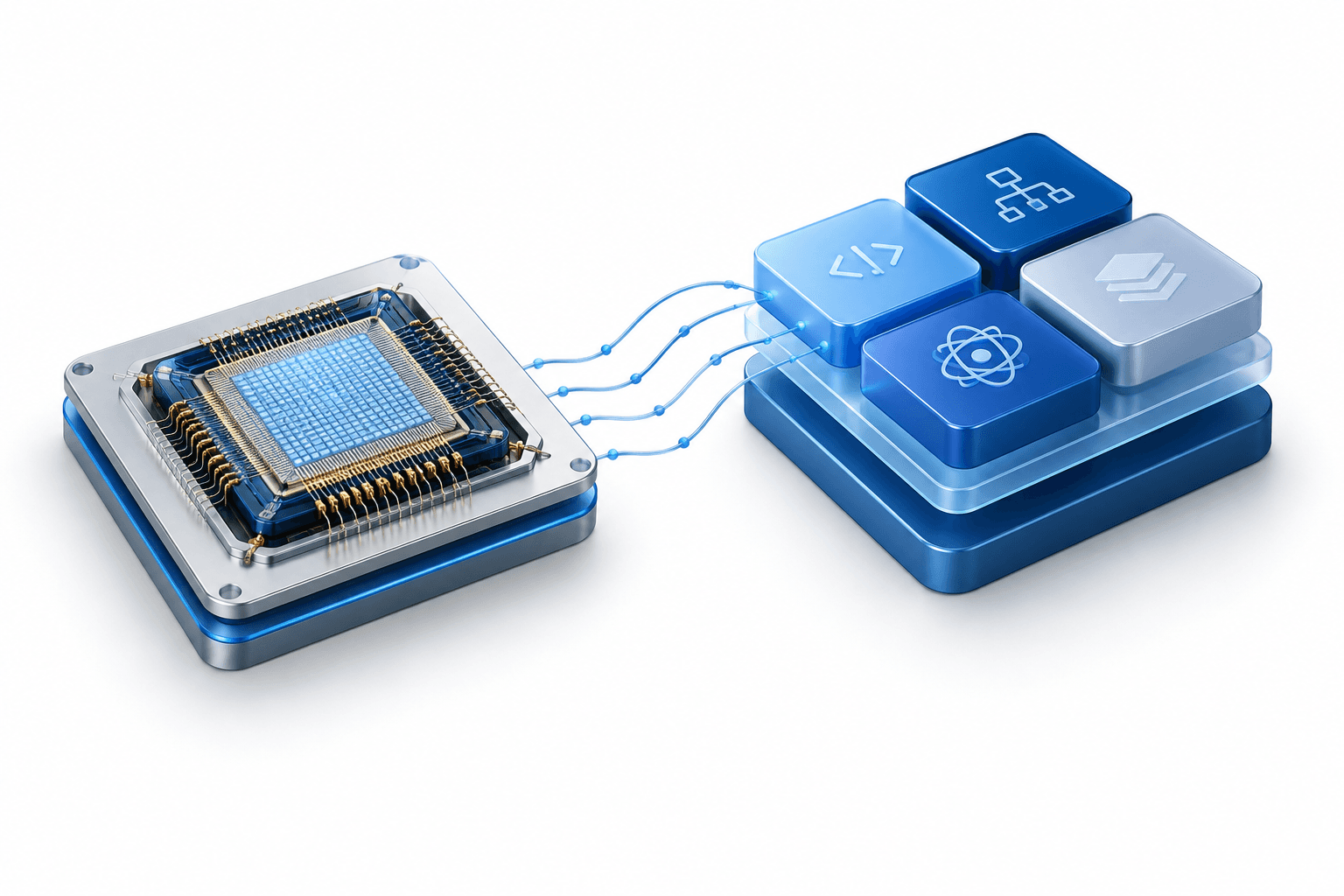
The Intel Classiq acquisition announced on October 26, 2026, would combine the Israeli quantum-software company’s platform with Intel’s silicon spin-qubit technology and manufacturing capabilities. Intel has signed a definitive agreement, but the transaction remains subject to regulatory approvals and other customary conditions, with closing expected in the first half of 2027.
Key Takeaways
- Intel and Classiq will remain separate, independent companies until closing.
- The proposed combination would bring quantum software design and hardware capabilities into one business.
- Intel intends to maintain Classiq’s support for multiple hardware platforms after completion.
Intel Classiq acquisition awaits regulatory approvals
Intel’s acquisition announcement confirms a definitive agreement rather than a completed purchase. The companies have not yet reached the closing stage, and the expected first-half 2027 completion window remains conditional.
Intel did not disclose the purchase price or payment structure in its announcement. The stated closing requirements include regulatory approvals and other customary conditions.
That distinction matters for the planned integration: Classiq’s business will not become part of Intel until the transaction closes. Intel also identified potential risks including failure to obtain approvals, retention of key Classiq employees and customers, and uncertainty over whether the expected benefits will be realized.
Software design is the strategic addition
Classiq provides automated quantum algorithm synthesis software, helping developers create quantum applications without manually designing every underlying circuit. Its platform is designed to work across different quantum hardware technologies.
Intel plans to combine that software with its existing quantum software, silicon spin-qubit technology and semiconductor manufacturing expertise. The intended result is a full-stack quantum computing business spanning software and hardware, rather than a hardware offering alone.
Intel Chief Executive Lip-Bu Tan described the combination as a way to transform the company’s Quantum Computing Group into a full-stack business. Those benefits remain prospective; the announcement does not establish a timetable for mainstream commercial adoption.
Classiq’s multi-platform support is intended to continue
Following completion, Intel intends to support Classiq’s existing multi-platform integrations and keep its software independent of any single hardware approach. The plan therefore does not call for restricting Classiq’s tools to Intel quantum processors.
For Classiq customers, that commitment addresses continuity across supported platforms. It is a stated post-closing intention, not a change already implemented.
Next milestone
Regulatory approvals and satisfaction of the remaining closing conditions are the next milestones before the expected first-half 2027 completion.
Read More News
Disclaimer
This FinanceVelix article provides general information, not personalized financial, investment, legal, or tax advice. Market prices, interest rates and economic conditions can change; investments carry a risk of loss. Facts reflect the material available when published and may change. Check important information independently and consult a qualified professional when needed. Mentioning an asset, company, or service is not an endorsement.



Comments
Be respectful. No spam, impersonation or private credentials. Ordinary posts and comments appear immediately; suspicious links are held for review.
Please wait…