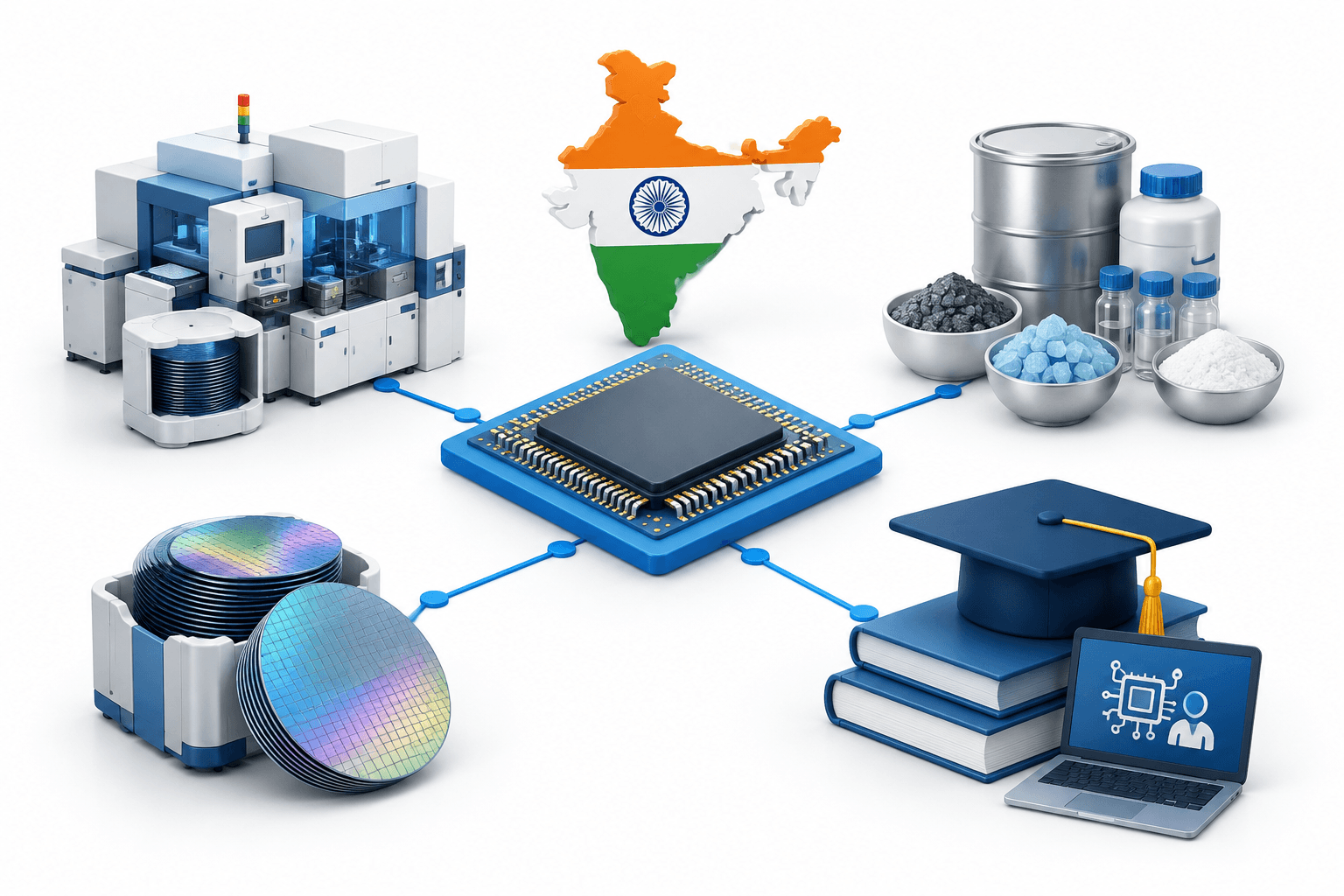
India semiconductor supply chains need to extend beyond chip design into fabrication, packaging, testing, equipment and critical materials, industry stakeholders said at Semiconductor Summit 2026. They also identified a gap between academic training and the skills employers need.
Key Takeaways
- Stakeholders said assembly and testing investments and smaller fabrication plants could help build a broader manufacturing ecosystem.
- Advanced packaging, quantum technology and photonics were identified as potential areas for development.
- Industry representatives called for curriculum changes and closer partnerships between companies and universities.
India semiconductor supply chains face a broader challenge
Stakeholders said investments in outsourced semiconductor assembly and testing, known as OSAT, and boutique fabrication plants could provide a starting point for a wider manufacturing ecosystem. That ecosystem would also need high-tech equipment, materials and gases.
Sharath Kaul, India representative at the International Electronics Manufacturing Initiative, said existing OSAT facilities have advanced packaging on their roadmaps, even if they do not currently offer it. He described the technology as an opportunity for India to accelerate its progress.
Kamaljeet Singh, director general of the Semiconductor Laboratory in Mohali, highlighted quantum technology, photonics and the integration of different kinds of AI chips as potential areas of focus. Kaul said government capital and resources would be critical initially, but companies would need to become financially sustainable over the long term.
Training and international cooperation
Indichip Semiconductors CEO Sandeep Garg said graduates need more preparation for industry requirements and called for curriculum changes. SRM Institute of Science and Technology Vice-Chancellor C. Muthamizhchelvan advocated closer industry-academic partnerships.
Germany’s consul general, Michael Hasper, highlighted cross-border collaboration and the division of work among countries as factors in semiconductor industry progress.
Read More News
Disclaimer
This FinanceVelix article provides general information, not personalized financial, investment, legal, or tax advice. Market prices, interest rates and economic conditions can change; investments carry a risk of loss. Facts reflect the material available when published and may change. Check important information independently and consult a qualified professional when needed. Mentioning an asset, company, or service is not an endorsement.



Comments
Be respectful. No spam, impersonation or private credentials. Ordinary posts and comments appear immediately; suspicious links are held for review.
Please wait…