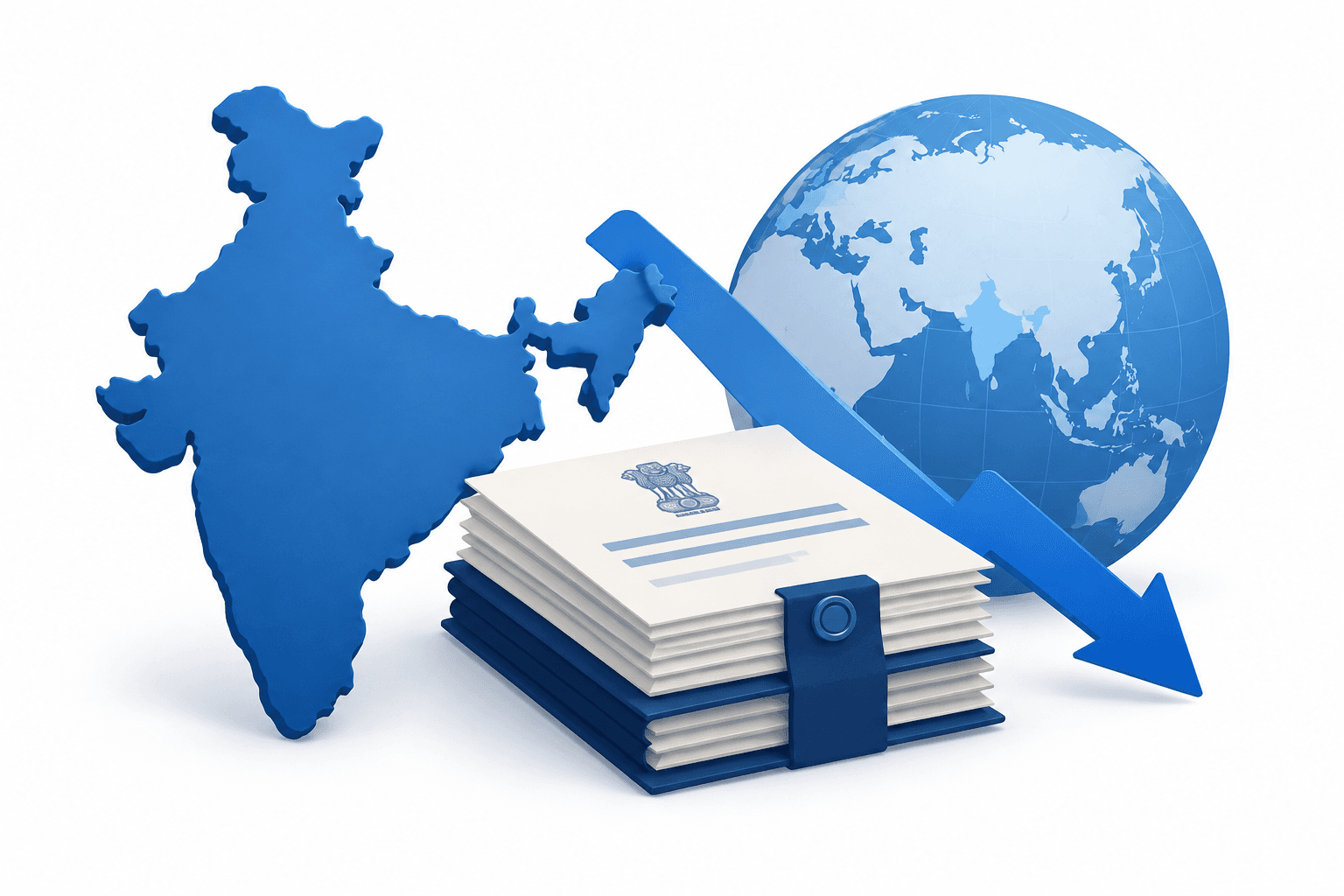
The India debt outlook stands apart from that of other large emerging economies, with its general government debt projected to fall from 84.3% of GDP in 2025–26 to 75.1% in 2031–32, Reserve Bank of India Deputy Governor Poonam Gupta said.
Key Takeaways
- Gupta said India is the only one of nine emerging economies with GDP above $1 trillion projected to reduce its debt ratio between 2025 and 2031.
- She cited fiscal consolidation, nominal GDP growth and a lower primary deficit as factors behind India’s projected path.
India debt outlook against global projections
Speaking at the Business Standard BFSI Insight Summit, Gupta cited International Monetary Fund projections from October 2026. The figures are forecasts, rather than guaranteed reductions in debt.
She said global public debt stood at 94% of GDP in 2025 and was expected to cross 100% in 2030, reaching nearly 102% in 2031. Over the 2025–2031 period, the ratio for advanced economies was projected to rise from 108.2% to 115.2%, and that for emerging market and developing economies from 73.7% to 84.2%.
The IMF has warned that high debt can amplify the effect of rising policy rates on public finances. Its research on high debt and rising rates also describes how fiscal developments can make market interest rates more sensitive.
Growth and borrowing costs
Gupta said India’s nominal GDP growth was projected at around 11% annually, above an effective interest rate on government debt of about 7%. Growth above the effective interest rate can help lower debt relative to GDP, alongside changes in the primary deficit.
She also said general government capital expenditure rose to 5.8% of GDP in 2025–26 from around 4% in 2019–20. Higher capital spending can support debt sustainability by attracting private investment and strengthening growth potential, she said.
Gupta cautioned that high debt and rising borrowing costs were limiting governments’ capacity to respond to future shocks. She said India’s public debt is largely long-term, denominated in domestic currency and held domestically, limiting refinancing risks.
Read More News
Disclaimer
This FinanceVelix article provides general information, not personalized financial, investment, legal, or tax advice. Market prices, interest rates and economic conditions can change; investments carry a risk of loss. Facts reflect the material available when published and may change. Check important information independently and consult a qualified professional when needed. Mentioning an asset, company, or service is not an endorsement.


Comments
Be respectful. No spam, impersonation or private credentials. Ordinary posts and comments appear immediately; suspicious links are held for review.
Please wait…