Binance P2P is a marketplace for buying and selling cryptocurrency directly with other users. Binance holds the seller’s crypto in escrow during the order, while the buyer sends fiat money through the agreed external payment method. Buyers should pay only against the active order; sellers should release crypto only after independently checking actual receipt. Escrow does not guarantee the external bank payment.
This FinanceVelix guide uses official public Binance documentation and research notes checked on October 23, 2026. Calculations below are explicitly hypothetical, not live quotes. Product availability, fees and payment options must be checked for your account and market.
Understand the two transfers before trading
A P2P order coordinates two separate movements: fiat money through a bank or payment service, and cryptocurrency through Binance’s escrow process. The order record connects them but does not make them the same transaction.
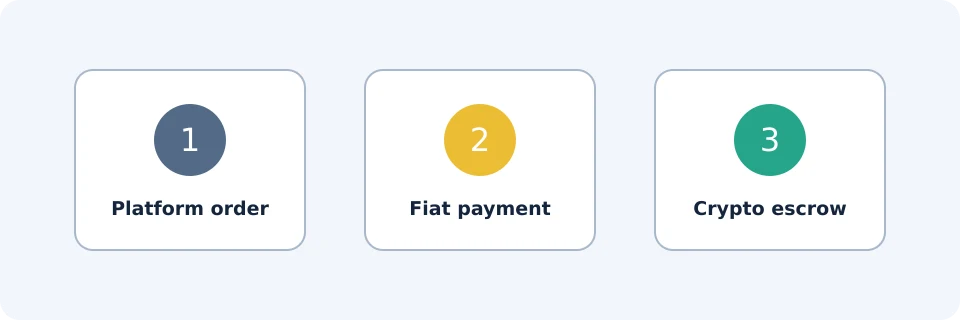
For a USDT purchase, the seller’s USDT is locked when the order is placed. You transfer the agreed fiat amount externally, confirm payment in the order, and wait for release after the seller verifies receipt. Binance’s P2P overview describes this structure and the identity-verification requirement.
Escrow reduces the risk that a seller receives payment and simply withholds freely available crypto. It does not establish that an external transfer is irreversible, that a screenshot is genuine, or that a payment provider will never restrict funds. Understand your payment method’s settlement and reversal rules before using it.
Compare the whole advertisement, not just the rate
An ad is an offer with a price, available quantity, order limits and payment conditions. The maker posts it; the taker accepts an existing ad. When browsing the Binance P2P interface in the app or website, check the selected asset, fiat currency and your direction: buying USDT and selling USDT require opposite comparisons.
| Check | What to establish | Reason to pause |
|---|---|---|
| Price and total | Fiat per unit and crypto received or sold | Wrong currency or confusing quote direction |
| Limits and availability | Your amount fits the minimum, maximum and available quantity | Pressure to split into unrelated transfers |
| Payment method | You can use the specified method within the window | A different destination is proposed privately |
| Identity and terms | Payment-account details meet the platform’s identity rules | A third-party payer or unexplained name mismatch |
| Counterparty record | Review available trading history and feedback alongside terms | Good statistics are offered as a reason to bypass checks |
Read the full terms before opening an order. A competitive rate is not useful if you cannot comply with the payment method or complete payment in time. Binance’s P2P transaction policy governs payment identity and in-platform conduct; an advertiser’s private instructions should not replace it.
Worked example: 1,000 divided by 0.99 versus 1.01
Assume two hypothetical USDT buy ads quote 0.99 and 1.01 units of the same fiat currency per USDT. Both accept a 1,000-unit order, have identical acceptable payment terms, and initially have no separate charges:
- Ad A: 1,000 ÷ 0.99 = 1,010.10 USDT.
- Ad B: 1,000 ÷ 1.01 = 990.10 USDT.
- Difference: approximately 20.00 USDT, rounded to two decimals.
For a buyer, the lower fiat-per-USDT quote buys more units. For a seller disposing of 1,000 USDT, the same rates produce 990 versus 1,010 fiat units: the higher rate produces more proceeds before costs.
Now assume Ad A’s payment route costs 15 fiat units and Ad B’s costs nothing. If your total budget remains 1,000, only 985 goes into Ad A’s purchase: 985 ÷ 0.99 = 994.95 USDT. Its advantage falls to about 4.85 USDT. This assumes the provider fee reduces the purchase budget and the revised amount still meets the ad’s limits.
Compare fees separately from the quoted price
Check current maker/taker charges for your market and any payment-provider costs. A counterparty’s margin can also be embedded in the quote. Binance’s P2P introduction says completed orders may carry maker or taker fees that vary by market. Its fee overview also distinguishes fiat markets, trade zones and user-tier rates. Check those current terms rather than applying a generic “P2P is free” statement to every order.
A useful buying comparison is total fiat spent ÷ net crypto received. For selling, compare net fiat received for the same crypto quantity. Include any later withdrawal cost separately if your goal is an external wallet, rather than treating it as part of escrow.
Referral rebates, BNB fee deductions and welcome-task rewards are different mechanisms, not interchangeable P2P discounts. Do not assume they apply to an order or stack together. See the trading-fee guide for the broader distinction.
How to buy USDT on Binance P2P
Complete the required identity verification first. If needed, use the registration and verification guide. Navigation can vary, so follow the live app or website rather than relying on a fixed screen layout.
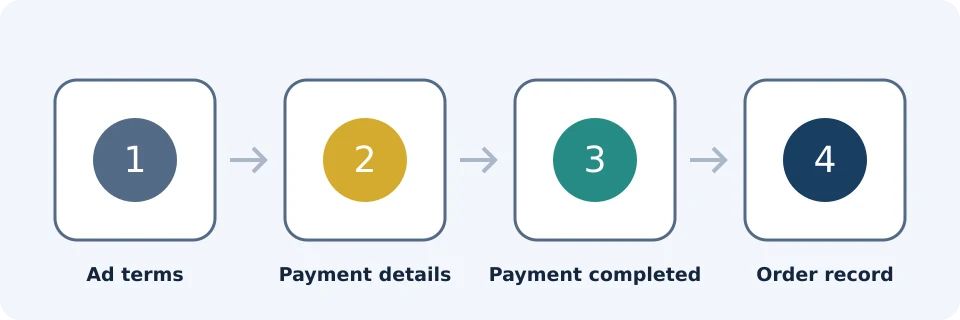
- Select the market. Open P2P, choose to buy, select USDT and your fiat currency, then filter by amount and payment method.
- Review the offer. Read the rate, limits, payment window, identity requirements and terms before placing the order.
- Check the active order. Verify the recipient and amount there. Stop if instructions change or conflict with the permitted process.
- Send the external payment. Use the agreed method and compliant payment account. Confirm payment in Binance only after actually sending it.
- Keep the evidence. Retain the order reference, transfer record and in-platform messages until the trade is resolved.
- Check completion. Verify crypto release in your account rather than relying on a chat promise.
The payment window is a deadline to act, not a promise that your bank will settle instantly. Before starting, allow for provider delays. If money has already been sent and the order develops a problem, do not casually cancel or send a second payment; use the order’s support or appeal route.
How to sell USDT on Binance P2P
Binance’s documented selling process requires the crypto to be in the Funding Wallet. Check the asset and available balance before selecting an offer.
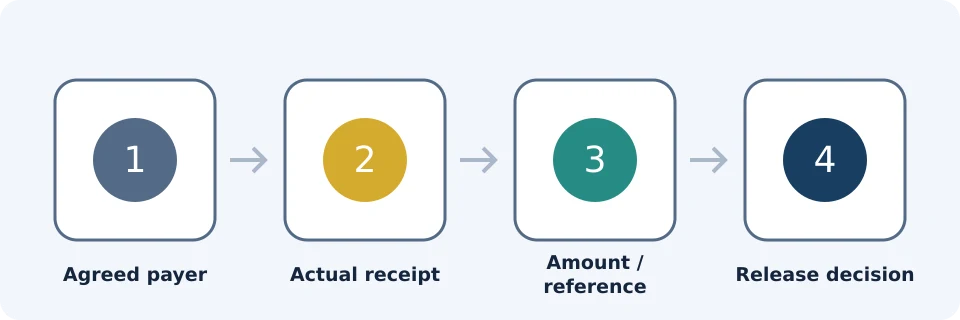
- Choose the selling side. Select USDT, fiat currency, amount and the method through which you can receive payment.
- Read the conditions. Check the payout, limits and payment-account requirements before proceeding.
- Monitor the order. A buyer’s “paid” status is a claim to check, not proof of receipt.
- Open your payment account independently. Inspect the actual transaction, received amount, sender details and payment status.
- Resolve discrepancies first. If the amount, identity or receipt status is uncertain, keep the crypto unreleased and seek official assistance.
- Release only after verification. Complete the release through the active Binance order once the payment checks are satisfied.
A screenshot, email or SMS can be fabricated or misunderstood. Even a real notification may describe a pending rather than completed payment. Check the receiving account itself; do not use a login link supplied by the counterparty. Actual receipt still does not eliminate every external-payment risk.
Troubleshooting payment and release problems
The right next action depends on whether money moved and whether its receipt can be established. Keep communication within the order and avoid creating unrelated transfers that make the evidence harder to follow.
| Situation | Immediate action | Avoid |
|---|---|---|
| Buyer paid; crypto not released | Check the order status, retain the transfer reference and use the available appeal process | Paying again or cancelling on a private promise |
| Seller cannot confirm receipt | Check the receiving account directly; explain the discrepancy in the order and seek support | Releasing against screenshots or pressure |
| Payer or recipient name mismatch | Pause and consult the order’s support process about the identity discrepancy | Assuming a friend’s or relative’s account is acceptable |
| Request to move off platform | Keep the transaction and messages in the official order; report suspicious instructions | Private settlement or a new external payment link |
| Window expiring before payment | Follow the current order instructions; if unpaid, do not falsely mark payment complete | Sending late without clarifying the order status |
| Order expired after money was sent | Contact official support with the order and payment evidence | Assuming automatic recovery or opening another paid order |
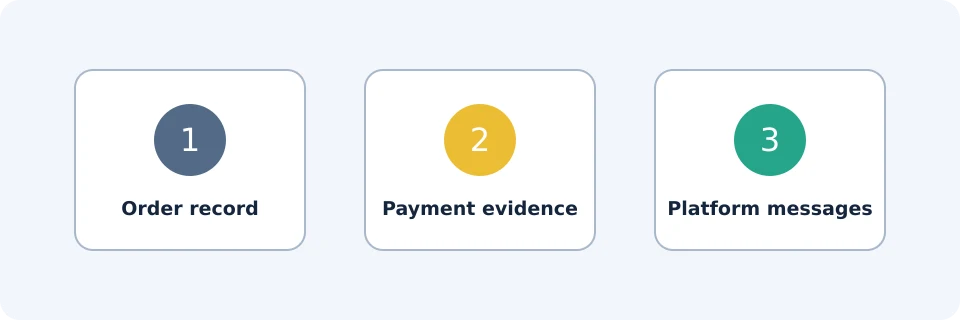
For an appeal, organize three evidence groups: the order record and agreed terms, the external payment record, and relevant in-platform messages. Include amounts, timestamps and transaction references where available. Submit sensitive evidence only through official support channels, not public posts.
Binance documents an appeal process in which support reviews both parties’ evidence. That is a dispute-resolution route, not a guaranteed outcome or fixed completion deadline.
Frequently asked questions
Which payment methods can I use?
Use methods available for your market and the specific ad. Binance documents broad payment-method support, but a global list does not establish availability for your account. Check the live filters and offer terms.
Should I start with a small order?
A smaller order can limit the amount exposed while you learn the workflow, provided it meets the ad’s minimum. It does not validate a counterparty or make an unsuitable payment method safe.
Does buying USDT mean its value is guaranteed?
No. This guide’s arithmetic assumes a quoted fiat price, not a guaranteed redemption value. P2P execution risks and the risks of holding the crypto asset are separate decisions.
Does P2P release send USDT to my external wallet?
No. Release completes the Binance-side P2P transfer. An external transfer is a separate withdrawal requiring destination, network and cost checks; see the crypto withdrawal guide.
What if no advertisement meets my requirements?
Wait or compare another available purchase route. Do not weaken identity checks, accept an unfamiliar payment method or move outside the order simply to obtain a better rate.
Affiliate disclosure
FinanceVelix may earn a commission if you register through its Binance referral link. Eligibility and benefits depend on location, account and current terms. This educational guide is not a recommendation to trade cryptocurrency.
Official educational references
- What Is Binance P2P and How to Use It? ↗Source accessed: 2026-10-23
- Binance P2P introduction ↗Source accessed: 2026-10-23
- P2P user transaction policy ↗Source accessed: 2026-10-23
- Binance P2P introduction and market-dependent fees ↗Source accessed: 2026-10-23
- Binance P2P fee overview ↗Source accessed: 2026-10-23
- Binance VELIX registration offer ↗Source accessed: 2026-10-23