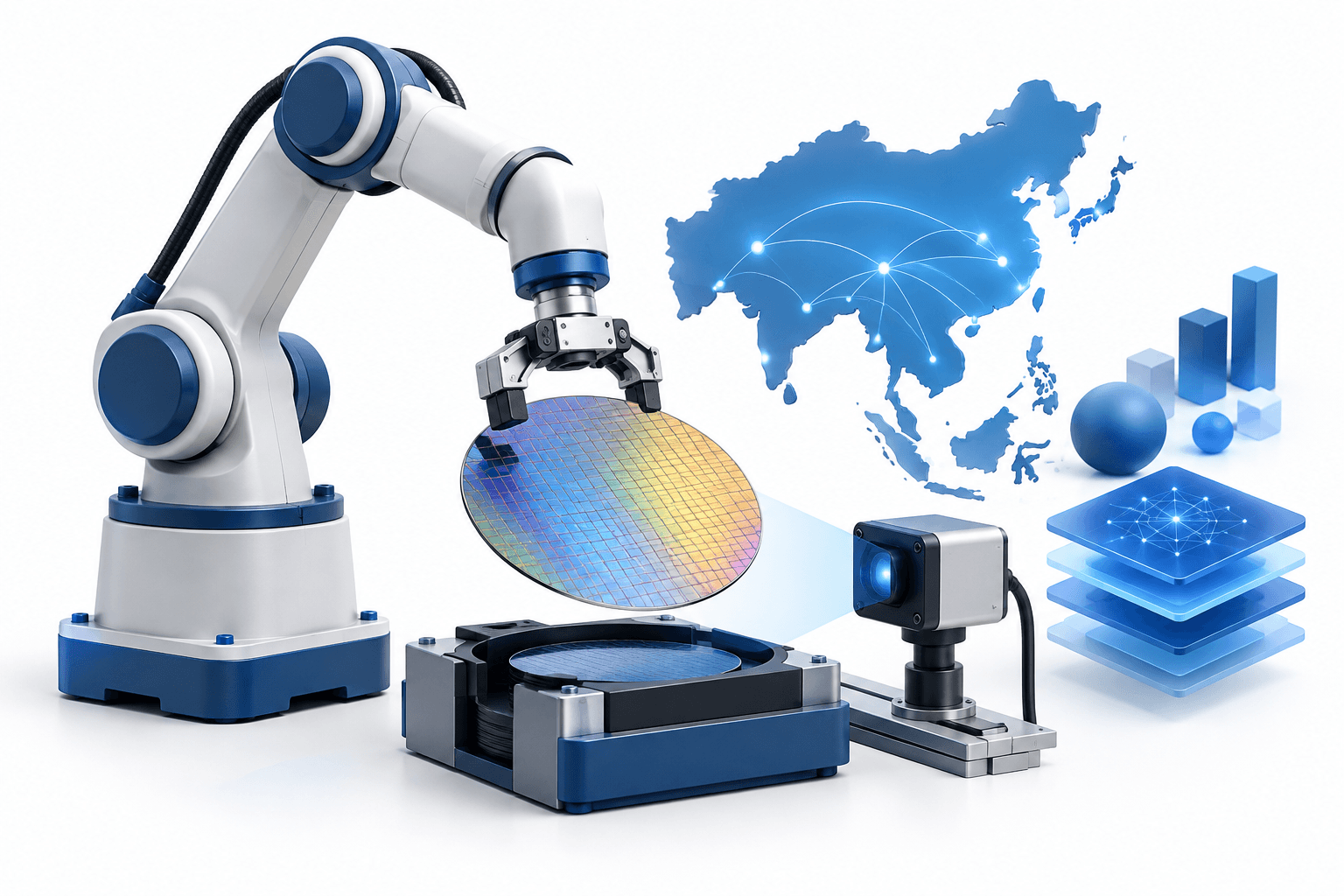
Physical AI investors highlighted Asia’s manufacturing and semiconductor capabilities as potential advantages for robotics companies moving toward commercial deployment, while identifying access to real-world training data as a major obstacle.
Key Takeaways
- Investors discussed opportunities in Taiwan, Japan and Southeast Asia at a San Francisco summit.
- Factory data can be difficult to obtain because manufacturers may be reluctant to share proprietary information.
- The Startup Island TAIWAN Silicon Valley Hub is organizing further industry dialogues and investor gatherings.
Physical AI moves from simulation to production
At the Silicon to Scale: A Physical AI Summit during SF Tech Week, investors and industry executives discussed the challenge of deploying intelligent machines in real-world settings. The event drew more than 170 investors, industry leaders and founders and featured five Taiwanese startups: Morale AI, MetAI, Jmem Tek, Neuroshine and APMIC.
A corporate panel examined the gap between simulation and real-world deployment, as well as the computing, edge and energy infrastructure needed to scale.
Where Asian manufacturing could help
Citi’s director of AI infrastructure, Jeff Tao, pointed to semiconductor assembly and testing operations in Southeast Asia, including Malaysia, as existing capabilities that could support emerging technologies. He also said companies could combine Asian manufacturing strengths with access to the United States, where high labor costs create opportunities for industrial automation.
Kosuke Yusa of Open Network Lab Fund said Japan offers a different advantage: production environments that frequently change and require robots to adapt to different tasks and operating conditions. Uly Su, head of the Startup Island TAIWAN Silicon Valley Hub, said Taiwan could draw on its semiconductor, electronics and advanced manufacturing strengths.
Factory data and infrastructure constraints
Unlike language models trained on extensive digital information, robotics systems need specialized data from physical environments such as factories and production lines. Tao said collecting it is difficult partly because manufacturers are reluctant to share proprietary operational data.
DCVC principal Vandon Duong said developers are willing to pay for diverse, well-annotated datasets, but questioned how data-collection companies could build lasting advantages as competition grows. Investors also discussed computing costs: Tao identified electricity availability as an increasingly important US infrastructure bottleneck, while Duong pointed to technologies that could improve computing efficiency and reduce inference costs.
Read More News
Disclaimer
This FinanceVelix article provides general information, not personalized financial, investment, legal, or tax advice. Market prices, interest rates and economic conditions can change; investments carry a risk of loss. Facts reflect the material available when published and may change. Check important information independently and consult a qualified professional when needed. Mentioning an asset, company, or service is not an endorsement.


Comments
Be respectful. No spam, impersonation or private credentials. Ordinary posts and comments appear immediately; suspicious links are held for review.
Please wait…