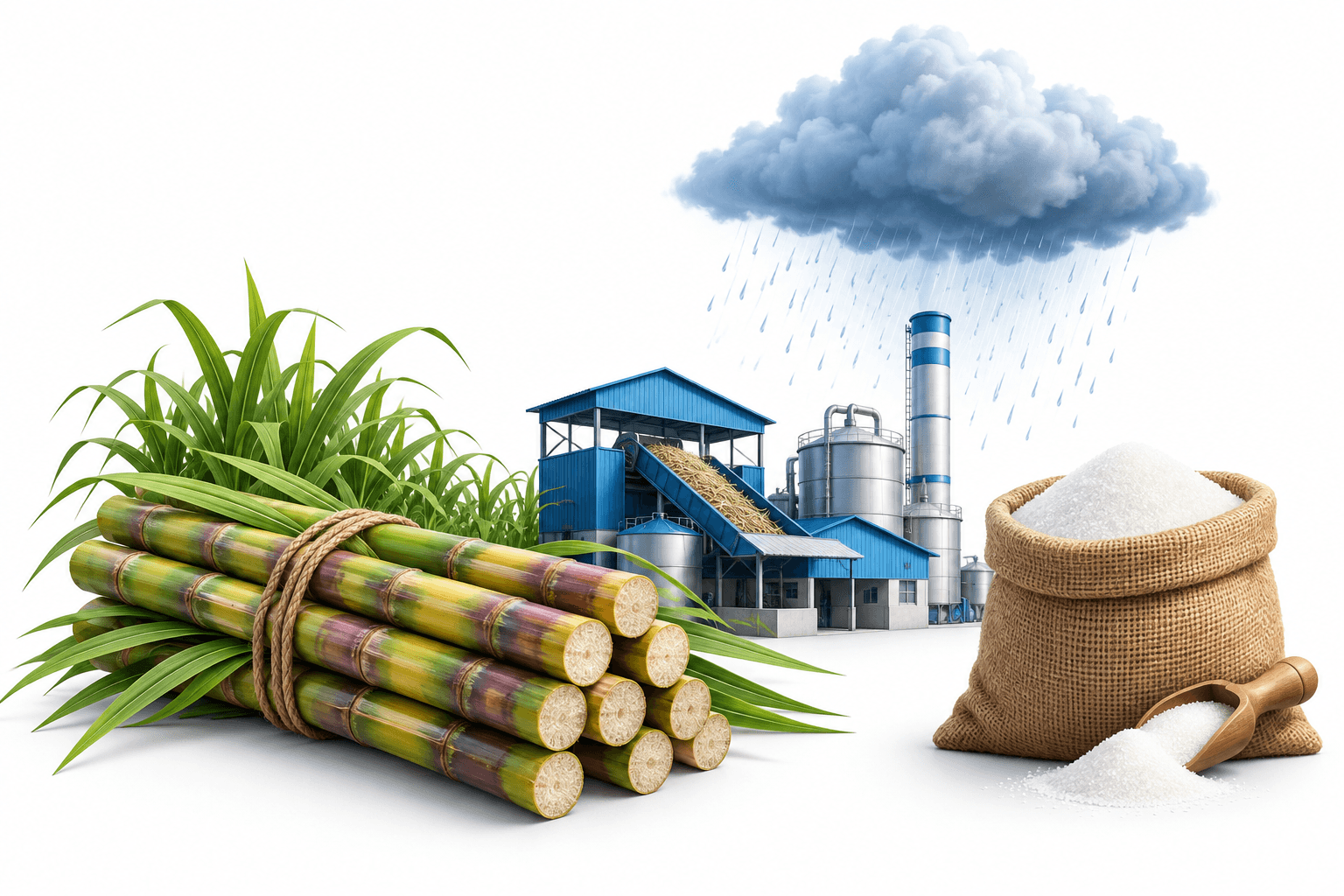
India sugar supply could face fresh pressure in November as forecast rain threatens to delay sugarcane harvesting and crushing in Uttar Pradesh, the country’s largest cane-producing state. Mills in Maharashtra may have to cover more of the shortfall if production is disrupted.
Key Takeaways
- November demand is estimated at 2.3 million tonnes, against an expected October carryover of 1.5 million tonnes.
- Rain has already delayed some planned crushing in western Uttar Pradesh.
- Forecasters expect rainfall across parts of the state from October 29 to 31.
India sugar supply relies on new production
The Indian Sugar & Bio-Energy Manufacturers Association said closing stocks at the end of the 2025–26 sugar season on September 30 were about 3.6 million tonnes. By October 27, 107 mills nationwide, including 87 in Maharashtra, had started crushing and produced about 400,000 tonnes of sugar, compared with around 60,000 tonnes a year earlier.
Industry sources estimated that another 200,000 tonnes could be produced by the end of October. Experts said that if mills sold all of their 2.7 million-tonne October domestic sales allocation, about 1.5 million tonnes would remain for November. That would leave the country dependent on new production to meet estimated demand.
Rain threatens cane harvests
Many mills in western Uttar Pradesh had planned to start crushing from October 20, but rain delayed harvesting and made mills reluctant to buy cane with higher moisture. Sugarcane breeder Bakshi Ram said heavy rain could delay harvesting in low-lying areas, particularly in eastern Uttar Pradesh, while mills may avoid crushing because sugar recovery would be lower.
The India Meteorological Department forecast isolated very heavy rainfall over eastern Uttar Pradesh during October 29–30 and isolated to scattered rainfall over the west during October 29–31. Its Bharat Forecast System indicated that some eastern districts could receive up to 40 millimetres on October 30.
Imported sugar could add to availability
Rising sugar prices could encourage more sales of imported sugar that had previously been difficult to sell because import costs were higher. The government permitted two refiners to sell 265,000 tonnes of imported sugar domestically, but they had sold less than 60,000 tonnes.
Read More News
Disclaimer
This FinanceVelix article provides general information, not personalized financial, investment, legal, or tax advice. Market prices, interest rates and economic conditions can change; investments carry a risk of loss. Facts reflect the material available when published and may change. Check important information independently and consult a qualified professional when needed. Mentioning an asset, company, or service is not an endorsement.



Comments
Be respectful. No spam, impersonation or private credentials. Ordinary posts and comments appear immediately; suspicious links are held for review.
Please wait…