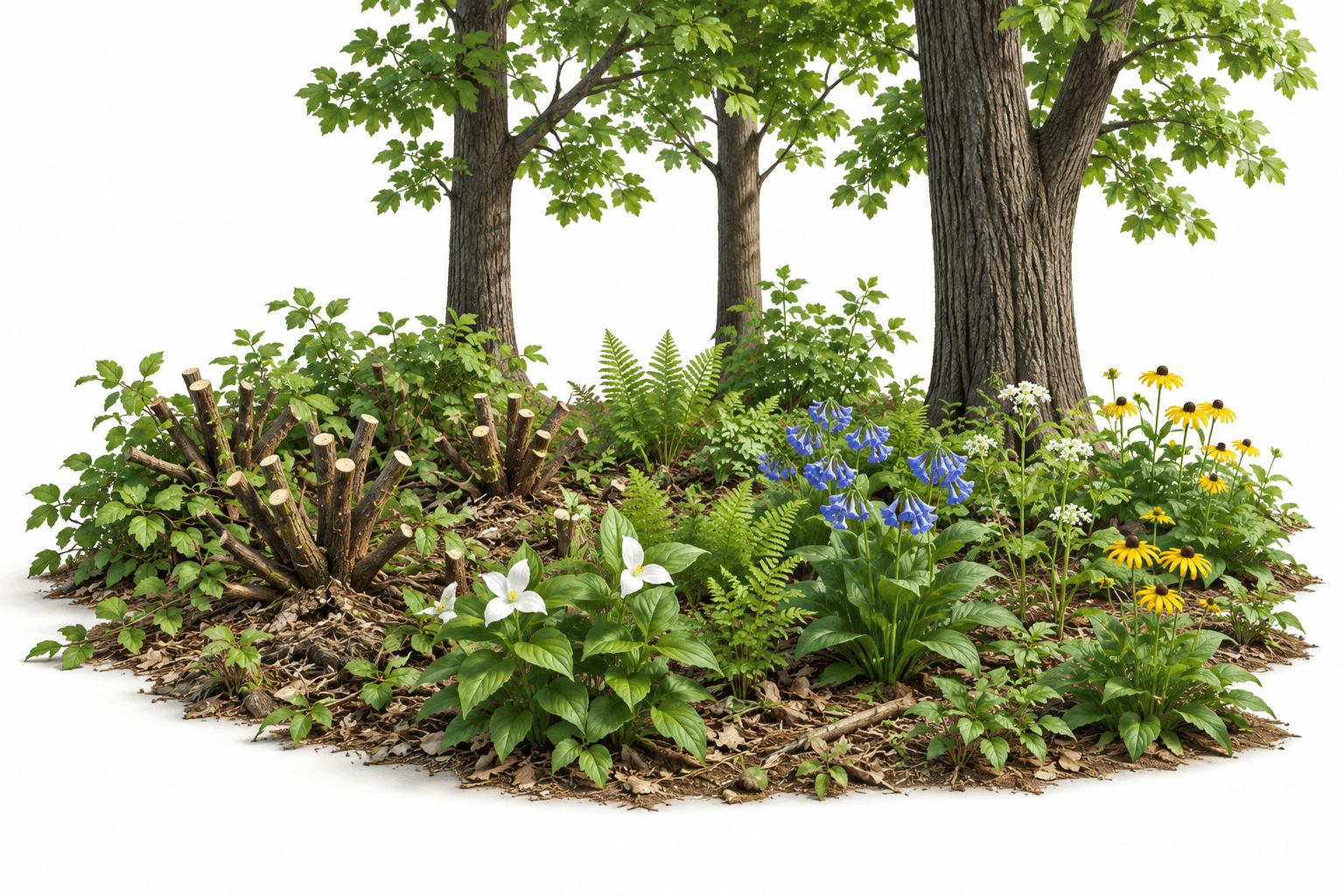
Invasive shrub removal helped native plants return to a Pennsylvania woodland over seven years, a study published in 2019 found. Researchers repeatedly cleared invasive shrubs and their regrowth, with native vegetation recovering more strongly than they had expected.
Key Takeaways
- Researchers treated five plots in Hartley Wood and paired each with a control plot.
- Native understory plants and small trees returned, but the study found no change in taller canopy-tree regeneration.
- The findings came from one woodland and do not establish that every forest will respond the same way.
What invasive shrub removal changed
Pennsylvania State University researchers studied Hartley Wood, a mature woodland at the university’s Arboretum. They repeatedly removed 18 invasive shrub species from five treatment plots, clearing regrowth and new seedlings over the following years.
After seven years, native understory plants, small trees and other vegetation had returned to the treated plots. Native cover increased by more than researchers measured in unmanaged forest where invasive shrubs were sparse.
What the findings mean for restoration
Ecologist Erynn Maynard-Bean and associate professor Margot Kaye suggested that invasive shrubs may have occupied spots with relatively favorable sunlight, water and soil nutrients. Once the shrubs were controlled, native plants could draw on those resources.
Natural regeneration could help managers restore some woodland areas without planting every replacement by hand. But the experiment involved repeated removal, not a single clearance, and its results do not guarantee the same response elsewhere. The study tracked vegetation, not whether bird or amphibian populations recovered.
Read More News
Disclaimer
This FinanceVelix article provides general information, not personalized financial, investment, legal, or tax advice. Market prices, interest rates and economic conditions can change; investments carry a risk of loss. Facts reflect the material available when published and may change. Check important information independently and consult a qualified professional when needed. Mentioning an asset, company, or service is not an endorsement.




Comments
Be respectful. No spam, impersonation or private credentials. Ordinary posts and comments appear immediately; suspicious links are held for review.
Please wait…