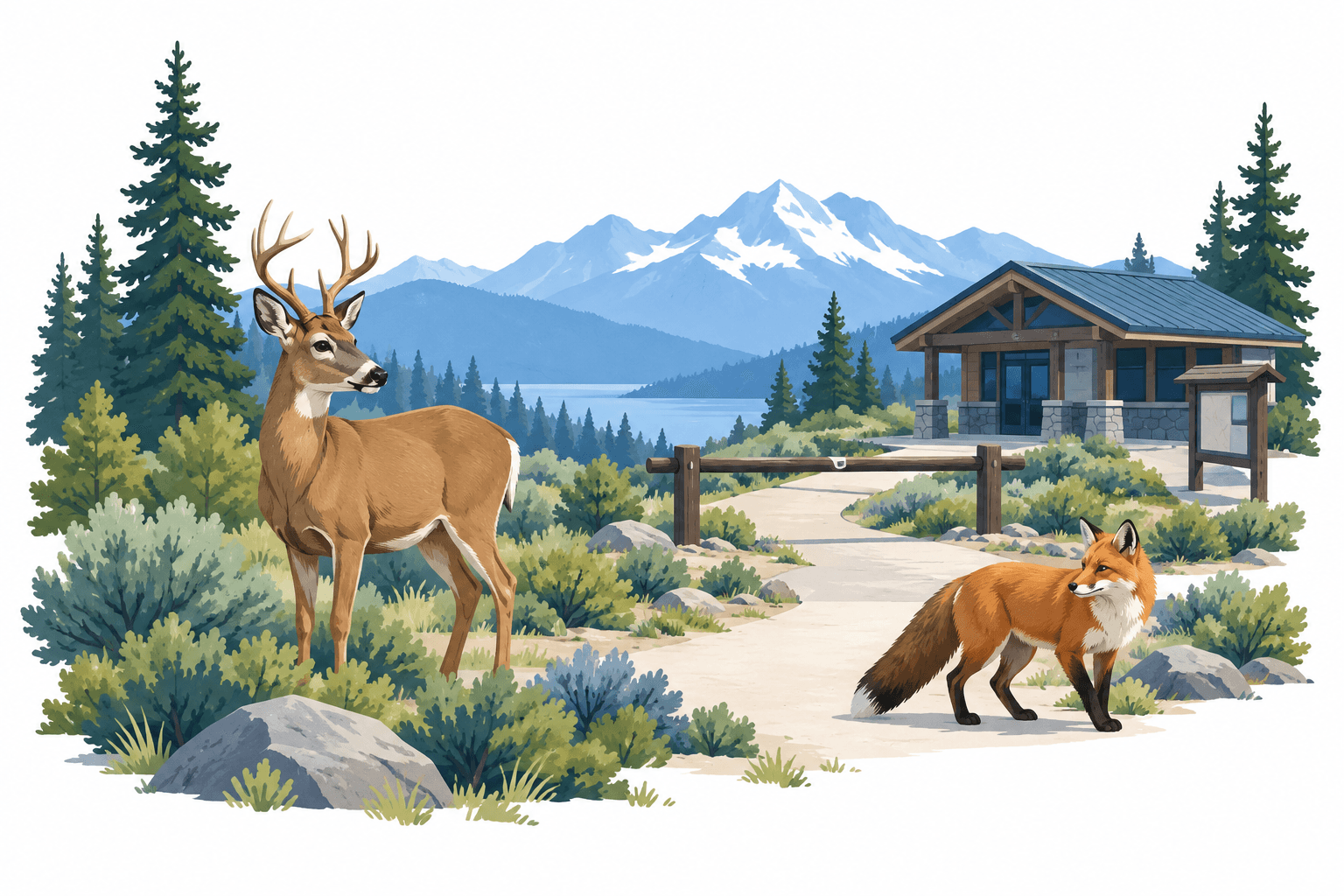
National park wildlife responded unevenly to the temporary closure of US parks during the 2020 pandemic, a 2025 study found. Some animals in more developed parks began using human-built areas they had previously avoided, while avoidance remained the general pattern across the parks studied.
Key Takeaways
- Researchers analyzed GPS data from 229 mammals across 10 species and 14 parks.
- Responses differed by species and location, and some changes persisted after parks reopened.
National park wildlife during closures
The study, published in Proceedings of the Royal Society B, compared animal movements in 2019, when parks were open, with those in 2020, when they were closed. The shutdown gave researchers an opportunity to examine animal responses to reduced human presence while roads, buildings and other infrastructure remained.
Averaged across all parks and species, the animals avoided the human footprint whether parks were open or closed. In some more developed parks, however, certain animals that had avoided human areas in 2019 began selecting them in 2020. Some continued to do so after reopening.
Responses varied by species
Wolves and mountain goats reacted negatively to human interaction, while mule deer and red foxes reacted positively. Elk and mountain lion responses depended on their exposure to people, and black bears and moose showed a stronger response to the closure.
The researchers emphasized that behavior can differ among species, populations and individual animals. The localized shifts did not amount to an overall reversal from avoiding developed areas to preferring them.
Read More News
Disclaimer
This FinanceVelix article provides general information, not personalized financial, investment, legal, or tax advice. Market prices, interest rates and economic conditions can change; investments carry a risk of loss. Facts reflect the material available when published and may change. Check important information independently and consult a qualified professional when needed. Mentioning an asset, company, or service is not an endorsement.

Comments
Be respectful. No spam, impersonation or private credentials. Ordinary posts and comments appear immediately; suspicious links are held for review.
Please wait…